Is Adagio Grass a Fountain Grass? A Brief Explanation
Is Adagio a fountain grass? No. Customers ask us this all the time, and the plain answer is that Adagio is Miscanthus sinensis 'Adagio', a maiden grass. Fountain grass belongs to a different genus and looks different once you know where to check. Some retailer listings blur the two, and that is where the mix-up starts.
The difference matters because the two plants do not share a size, a hardiness range or a plume. Buy one expecting the other and you may end up with a clump that is the wrong height for your border or the wrong fit for your winters.
In this article, we'll go through why the mislabel happens, how Adagio's blades and plumes differ from true fountain grass, and the full list of names Adagio goes by. We'll finish with how to read a plant tag.
Adagio Grass Is Not a Fountain Grass
Here is the plain version of the answer first, and then the reason the mistake keeps happening.
Two Different Genera
The names tell the story once you read the Latin.
Adagio is a cultivar of Miscanthus sinensis. Fountain grass is Pennisetum alopecuroides, and the plant is now classified as Cenchrus alopecuroides. These are separate genera, so no amount of squinting turns one into the other. Adagio is not a dwarf fountain grass, not a cousin of one and not a form of one.
Fountain grass is also among the plants Miscanthus sinensis is often confused with. If you have mixed them up, you are in good company. The mistake is common enough to show up in plant references.
Why the Mislabel Sticks
A few honest similarities do most of the damage.
Both plants form tidy clumps of arching blades. Both put up plumes in the second half of the season. Both catch low evening light well. A listing writer who sorts plants by silhouette will file them together, and a shopper who types "adagio fountain grass" into a search bar finds those listings.
The mistake we see most often is a tag or listing that carries a common name and nothing else. The buyer is left guessing which plant is in the pot.
A Name That Changed Under the Plant
Fountain grass has also been renamed, which adds a second layer of confusion.
Older tags and books say Pennisetum. Newer references say Cenchrus. Both names point to the same fountain grass, and neither one is Miscanthus. So if you spot either word on a label, you are looking at a different plant from Adagio, however the front of the tag describes it.
What We Tell Customers to Trust
Common advice says to trust the common name on the tag. We don't. Common names for grasses overlap and wander, and "fountain grass" gets stretched to cover almost anything that arches. The Latin name does not wander.
What we recommend is simple. Look for Miscanthus sinensis 'Adagio' on the tag. If you see Pennisetum or Cenchrus, put the pot back.
Adagio Grass Blades and Plumes Compared With Fountain Grass
Names aside, you can settle the question in the garden with two checks: the blades and the plume.
Blades and Habit
Start low, at the clump itself.
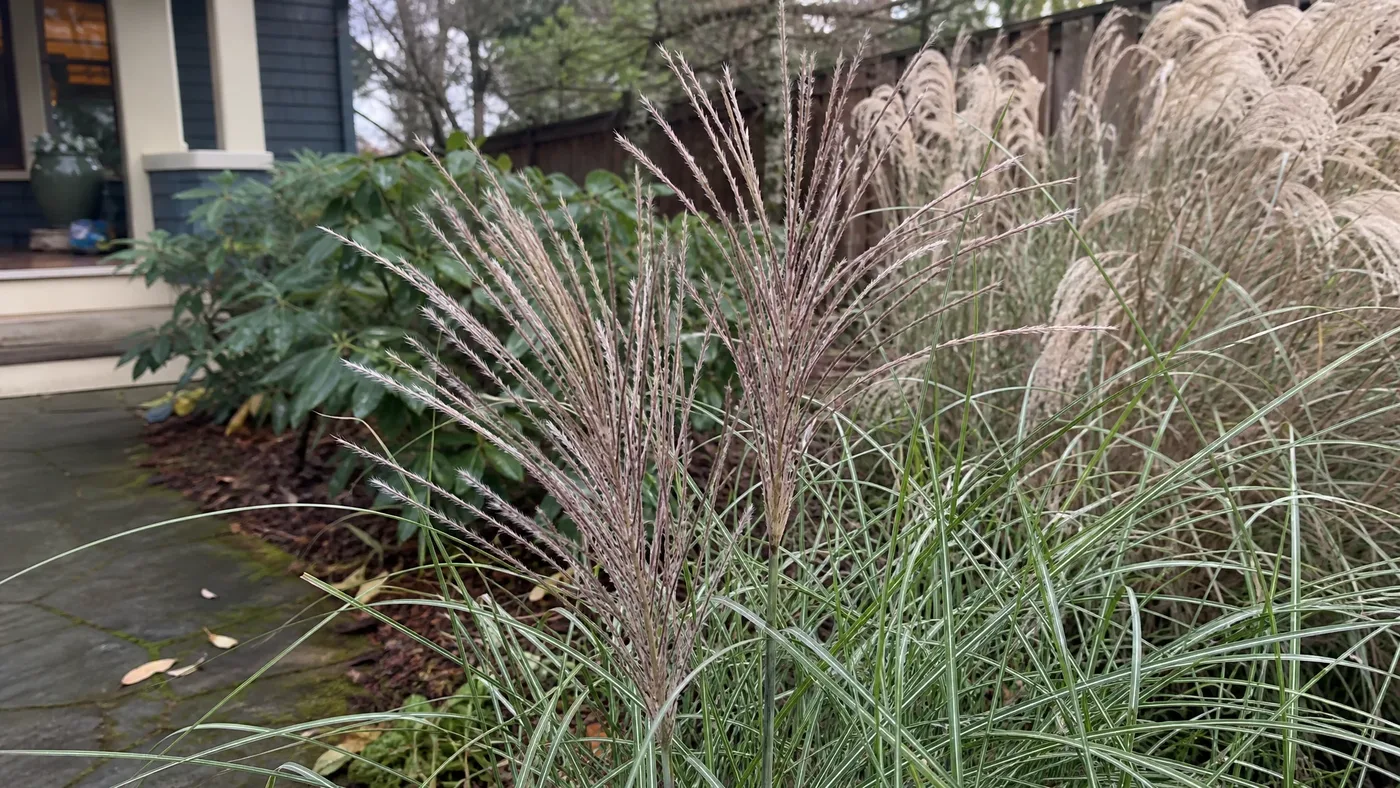
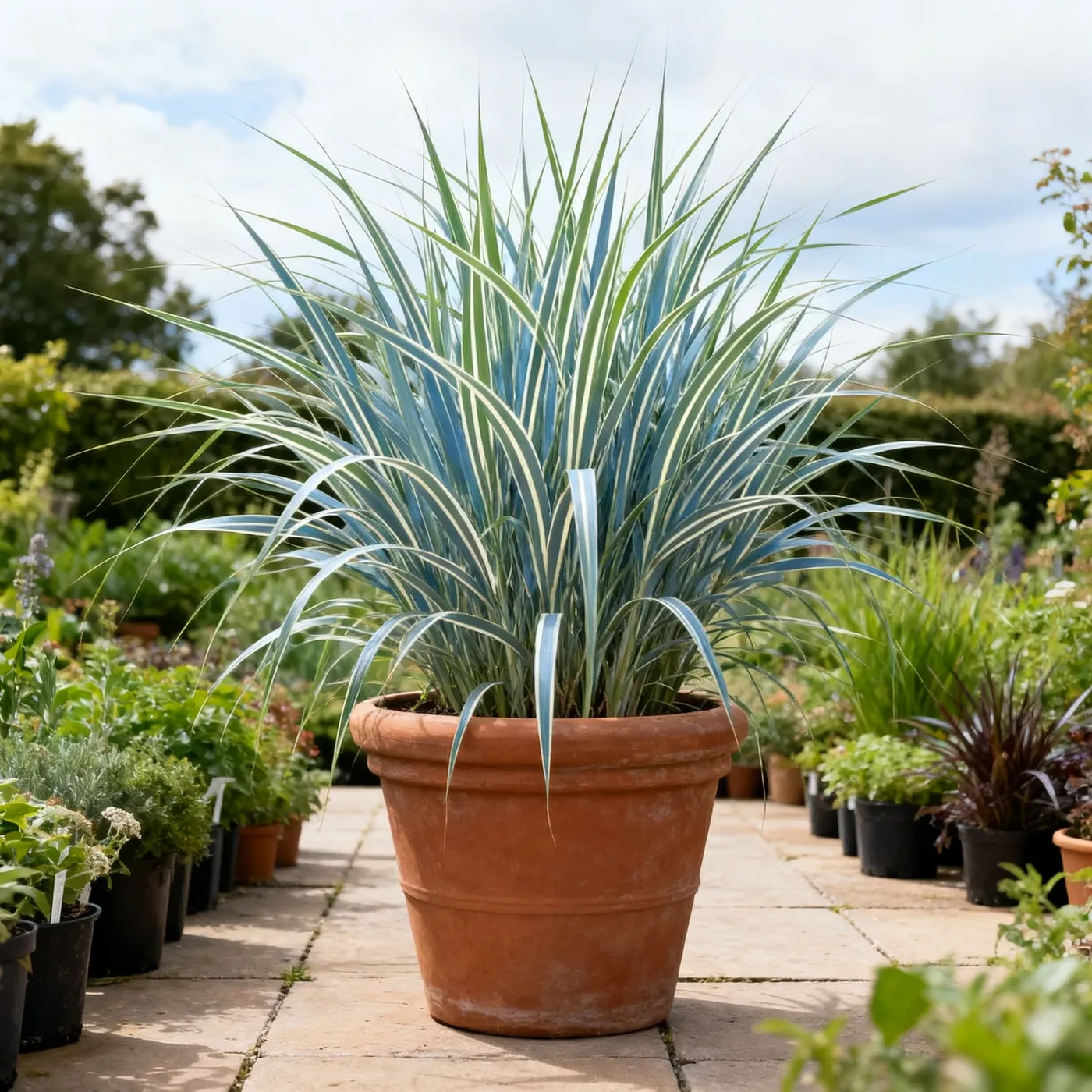
Adagio is a clump-forming, deciduous grass with long, narrow, gray-green, arching leaves that turn orange and yellow in autumn. That gray-green cast is a quick tell. Fountain grass leaves are bright green, 4 to 20 inches long and about a quarter inch wide.
Size helps too. Fountain grass grows in clumps 2 to 4 feet tall and wide. Adagio reaches about 3–5 feet in height with a spread of about 1.6–3.3 feet. So Adagio stands taller and carries that height in a clump that stays fairly narrow.
If you want the detail on how Adagio sits within its own genus, our Adagio versus maiden grass comparison covers it.
Plumes
The flower heads are where the two plants part ways most clearly.
Fountain grass carries bottlebrush spikes. The inflorescence is a raceme resembling a bottlebrush or fox tail, shifting from green to reddish-purple to golden brown from mid-summer into fall. They read as stiff, fuzzy brushes on arching stems.
Adagio's heads are tassel-like, pink-tinged in summer and turning creamy white in autumn. Miscanthus sinensis has finger-like racemes up to 8 inches long, and that spray of fine fingers gives the plume its feathery look rather than a brush look.
A Season of Color
The two plants also change color on different schedules, which gives you a second way to tell them apart across the year.
In our rows, the Adagio plumes open with a pink tinge and fade toward cream, so the clump looks different in August than in October. Then the leaves turn orange and yellow. Fountain grass shifts from green through reddish-purple to golden brown, and the change happens in the spike rather than in a gray-green clump of blades. Stand in front of the plant in late summer and the plume shape settles it.
Every Name Adagio Grass Goes By
Adagio picks up a long list of common names from its species. They all point to the same plant.
Maiden Grass, Eulalia and Silver Grass
These are the names you will meet on tags and in searches.
Miscanthus sinensis goes by many common names: Chinese silvergrass, dwarf maiden grass, eulalia, Japanese silver grass, maidengrass and susuki among them. Adagio inherits all of them. Add the cultivar name and you get the searches people actually type: Adagio eulalia grass, Adagio silver grass, Adagio Japanese maiden grass.
Japanese silver grass and Chinese silver grass are the same species. It is native across China and Japan, among other parts of East Asia, so each name simply points to a place where it grows wild.
The word "dwarf" deserves a note. The species runs 4–12 feet tall, and Adagio tops out around 5 feet. Next to the species, the label fits. It is still a maiden grass, and it is still not a fountain grass.
Maiden Hair Grass and Other Spellings
Some searches stray a little further from the sources.
"Maiden hair grass" with a space is one of them. No source we use lists that spelling, and maidenhair is the name of a fern, so a listing under that name deserves a second look at the Latin name. Treat it as a looser way of saying maiden grass.
"Fountain grass" is different. It is not a loose spelling of anything Adagio is called. It is the name of another plant, and it belongs in your search only if you want that plant.
Which Name to Search With
You can search by any of the common names, but one of them should always travel with the cultivar.
Whatever name you start from, the cultivar in single quotes does the real work. Plenty of maiden grasses share the species name, and each has its own size and plume. Searching "Miscanthus sinensis Adagio" narrows the results faster than any common name does. Our guide on the botanical name for Adagio grass goes through how that naming works.
Reading a Plant Tag for Adagio Grass
A tag gives you four or five clues. Knowing which ones to read keeps the wrong plant out of your cart.
Side by Side
This table lines up the checks that separate Adagio from true fountain grass.
| Check | Adagio | Fountain grass |
|---|---|---|
| Latin name | Miscanthus sinensis 'Adagio' | Pennisetum alopecuroides, now Cenchrus alopecuroides |
| Height | About 3–5 feet | 2 to 4 feet |
| Leaves | Long, narrow, gray-green, arching | Bright green, about 0.25 inch wide |
| Plume | Tassel-like, pink-tinged, creamy white by autumn | Bottlebrush spikes, green to reddish-purple to golden brown |
| Hardiness | Species zones 5a through 9b | Zones 6a through 9b |
Before You Order
A short checklist keeps you honest when a listing is vague.
- Find the full botanical name, Miscanthus sinensis 'Adagio', and ignore listings that give only a common name.
- Check that the stated mature height is in the 3–5 foot range, not 2 to 4 feet.
- Look at the photo. Tassel-like plumes and gray-green blades mean Miscanthus, while a fuzzy brush means fountain grass.
- If the title says fountain grass but the Latin name says Miscanthus, ask the seller which plant is in the pot.
When the Listing Says Fountain Grass
If the photo shows Adagio but the title says fountain grass, trust the photo and the Latin name.
Ask the seller to confirm the botanical name before you order. Pay attention to the size on the pot label as well, since a 2 to 4 foot plant is not what Adagio becomes.
Hardiness is the other reason to care. UF/IFAS rates the species for zones 4 through 9, and NC State gives 5a through 9b. Fountain grass is listed 6a through 9b, so a cold-climate buyer who gets the wrong plant has less margin in winter.
What the Right Identity Means for Growing Adagio Grass
Once you know it is a Miscanthus, the care advice you should follow changes in a few places.
Space and Sun
Plan for the plant you actually have.
Advice written for a 2 to 4 foot fountain grass clump assumes a smaller plant than Adagio. Leave room for 3–5 feet of height and up to about 3.3 feet of spread. Our guide on how big Adagio grass gets explains the growth rate and what to expect each year.
Adagio does best in full sun, and we recommend it. The species tolerates some shade, but we plant the cultivar where it gets full sun. For soil, it takes moist but well-drained or well-drained ground, and it accepts acid, neutral or alkaline conditions.
Cold, Pests and Deer
The Miscanthus label also tells you what to expect in winter and from visitors.
UF/IFAS reports no major pests or diseases for the species, and it is deer resistant. Those are species notes, so treat them as a good starting point rather than a promise.
Cutting Back and Local Rules
Two practical points follow from the Miscanthus label.
Remove dead foliage and old flowered stems in spring. That is the cutback we use, and it leaves the winter clump standing for you to enjoy. Fountain grass advice may differ on timing, so do not borrow it. Our guide on cutting back Adagio grass walks through the steps.
The species also carries a local-rules note. Miscanthus sinensis is invasive in North Carolina. Fountain grass has no such note. Check with your local extension service about the species where you live before you plant.
Adagio Grass in Short: A Maiden Grass, Not a Fountain Grass
Adagio is Miscanthus sinensis 'Adagio'. Eulalia, Japanese silver grass, Chinese silver grass and maiden grass all describe its species, and "fountain grass" describes a different plant. Check the Latin name, look for gray-green blades and tassel-like plumes, and expect a plant around 3–5 feet tall.
Adagio Grass
Nursery-grown Adagio Grass in sizes from 1 Gallon, shipped to your door.
From $31.97
Shop Now →As a small business with our own farms, we grow and sell top-quality ornamental grasses. Our growers watch Adagio through the year, from the first gray-green blades in spring to the pink-tinged plumes of summer and the creamy heads and orange and yellow leaves of fall.