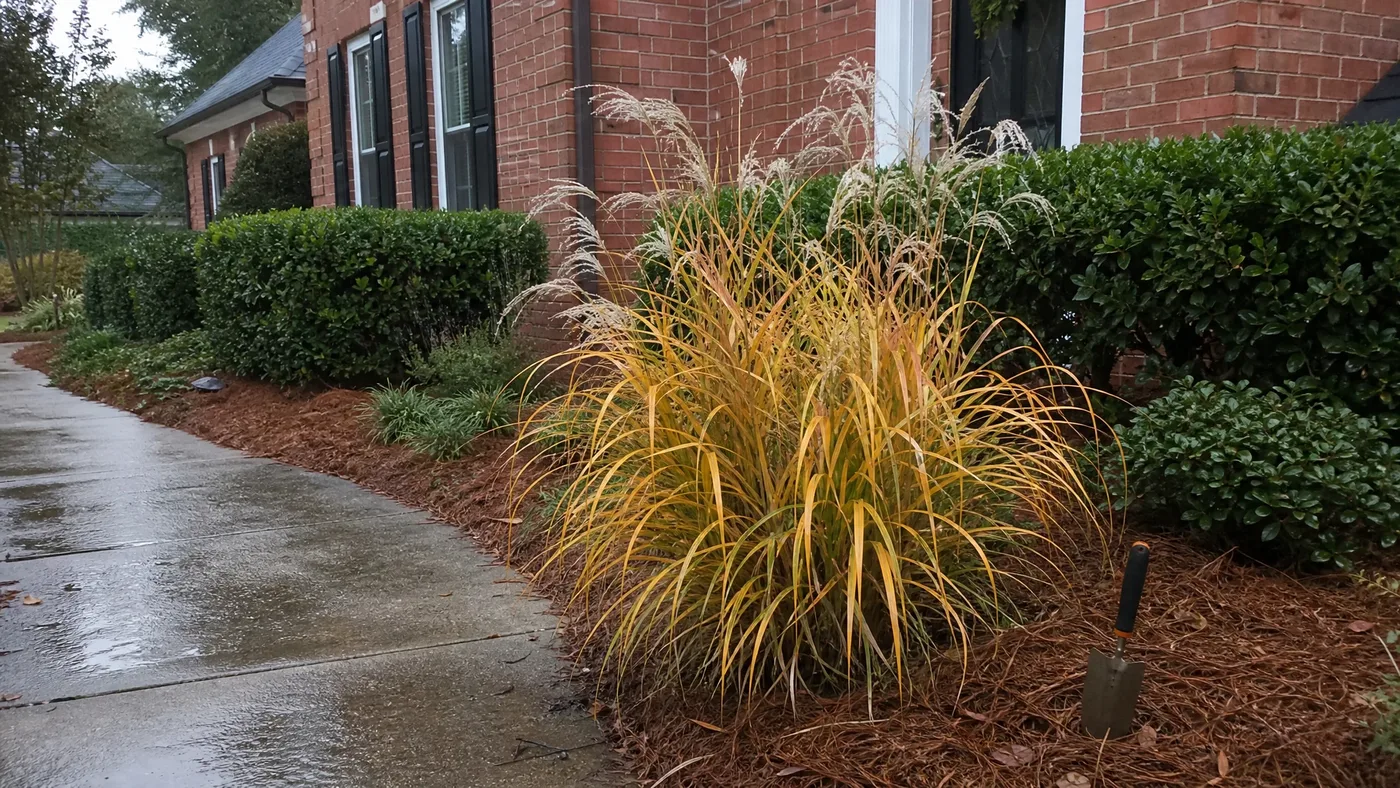
What Is the Botanical Name for Adagio Grass?
Plenty of shoppers type "Adagio" into a search box, click the first listing that says "maiden grass," and assume they bought the compact one. Often they didn't. Maiden grass is a whole species, and it runs from 4 to 12 feet tall depending on the cultivar.
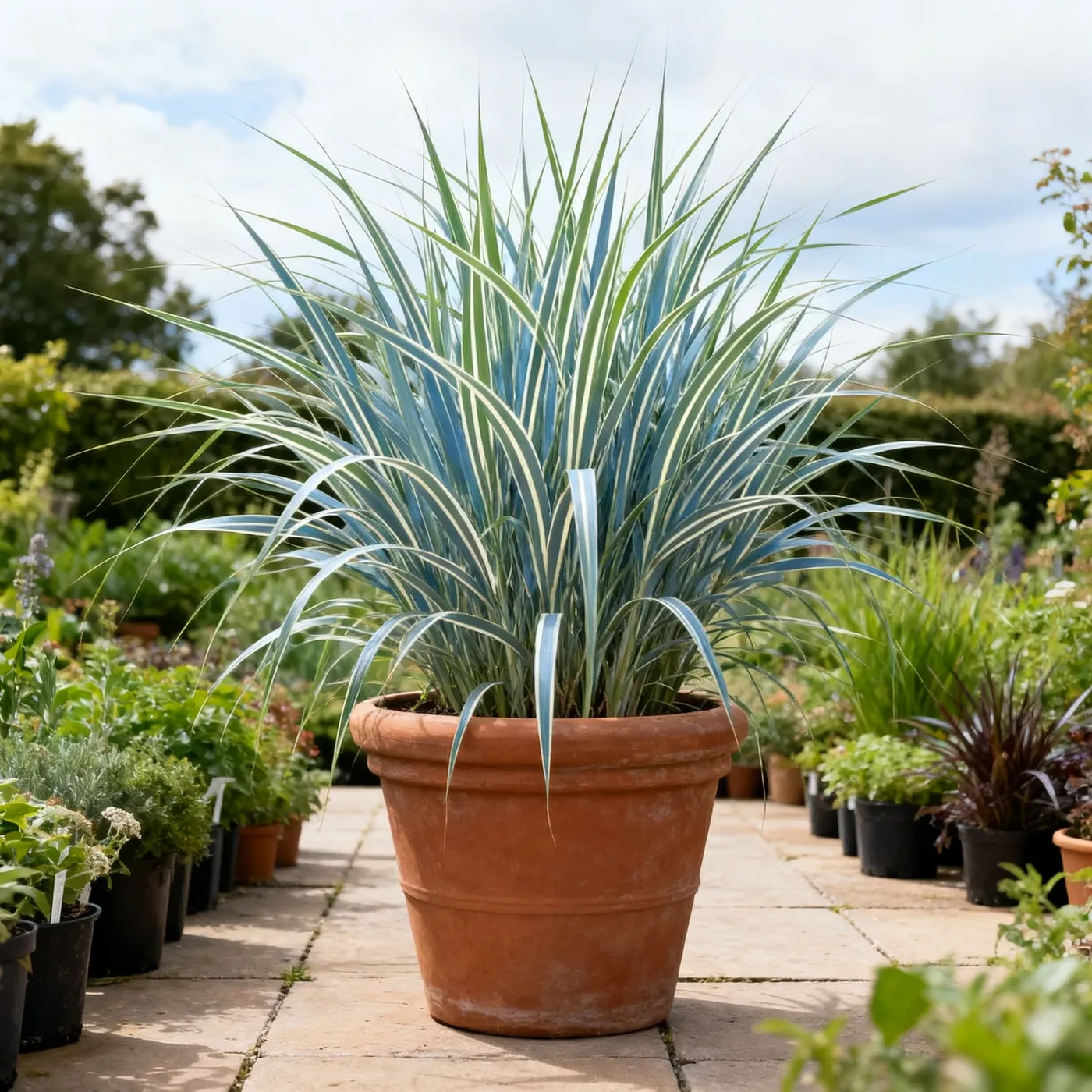
The botanical name settles that. It tells you which plant a nursery means, whatever the listing calls it. A bad match costs you a season of growing a clump that won't fit the spot you picked.
Below, you'll find out all about the botanical name of Adagio grass, including what each word in it means, how to read it on a tag, how it separates Adagio from other Miscanthus sinensis cultivars, and the checks that confirm you have the right plant.
The Botanical Name of Adagio Grass Is Miscanthus sinensis 'Adagio'
Here is the answer first, then the pieces that make it up. Once you can read the parts, every tag and catalog entry gets easy to check.
The Short Answer
The botanical name and the scientific name are the same thing. For this plant it is Miscanthus sinensis 'Adagio'. That is the full, formal name, and it is the one to look for on any tag.
It belongs to the grass family, Poaceae, and goes by the common name eulalia 'Adagio'. In the botanical world, "Adagio" never stands alone. It always hangs off the species name, and a listing that drops the species has told you less than you think.
What Each Part Means
The name works like a street address, moving from broad to specific. This table shows what each part does for Adagio.
| Rank | For Adagio | What it tells you |
|---|---|---|
| Family | Poaceae | It is a true grass. |
| Genus | Miscanthus | The group of ornamental silver grasses it belongs to. |
| Species | sinensis | The specific grass, native to China, Japan and nearby parts of East Asia. |
| Cultivar | 'Adagio' | The named selection with its own size, plumes and habit. |
Writing it correctly follows a few simple rules. The genus gets a capital letter and the species stays lowercase, and both are italic. The cultivar name gets a capital letter, single quotation marks and no italics. That is why you see 'Adagio' set apart on a good tag.
Why Adagio Is Not a Species
People often treat "Adagio" like a separate kind of grass. It isn't, and the name shows why.
One of the most common questions we get is whether Adagio is its own species. It is not. A cultivar is a selected form of a species, kept the same by dividing the plant rather than starting from random seedlings. Adagio only exists inside Miscanthus sinensis, which is why the species name must come before it.
Where the Name Places Adagio
Each rank above the cultivar tells you something real about how the plant lives. It helps to know what you inherit from the species and what you don't.
The species is an herbaceous perennial, deciduous ornamental grass native to Asia. That means the clump dies back each winter and regrows from the crown in spring. Adagio keeps that habit. What it changes is the scale. The species can reach 12 feet, while Adagio stays in the 3–5 foot range, so it suits spots where the full-size plant would swamp its neighbors.
The genus tells you the leaves are long, narrow and arching. The species tells you the plumes appear in late summer and hold into winter. The cultivar word tells you how big and what color. Read left to right, the name narrows from "a grass" to "this exact grass."
How to Read Adagio Grass Names on Tags and Listings
Tags and online listings write the name in a dozen slightly different ways. Use the steps below to cut through them.
Check the Name Step by Step
Work through these in order. Each one takes a few seconds, and together they rule out most mix-ups.
Step 1: Find the genus. It must read Miscanthus. A different genus means a different plant, however similar the picture looks.
Step 2: Find the species. It must read sinensis. A listing that stops at "Miscanthus" has not told you enough.
Step 3: Look for 'Adagio' in single quotes. If the cultivar is missing, you are looking at the plain species or an unnamed seedling.
Step 4: Compare the stated size. Adagio should be listed at about 3–5 feet tall, not 8 feet or more. Then set the common name aside. Use it for browsing, never for confirming.
Acceptable Spellings and Shortcuts
Not every variation is a problem. Some are just the ordinary shorthand that growers and catalogs use.
Dropped quotation marks are common in web listings, so Miscanthus sinensis Adagio is still the right plant. The genus is often shortened to M. sinensis 'Adagio' after the first mention. The common name eulalia 'Adagio' is also fine. What matters is that all three parts, genus, species and cultivar, are present and in that order.
Watch for the opposite problem too. A name like "Miscanthus Adagio" skips the species, and a name like "Adagio sinensis" scrambles the order. Both usually come from careless copying, but they are your cue to look harder at the rest of the listing.
Common Names That Cause Trouble
Common names are where most of the confusion starts, because one name covers many plants.
The species goes by the common name maidengrass, and you will also see eulalia and silver grass. Each of those covers every cultivar of the species. Our comparison of Adagio and maiden grass shows how far apart the sizes can be.
A piece of advice you will hear is to search by the common name you like and sort out details later. We don't follow it for this plant. Search and buy by the botanical name, because "maiden grass" can bring home something three times taller than you planned.
When a Listing Is Vague
Sometimes a listing gives you a common name and a photo and little else. Don't guess.
Ask the seller for the full botanical name, or for a photo of the tag. A seller who grows the plant can answer in one line. If the reply is a shrug or another common name, move on to a listing that states Miscanthus sinensis 'Adagio' outright.
How Adagio Differs From Other Miscanthus sinensis Cultivars
Adagio shares its first two name words with many other grasses. The cultivar word is where the real differences live.
Same Species, Different Plants
'Gracillimus', 'Morning Light' and 'Strictus' are all Miscanthus sinensis, exactly like Adagio. They differ in size, habit and look, and they are not interchangeable in a planting plan.
If you are weighing Adagio against the first of those, our guide to Adagio versus Gracillimus covers the practical differences. The point for tag reading is simple. Matching the species name proves almost nothing, and matching the cultivar proves nearly everything.
Adagio Compared With the Species
Adagio is also smaller and tidier than the species as a whole. The table below sets the two side by side.
| Trait | Species Miscanthus sinensis | 'Adagio' |
|---|---|---|
| Height | 4–12 feet | About 3–5 feet |
| Width | 4–6 feet | About 1.6–3.3 feet |
| Plume color | Gray or silver, pink, red or burgundy, white | Pink-tinged in summer, creamy white in autumn |
| Hardiness | Zones 4–9 | Zone 5a at the cold end |
The numbers come from different places. North Carolina State Extension gives the species 4 to 12 feet. For the species range, UF/IFAS lists zones 4 through 9.
Telling the Cultivar by Its Looks
A correct tag is the best proof, but the plant itself backs it up. Once it is growing, a few features separate Adagio from the species at a glance.
Adagio has long, narrow, gray-green leaves that arch and turn orange and yellow in autumn. The flower heads open pink-tinged in summer and age to creamy white. The species can bloom in gray, silver, pink, red or white, so a clump with deep burgundy plumes is not Adagio, whatever its tag says. Adagio can also be slow to establish, so a small clump in its first year is normal and not a sign of the wrong plant.
What the Name Does Not Tell You
A botanical name identifies the plant. It says nothing about how it behaves in your yard. For that, read the growing details separately.
Adagio wants full sun and well-drained soil, and it should be protected from excessive winter wet. Cut the dead foliage and old flowered stems in spring. Our hardiness zone guide helps you decide whether your winters suit it. Plant it, give it sun, and leave it alone.
Naming Mistakes That Put the Wrong Grass in Your Garden
Most wrong-plant stories trace back to a handful of habits. Here is what goes wrong and how to avoid it.
Five Mistakes to Avoid
Each of these looks harmless on the screen. Each can leave you with a grass that doesn't fit.
Mistake 1: Buying by the common name. A listing for "maiden grass" may be any cultivar of the species. In our rows, the plants that get mixed up are the ones sold under that name alone. Look for the quotes around 'Adagio' before you add anything to a cart.
Mistake 2: Accepting a name with no cultivar. Miscanthus sinensis on its own is the species, with its full 4–12 foot range. If the listing never says 'Adagio', ask the seller.
Mistake 3: Trusting the photo. Pictures get reused from one listing to the next. Check the written description against the traits above rather than the image.
Mistake 4: Assuming the zone from the species. The species is listed at zones 4 through 9, but that range belongs to the whole group. Check your own zone against the cultivar, not the species.
Mistake 5: Skipping local rules. North Carolina State Extension notes that the species is listed as invasive there, and that some cultivars are less weedy than others. Check your local extension service before you plant, and see our guide on whether Adagio is invasive for how it grows.
Your Last Check Before Buying
Run through this on any tag or listing, and you will catch nearly every problem before it ships.
Confirm that the genus reads Miscanthus, the species reads sinensis, and 'Adagio' appears as the cultivar. Confirm the listed mature height is around 3–5 feet. Look for pink-tinged summer plumes that fade to creamy white. Then check your zone with your local extension service. If every point holds, you have the right plant.
We label every Adagio we grow with its full botanical name, so the tag matches what you read here. For pot sizes and what to look for in the plant itself, see our buying guide.
Reading the Adagio Name Right Before You Buy
Miscanthus sinensis 'Adagio' is the botanical and scientific name, and each word narrows the plant down. The genus and species put it in the silver grass group, and only the cultivar word separates this compact clump from its much taller relatives. Check all three parts every time.
Adagio Grass
Nursery-grown Adagio Grass in sizes from 1 Gallon, shipped to your door.
From $31.97
Shop Now →Customers come back to us for Adagio because the clump they bring home stays the neat, compact size the tag promised. We grow it on our own farms, and a plant is only worth selling if the name on its tag is the plant in the pot.