Adagio Grass vs Maiden Grass: Size, Habit and Plumes
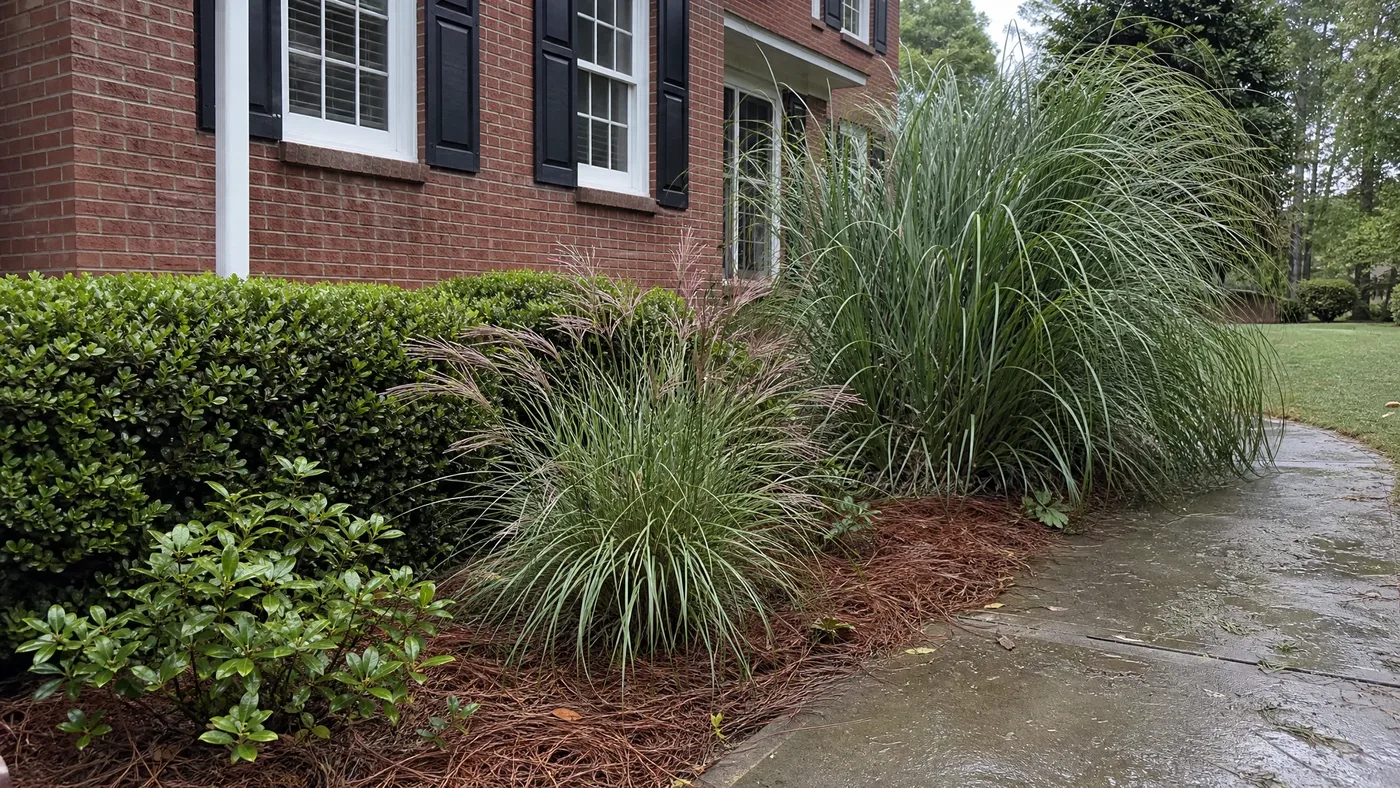
Pull a tape measure across a bed in late June and the number that matters is the width of the clump, not the height on the plant tag. Standard maiden grass runs 4 to 12 feet tall and 4 to 6 feet wide. A clump that size can swallow a path in one season, and that is how last year's tall grass ends up dug out with a shovel.
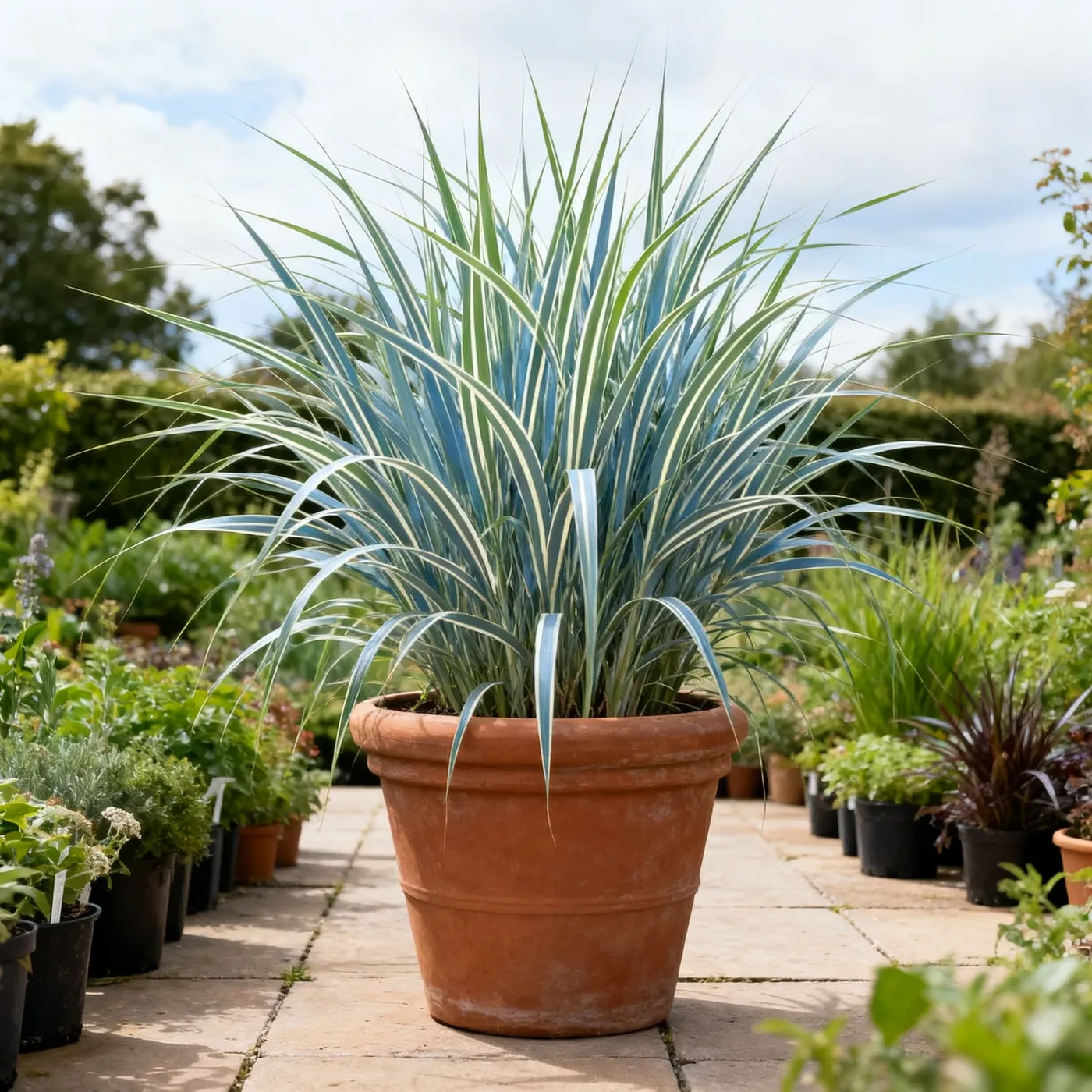
Adagio is the same species, Miscanthus sinensis, with the same arching leaves and feathery plumes. It simply asks for far less room, and it keeps its shape while it does.
This guide covers everything you need to know about choosing between Adagio and full-size maiden grass, from narrow beds and hot decks to windy corners, mixed borders, back screens and foundation plantings.
Fitting Adagio Grass Into a Narrow Side Bed
A side bed under three feet wide is where the size gap shows first, because width is what pushes a grass onto the walk. Start with the numbers.
Adagio grows 1 to 1.5 meters tall and 0.5 to 1 meter wide. The table converts that and sets it beside the species figures.
| Trait | Adagio | Standard maiden grass |
|---|---|---|
| Height | about 3.3 to 5 feet | 4 to 12 feet |
| Spread | about 1.6 to 3.3 feet | 4 to 6 feet |
| Habit | clump-forming, arching leaves | erect clump |
Run the arithmetic for a 3-foot bed. A standard clump at 4 to 6 feet wide overshoots by at least a foot, and that foot lands on your walkway. Adagio at its widest just fills the bed, and many clumps stay narrower.
Don't try to shear a big grass down to fit. Cutting leaves and stems in summer ruins the shape and the plumes, and the clump keeps pushing outward anyway. Pick the right size once and you never have to hack at it.
Where to Set the Crown
Placement inside the bed matters as much as the plant you pick.
Plant it toward the back of the bed. Set the crown near the fence or wall so the arching leaves lean over the front edge of the bed, not the path. In a bed closer to 2 feet wide, snip any stray blades in midsummer and you are done.
Keeping the Walk Clear Through the Year
A narrow bed has no spare room in any season, so the cutting schedule counts.
Remove dead foliage and old flowered stems in spring. Do that before new growth starts and the clump begins the year small and tidy, with nothing flopping over the walk. Our size and growth rate guide shows what to expect each year.
Adagio can also be slow to establish and takes 2 to 5 years to reach maturity. One of the most common questions we get is whether Adagio will catch up to the big grasses. It won't, and in a narrow bed that is the whole point.
Adagio Grass in a Pot on a Hot Deck
A sunny deck is hard on any container plant. Heat bounces off the boards, the pot dries fast, and a tall grass in a pot tends to tip over.
A compact clump handles all three better. Here is how to set it up.
Pot Size and Placement
Pick the container first, because a grass that outgrows it will fight you all summer.
Choose a heavy pot with drainage holes, clearly wider than the nursery container, and give it full sun. A full-size maiden grass wants a barrel-sized tub and still gets top-heavy. Adagio's modest height and 1.6 to 3.3 feet of spread sit comfortably in a large planter. Our container growing guide covers potting mix and repotting.
Watering Rhythm on a Hot Deck
Watering is the one chore a pot adds, so set a simple routine.
UF/IFAS rates the species' drought tolerance as moderate. In the ground that forgives a missed week. In a pot on hot boards it does not. Soak the pot until water runs out the bottom, then let the top of the mix dry a little before the next drink. In midsummer heat that can mean daily checks.
Skip the saucer that holds standing water. A mulch of bark or gravel on top slows evaporation, and that is about all the fussing this plant needs. Feed lightly, if at all.
Planning for Winter
Winter is the other pot problem, so decide early where the pot will spend it.
Hardiness ratings assume roots in the ground, and a pot freezes harder than soil. If you garden in a cold zone, move the container against a wall or into an unheated garage after the foliage browns.
Taming a Windy Corner With Adagio Grass
On an exposed lot, height decides whether a grass stands or sprawls. Stems act like sails, and the taller they are, the harder the wind pulls on the base.
How a Tall Clump Fails
Knowing the failure tells you what to fix.
A big maiden grass with stems well past 6 feet takes a summer storm badly. The species forms erect clumps, and that holds until wind and a heavy load of plumes tip the stems over. The clump opens in the middle, plumes hit the ground, and September becomes a job with twine.
Why Adagio Stays Upright
The compact clump wins here on simple leverage.
Adagio tops out at 3.3 to 5 feet. Shorter stems mean less leverage, so they hold their line through the same weather. Give it full sun and it keeps that habit. A corner that catches wind usually catches sun too, so the two fit together.
Plant it on the exposed edge on purpose. The foliage is narrow and the flowers are consistent through August, and narrow blades give the wind less to grab than a broad leaf would.
Go easy on feed. Rich soil and extra fertilizer push soft, leggy growth, and soft stems lean first. Adagio takes clay, loam or sand, so average, well-drained soil is plenty. If you already stake a tall grass every year, the stakes are telling you something. Replace it with Adagio and take them out of the shed for good.
A Mixed Border Where Plume Timing Counts
In a perennial border the question is not only size. It is also when the plumes open and what is blooming beside them.
Adagio Opens Early
Timing is where the dwarf grass earns a place in a planned color scheme.
Adagio has pink-tinged flower heads in summer that turn creamy white in autumn, and the flowers are consistent through August. That puts the plumes at mid-border height while summer perennials are still in flower, so they overlap with their neighbors instead of waiting behind them.
Full-Size Grasses Rise Above the Border
The taller selections play a different part in the same border.
In our rows, a tall maiden grass is a bigger presence than a border neighbor. Its plumes rise above everything else, which suits the back of a border and shades or hides the plants in front of it. If your border has low perennials up front, a tall grass can smother them by midsummer.
Pairing for a Handoff
The best border uses the grass to cover gaps between peaks.
Put Adagio near later bloomers such as fall asters, and the grass carries the border while they build color. Its leaves then turn orange and yellow in autumn, which takes over once the flowers fade.
Keep it away from the very front edge of a deep border. The arching leaves need a hand's width of clearance, and you will want to reach in to cut it back each spring. Our bloom timing guide has the details by month.
A Big Back Corner That Wants Full-Size Maiden Grass
Here is where we tell you not to buy the dwarf. A back corner with plenty of room is a job for the big grass.
When the Full-Size Grass Wins
Some jobs are about height, and only height will do them.
If you need a screen against a neighbor's fence, a backdrop for a bed, or a living wall at the end of a long lawn, Adagio will not deliver. At 3.3 to 5 feet it never reaches the height. The species is a medium-large upright ornamental grass, and that scale is what a screen needs.
The common advice says to buy the compact one to be safe. We disagree. A small grass in a spot built for a large one just looks lost, and you lose the very thing you wanted.
Two Checks Before You Buy
Big grasses carry a few responsibilities that the dwarf does not.
Read the tag. Maiden grass covers many cultivars, and heights run from the 4 feet at the low end of the species range to 12 feet. Choose a named tall form for a screen, and give it the full 4 to 6 feet of width so it never crowds the fence.
Check your local rules. NC State lists the species as invasive in North Carolina, and wind-spread seed is part of the reason. Ask your local extension service before planting a large clump near open land or a natural area.
Also check your zone. NC State lists the species for zones 5a through 9b, UF/IFAS gives 4 through 9, and Adagio is listed at 5a. In the coldest gardens, confirm the tall form you pick is rated for your winters.
Foundation Planting Under a Low Front Window
Under a window, the grass must stay below the glass line, or you will be looking through a haystack from inside the house.
Measure from the ground to the window sill before you buy anything. If the sill sits at 3 feet, even Adagio's 3.3 to 5 foot height will cover some glass, so you may prefer a spot beside the window rather than under it. If the sill is higher, Adagio fits. A full-size clump never will.
Setting the Distance From the Wall
Distance is the part people get wrong, since arching leaves need somewhere to go.
Set the crown at least half the mature spread from the wall, which is close to 1.7 feet for the widest Adagio. Closer, and the leaves press on siding or brick and air has nowhere to move. Beneath an eave, rain may not reach the soil, so check moisture there often in the first seasons.
Spacing Along the House
For a run of plants, work from the mature width rather than the pot size.
Space them so the clumps just touch at maturity, and no more. Our spacing guide gives distances for borders and mass plantings. Because Adagio is slow to fill, plant odd-numbered groups of three or five for a quicker effect, and mulch the gaps for now.
Cut the clumps back each spring so the new leaves start fresh below the sill line. Then leave them alone.
What These Yards Say About Adagio Grass and Maiden Grass
Choose by site, not by taste. For a narrow bed, a deck pot, a windy lot or a low window, Adagio Grass fits and stays upright. For a deep back corner that needs a screen, full-size maiden grass earns its space. In a mixed border, let plume timing decide. After planting, the Adagio Grass care guide covers the rest.
Adagio Grass
Nursery-grown Adagio Grass in sizes from 1 Gallon, shipped to your door.
From $31.97
Shop Now →Before you buy either, stake out the mature width with a hose or string and leave it on the ground for a week. As a small grower with our own farms, we raise top-quality ornamental grasses, and nothing frustrates us more than a customer digging out a giant that was never meant for the spot, so we would rather help you match the clump to the space the first time.