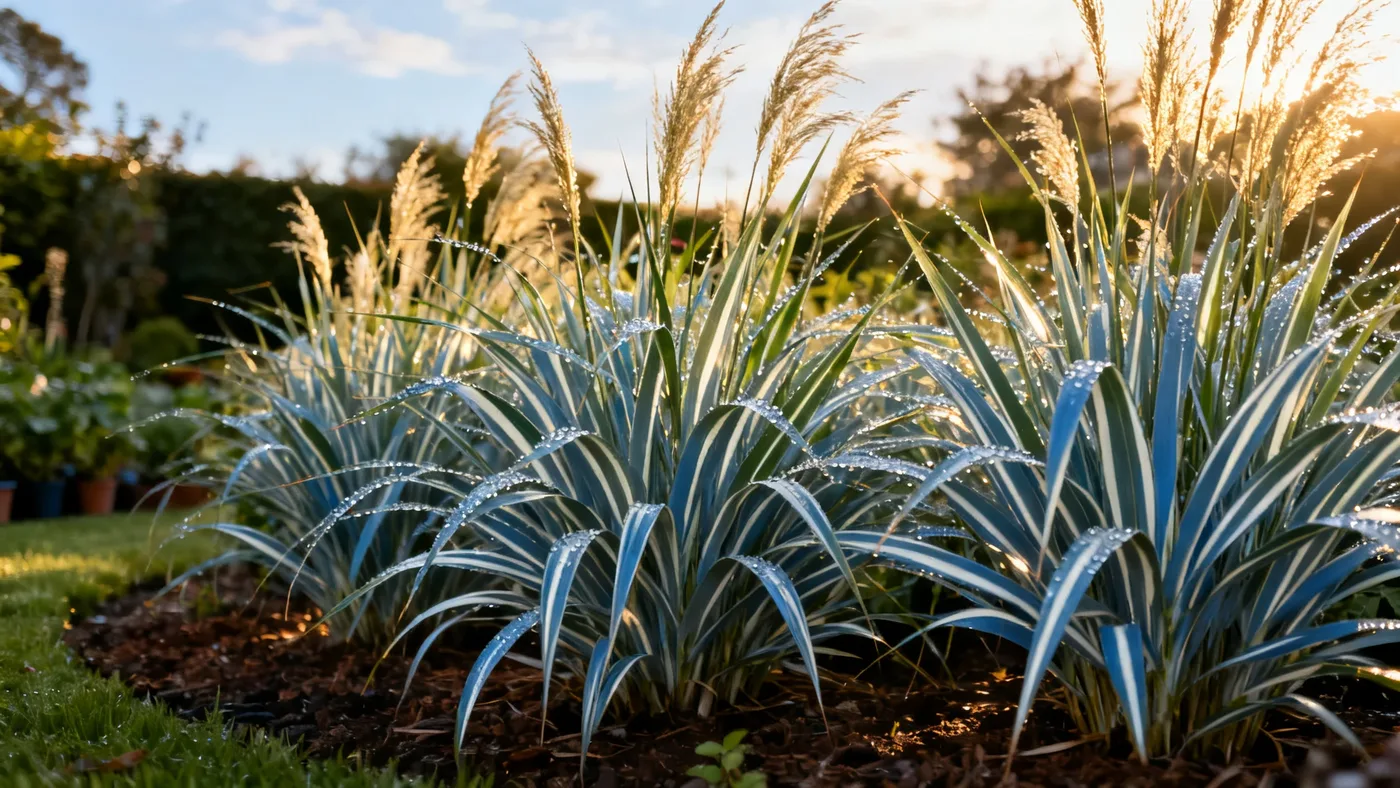
Sun Requirements for Adagio Grass: Full Sun vs Shade
Adagio Grass is an ornamental grass that brings structure and movement to the garden, but like most grasses, it has preferences about light. If you're wondering whether your shaded corner can host this plant or whether you need bright conditions, this guide will help you make the right choice for your space.
Does Adagio Grass Need Full Sun?
Yes and no. Adagio Grass performs best in full sun, where it reaches its full potential. Full sun means at least 6 to 8 hours of direct sunlight each day. In these conditions, the plant develops its characteristic plumes reliably, maintains dense foliage, and shows its blue-green blades with distinctive white midribs at their best.
That said, Adagio Grass tolerates light to partial shade. The word "tolerates" matters here: the plant will survive and grow in shadier spots, but you may notice differences in flowering and overall habit compared to a full-sun specimen. Understanding these trade-offs helps you decide whether a partially shaded location will work for your garden plan.
How to Assess Your Yard's Light Exposure
Before planting, spend a few days observing your chosen location. Light exposure varies by season, time of day, and nearby structures or trees.
- Track sunlight throughout the day. Note when direct sun hits your planting area. Mark the time when shadows first fall across the spot and when they clear. Full sun exposure means at least 6 to 8 hours of direct sun; partial shade typically means 3 to 6 hours.
- Check the season. Winter sun angles are lower than summer angles. A spot that receives plenty of afternoon sun in June may be shaded in November when deciduous trees are bare. Conversely, trees leafed out in July can create deep shade that wasn't there in spring. Observe at both ends of the growing season if possible.
- Consider reflected heat. South or west-facing sites reflect warmth off pavement or buildings, which can intensify sunlight in that area. East-facing sites get morning sun but afternoon shade. North-facing areas typically receive only indirect light.
- Assess dappled vs solid shade. If tree canopy filters sunlight throughout the day, that's dappled or dapple shade. Adagio Grass may tolerate this better than solid shade from a building wall or dense shrubs.
- Walk the site after peak heat. Visit during late afternoon to see whether the area feels protected from intense western sun or baked by it. This helps you understand whether the site offers relief for the plant during very hot spells.
Planting Adagio Grass in Full Sun
Full sun is the ideal choice for Adagio Grass. Here's what you can expect and how to set up your planting area.
What to Prepare
- A location receiving 6 to 8 hours of direct, unobstructed sunlight
- Well-drained soil (the plant adapts to most soil types, including clay, as long as drainage is adequate)
- Spacing of 24 to 36 inches from neighboring plants
- Optional: compost or a light balanced fertilizer for spring planting
Expected Results in Full Sun
In full sun, Adagio Grass develops into a dense, well-formed clump. The foliage reaches a mature height of approximately 2.5 to 3 feet, with plumes extending the plant to 3.5 to 4.5 feet in late summer and fall. The narrow, fine-textured blue-green blades display their white midribs clearly, creating a soft, silvery appearance. Bloom time typically falls between August and October, depending on your climate, producing coppery-pink to silvery-pink plumes that age to silvery-white or tan.
The plant grows at a moderate rate, adding roughly 6 to 12 inches of new growth per year until it reaches full clump size in 2 to 3 years. This means a nursery-grown starter in a quart or #1 container will fill in noticeably by its second season.
Growing Adagio Grass in Partial Shade
If your yard has only a partially shaded spot available, Adagio Grass can still work for you, though results differ from full-sun conditions.
What Changes in Partial Shade
- Flowering may be reduced or delayed. Blooms appear later in the season or less profusely than in full sun. Some gardeners in shadier conditions report fewer plumes overall.
- Foliage may be less dense. The clump may not fill in as thickly, and the blue-green color may appear slightly muted compared to plants in full sun.
- Plant height may be shorter. While the plant will still reach close to its mature size, it may stretch slightly toward available light rather than forming a compact mound.
- Growth may be slower. The plant will eventually reach full size, but the timeline may extend beyond 2 to 3 years.
How to Maximize Success in Partial Shade
If you choose a partially shaded location, give the plant as much light as your garden allows. Site it on the eastern edge of shade so it catches morning sun, or beneath high tree canopy where dappled light filters through all day rather than in the solid shade of a building's north wall.
Ensure excellent drainage in a shaded spot. Shade plus moisture retention increases the risk of fungal issues. Adagio Grass adapts to most well-drained soils, including clay, but avoid planting in poorly drained, compacted soil, especially where shade reduces air circulation.
A light feeding in spring supports growth in less-than-ideal light. A balanced slow-release fertilizer or a compost topdressing helps fuel the plant's moderate growth rate without forcing soft, floppy new growth that shade-grown plants are prone to.
Common Mistakes and Light-Related Problems
Planting in Too Much Shade
The most common mistake is underestimating how much shade a location receives. Many gardeners measure shade in winter and plant in spring, then discover in summer that the site is much darker than expected. Observe your garden over time and choose a spot with at least 6 hours of direct sun for reliable flowering.
Confusing Partial Shade with Part Sun
Industry definitions can be confusing. Part sun generally means 3 to 6 hours of direct sun, while partial shade means the same. Adagio Grass tolerates this range, but full sun (6 to 8 hours or more) remains ideal. If you're on the fence between two locations, the sunnier one is the safer choice.
Expecting Full Results in Shade
Don't plant Adagio Grass in a shaded spot and then worry that it's not flowering well by midsummer. The plant adjusts gradually to its environment. It may take a season or two to see the full impact of light (or lack thereof) on flowering and form. Be patient, and avoid over-fertilizing, which causes floppy growth regardless of light conditions.
Overlooking Reflected Heat in Full Sun
In hot climates or areas with intense afternoon sun, a site with some afternoon shade may actually extend the plant's visual appeal into fall. Reflected heat from pavement or south-facing walls can stress ornamental grasses. If your site bakes all afternoon, afternoon shade from trees or structures can be beneficial.
Light Needs and Your Growing Zone
Adagio Grass thrives in USDA hardiness zones 5 through 9. Sun requirements remain consistent across this range. Whether you're in zone 5 (cooler climates with shorter growing seasons) or zone 9 (longer, hotter summers), full sun remains the recommendation. In colder zones, full sun helps the plant mature and harden off for winter. In warmer zones, full sun supports flowering without sacrificing the plant to heat stress, especially if the site has good air circulation.
Integrating Adagio Grass into Your Garden Design
Once you've chosen a sunny location, consider companion plants that share the same light requirements. Adagio Grass combines well with other full-sun lovers like Sedum, Rudbeckia, Echinacea, and Russian sage. These companions create balanced texture and extend bloom time from summer into fall.
For design and detailed growing guidance, see the complete growing guide for Adagio Grass, which covers planting, spacing, seasonal care, and division.
Quick Reference: Sun Requirements for Adagio Grass
| Light Condition | Daily Sun Hours | Expected Results | Best For |
|---|---|---|---|
| Full Sun (Ideal) | 6-8+ hours direct sun | Dense clump, reliable plumes Aug-Oct, vibrant blue-green foliage, moderate growth (6-12 in/year) | Primary choice for all zones 5-9 |
| Part Sun / Partial Shade | 3-6 hours direct sun | Reduced flowering, lighter foliage color, slower growth, open form | When full sun is not available; use afternoon shade in very hot areas |
| Shade (Not Recommended) | Less than 3 hours direct sun | Little to no flowering, thin foliage, stretched growth, poor ornamental value | Not suitable; choose a different plant |
Sun Checklist Before Planting
- [] Observed the site for at least 2-3 days at different times of day
- [] Confirmed 6 to 8 hours of direct sunlight in summer conditions
- [] Checked that tree canopy won't cast heavy afternoon shade by July
- [] Verified well-drained soil (no standing water after rain)
- [] Measured spacing: 24 to 36 inches from neighboring plants
- [] Noted bloom time expectations for your zone (typically August-October)
- [] Confirmed you're planting in zone 5-9