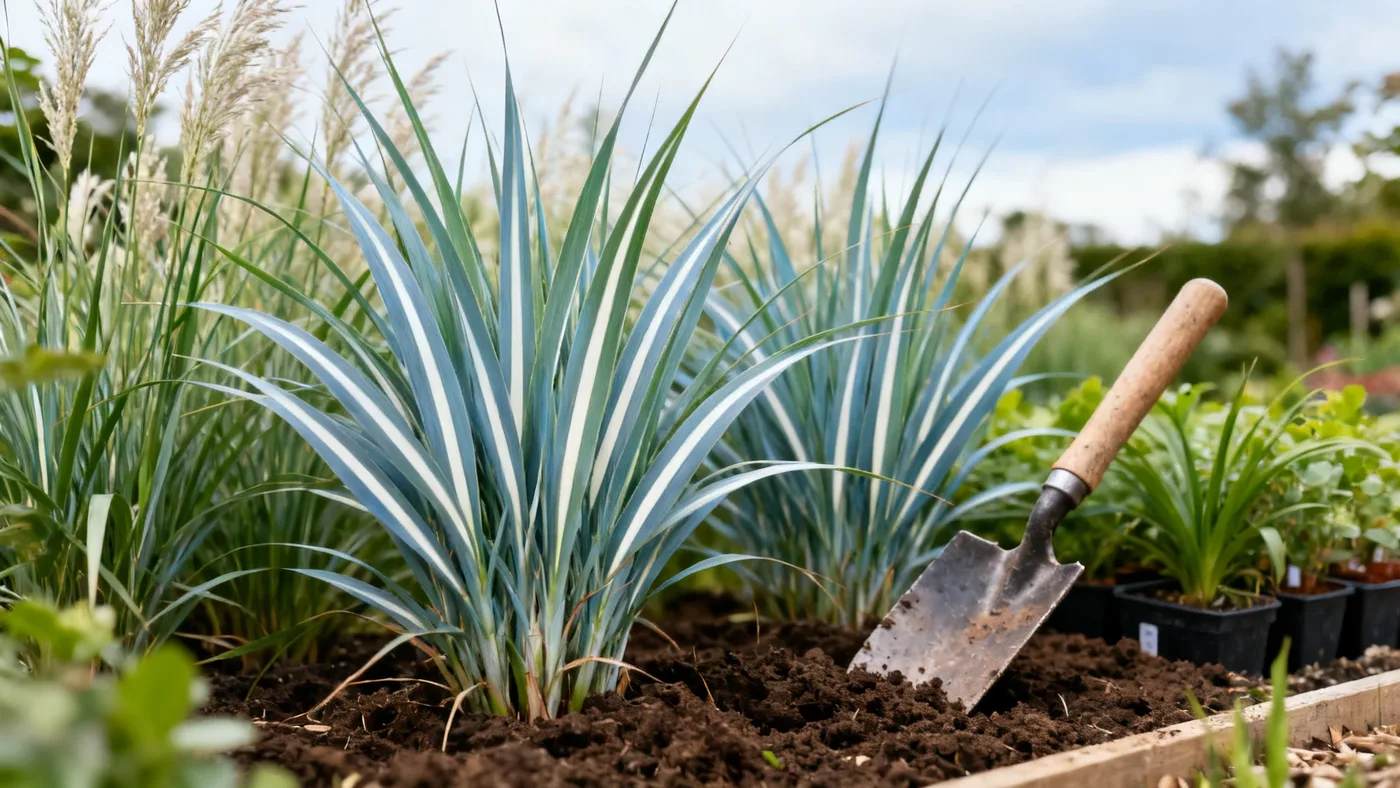
Watering Adagio Grass: From New Planting to Maturity
Getting watering right is one of the most important things you can do for Adagio Grass (Miscanthus sinensis 'Adagio'). Even though this ornamental grass is moderately drought tolerant once established, the first year is critical. A newly planted clump needs consistent moisture to develop a strong root system. Once it's settled in over 2 to 3 years of growth, you can back off and let it handle dry spells on its own. This guide walks you through exactly how much water your Adagio Grass needs at every stage, when to apply it, and how to adjust based on your climate and soil.
What You'll Need
Before planting, gather these materials to set yourself up for successful watering:
- Soaker hose or drip irrigation line (preferred over overhead sprinklers)
- Garden hose with a gentle spray nozzle or watering wand
- Mulch such as wood chips, compost, or straw (2 to 3 inches deep)
- Moisture meter or your finger (to check soil dampness at 3 to 4 inches deep)
- Watering can (useful for container-grown plants or spot watering)
- Rain gauge (optional, but helpful for tracking rainfall)
Watering Adagio Grass in Year One: Establishing Deep Roots
The first growing season determines whether your Adagio Grass thrives or struggles. Even though the mature plant tolerates moderate dryness, a newly planted clump must have regular moisture. Aim to keep the soil consistently moist, not soggy, for the first 12 months. Here's how:
Step 1: Water Immediately After Planting
Right after planting, water your Adagio Grass thoroughly. Spring is the preferred planting season, and a deep soaking means water reaches 6 to 8 inches down into the root zone. This settles soil around the roots and removes air pockets. Do this even if rain is forecast. One good soaking right after planting establishes solid root-to-soil contact and jump-starts the establishment process.
Step 2: Water Every 2 to 3 Days for the First Month
During the first 4 weeks after planting, water every 2 to 3 days if there's no significant rainfall (0.5 inches or more counts as significant). Each watering should deliver 0.5 to 1 inch of water. A soaker hose run for 20 to 30 minutes usually delivers this amount, though water pressure varies. If you use an overhead sprinkler, run it until the soil 1 to 2 inches down is damp. After rainfall, check the soil 3 to 4 inches down. If it's still moist, skip your next watering and check again the following day.
Step 3: Stretch Out Waterings During Weeks 5 Through 12
As your Adagio Grass enters its second month and beyond, the roots are working deeper into the soil. You can now space out waterings to every 4 to 5 days if the top 3 to 4 inches are dry to the touch. Each watering still delivers 0.5 to 1 inch. The goal here is to encourage deep rooting, not daily surface wetting. Sandy soils may need watering more frequently. Clay soils hold moisture longer, so you may stretch intervals even further. Use a moisture meter or your finger test to decide, not a calendar.
Step 4: Maintain Steady Moisture Through Summer and Fall
From month 4 onward through the end of the growing season, water whenever the top 1 to 2 inches of soil feel dry. In most climates, this means watering once a week to every 10 days, depending on rainfall and temperature. Zones 5 to 7 with dry summers typically need this frequency. Zones 8 to 9 with summer heat and humidity may need watering more often in peak heat but less during rainy periods. Don't rely on a watering schedule. Check soil moisture, and water when needed. This is the most reliable approach across all regions and soil types.
Step 5: Apply Mulch Soon After Planting
Mulch is your silent partner in water management. Apply 2 to 3 inches of mulch around the base of your Adagio Grass clump shortly after planting. Keep mulch a few inches away from the stem to prevent rot and pest issues. Mulch moderates soil temperature, reduces evaporation by up to 30 percent, and keeps the root zone more consistently moist. This single step can cut your watering frequency significantly.
Watering Mature Adagio Grass (Year 2 and Beyond)
Once your Adagio Grass has spent 12 months in the ground and is reaching its full mature size of 3 to 4 feet tall and 2.5 to 3.5 feet wide, watering becomes much easier. This is when Adagio Grass truly shows its drought tolerance strength.
Step 1: Reduce Watering Frequency Significantly
An established Adagio Grass clump needs supplemental water only when the soil is dry several inches down. In most climates, this means watering every 7 to 14 days during the growing season, spring through early fall. Zones 5 to 6 with reliable rainfall may only need a few supplemental waterings after spring. Zones 8 to 9 in hot, dry climates will need more frequent watering but still far less than the first year. The plant's deep, established root system can access water that surface watering never reaches.
Step 2: Let Rain Do the Work
During rainy periods, skip supplemental watering entirely. Adagio Grass prefers moist but not waterlogged soil, so avoid adding water if natural rainfall is regular. Check that the soil isn't soggy or sour-smelling. If rain is falling weekly or more, your only job is to let nature handle it.
Step 3: Water During Extreme Heat or Drought
When a heat wave or unusual dry spell hits, increase watering to every 7 to 10 days if the plant shows wilting or the soil is bone-dry several inches down. Once normal conditions return, scale back again. Mature Adagio Grass is resilient, but a few targeted waterings during extreme stress keep the plant looking vigorous and full, especially if you want strong flowering in late summer.
Tips for Success
Soaker Hoses Beat Overhead Sprinklers
Soaker hoses and drip lines deliver water directly to the root zone where it's needed. They waste far less than overhead sprinklers and keep foliage dry, which reduces fungal disease risk in humid climates. If you're watering multiple plants, a drip system with timers saves both water and time.
Water in Early Morning
Watering before 10 a.m. gives water time to infiltrate before midday heat. If evening watering is your only option, do it early enough that foliage dries before dark. Wet foliage overnight invites mildew and rust, especially in humid regions.
Clay Soil Needs Fewer Waterings
Adagio Grass adapts to clay, but clay holds water much longer than sandy soil. If you're planting in heavy clay, increase the interval between waterings by several days compared to loamier soils. A moisture meter is invaluable here, so you don't accidentally overwater in clay and invite root rot.
Keep Mulch Away From the Crown
Never pile mulch against the base of the grass clump. Keep mulch 3 to 4 inches back from the stem. Mulch in contact with the crown traps moisture and invites rot, particularly in humid climates or wet seasons.
Don't Fertilize to Compensate for Dry Spells
Adagio Grass is a light feeder. If you add extra fertilizer during a drought, you won't help the plant. In fact, excess fertilizer encourages soft, floppy growth that wilts more readily. Water is your only answer when drought stress appears.
Expect Slow Spring Emergence
One surprise that catches many gardeners: Adagio Grass often looks completely dead in early spring. New growth may not appear until late April or even May in cooler zones. This is normal. The plant needs warm soil before it breaks dormancy. Don't assume your clump died over winter or wasn't watered properly. Patience and light watering in early season are all that's needed. By early summer, growth accelerates and the clump fills out visibly week to week.
Common Mistakes to Avoid
- Watering every day in year one. This encourages shallow rooting and weak plants. Water deeply and less frequently instead.
- Overhead watering in humid climates. Wet foliage invites rust and fungal diseases. Soaker hoses are worth the small investment.
- Assuming the plant is dead in spring. Adagio Grass wakes up late. Wait for consistent warmth before giving up.
- Overwatering mature plants. Once established, less water often means a healthier, stronger plant with less flopping.
- Ignoring soil texture. Sandy soil needs more water; clay soil needs less. Test the soil, don't guess.
Expected Results When Watering Correctly
With proper watering, your Adagio Grass should show these signs:
- Visible new growth within 4 to 6 weeks of spring planting
- Healthy blue-green to gray-green foliage with a distinct white midrib throughout the season
- Steady clump expansion, reaching roughly 6 to 12 inches of new growth per year until reaching full mature size in 2 to 3 years
- Coppery-pink to silvery-pink plumes appearing in late summer to fall (typically August to October, depending on zone)
- Greatly reduced watering needs after year one, with only occasional supplemental water needed during dry spells
For more detailed care information beyond watering, see the complete growing guide for Adagio Grass.
Quick Reference: Watering Schedule by Growth Stage
| Growth Stage | Watering Frequency | Soil Moisture Target | Signs of Underwatering |
|---|---|---|---|
| Year 1, Weeks 1-4 (First Month) | Every 2-3 days | Consistently moist throughout root zone | Drooping foliage, slow growth, wilting in afternoon heat |
| Year 1, Weeks 5-12 (Deep Root Development) | Every 4-5 days | Moist 3-4 inches deep; drier at surface | Leaf tips wilting, foliage curling, slower growth rate |
| Year 1, Months 4-12 (Summer Through Fall) | Every 7-10 days as needed | Moist 1-2 inches down | Visible wilting, reduced plume development, yellowing tips |
| Year 2 and Beyond (Established) | Every 7-14 days or during dry spells | Moist but not waterlogged; allow some drying between waterings | Persistent wilting in peak heat; yellowing or browning foliage |