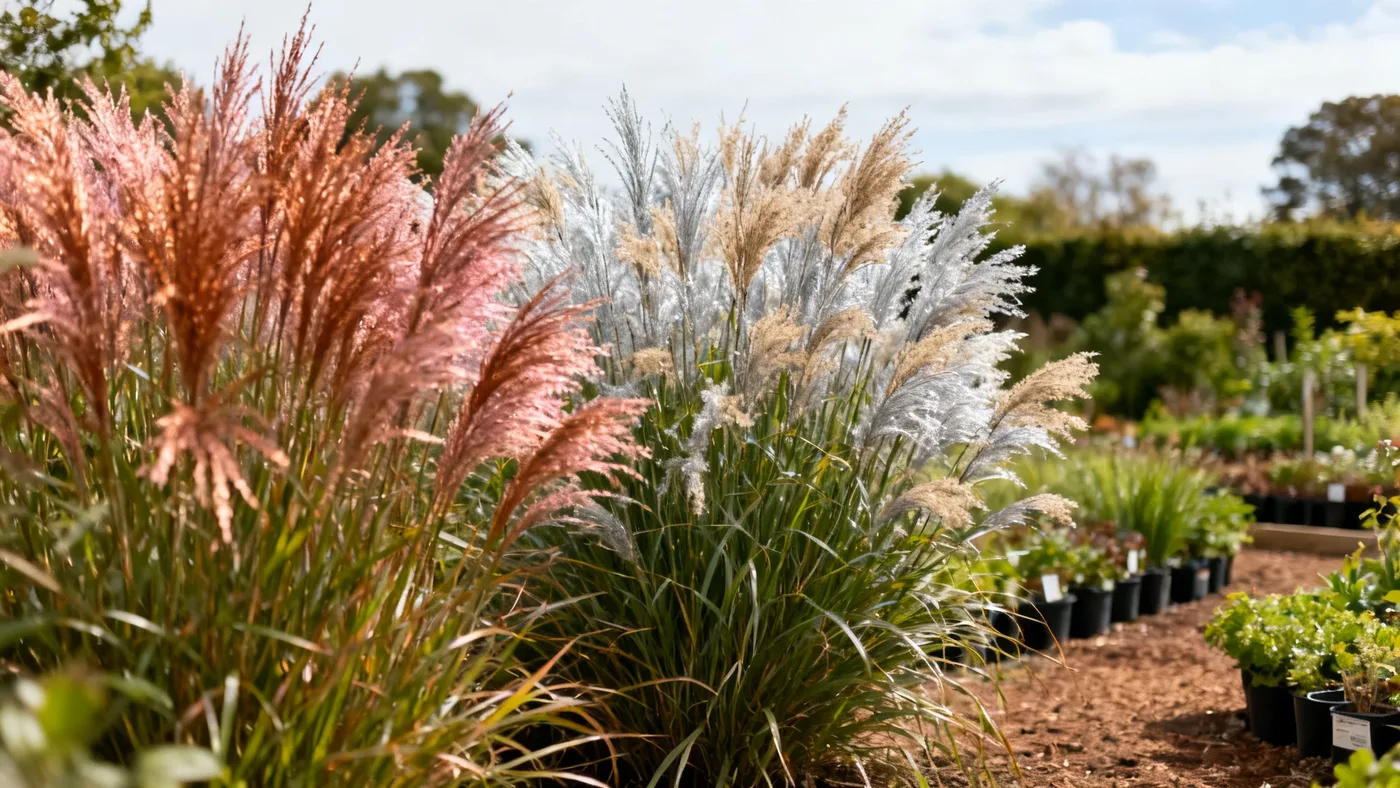
Adagio Grass Fall Color: What to Expect in Autumn
If you planted Adagio Grass this spring or added it to your border last year, autumn is when you'll see one of its standout features. Right now, in late September and October, Adagio Grass is transforming from its summer green into a warm tan and bronze display, topped with plumes that shift from coppery-pink to silvery-white. This is no minor color shift. For a dwarf ornamental grass, the fall performance is one of the strongest reasons gardeners reach for this cultivar over its taller cousins.
This article walks you through exactly what to expect, when to expect it, and how to get the most from your grass as the season moves toward winter.
What Color Does Adagio Grass Turn in Fall?
Adagio Grass does change color in fall, though the shift is less dramatic than a deciduous tree and more subtle than many perennials. The change happens in two parts: foliage and plumes.
The foliage, which starts the season as blue-green to gray-green with a distinctive white midrib running through each blade, gradually shifts to tan and golden bronze as temperatures drop. This is a slow warm that unfolds over several weeks, not an overnight change. By late October and early November in zones 5-7, the entire clump reads as warm bronze. In warmer zones (8-9), the shift may be less pronounced, sometimes staying more tan with hints of gold.
The plumes are the real show. They emerge in late summer as coppery-pink flowers, very soft and feathery. As fall progresses and temperatures cool, these plumes age to silvery-white or silvery-tan. Some gardeners see hints of blush or pale pink lingering into November. The dried plumes persist through winter, providing structure and interest even after the foliage has weathered and dulled. Unlike fresh plumes, which are delicate and nearly translucent, the aged plumes become more opaque and catch light differently, creating a subtle shimmer in morning frost.
The Timeline: When Autumn Color Appears
Timing varies by region, but the pattern holds across zones 5-9.
In zones 5-6 (cold climates), look for the foliage shift to begin in early September and reach peak color by mid-October. Plumes finish their color transition by late October. The entire display is typically at its best from late September through November.
In zones 7-8 (mid-range), the shift starts a week or two later, usually mid-September, with peak color from late October into November. The cooler nights of October accelerate the color change, so a warm September may delay visible bronze until October arrives.
In zones 9 (warmest range), the color change is subtler and may not begin until late October. Golden bronze is less pronounced than in cooler zones, but the silvery plumes still show and provide autumn interest.
One caveat: if your region experiences an early hard frost (below 28°F), the foliage may brown more aggressively and lose some golden tone. A more gradual cooling preserves the warm bronze longer.
Maximizing Fall Color and Plume Display
Not all Adagio Grass plantings color equally. Site and care make a real difference.
Full sun is non-negotiable. Adagio Grass planted in part shade will still turn color, but the display is muted. The foliage remains more olive-tan, and the plumes are smaller and less vibrant. If your grass is in light afternoon shade, you will see a difference compared to a plant in 6+ hours of direct sun. Full sun doesn't just intensify the color; it also strengthens the plant's ability to produce dense, upright plumes that hold their structure through fall.
Hold off fertilizing in late summer. A light balanced fertilizer in spring is fine, and Adagio Grass is a light feeder. But a heavy nitrogen boost in August or September causes soft, floppy growth that delays color shift and produces fewer, weaker plumes. If you haven't fertilized since spring, you're likely in good shape. If you're tempted to tidy up or boost the plant in late summer, resist it. The plant knows what it's doing.
Keep irrigation moderate in September. Once established, Adagio Grass is moderately drought tolerant and doesn't need frequent water. In fact, a drier September can actually deepen color shift slightly. That said, don't let it stress severely. If you're in a drought, a thorough soaking every 10-14 days is fine. Soggy soil in fall invites rust, a fungal disease that's more common in humid climates and can dull foliage and weaken plumes.
Staking is rarely needed, but grouping helps. A single mature clump of Adagio Grass (reaching 3 to 4 feet tall when plumes are included) is compact and sturdy. If you've planted a group of three or more, the plumes can gently lean on one another, which is natural and attractive. Staking looks artificial and interferes with how the plant moves with wind.
Pairing Adagio Grass with Fall Perennials
Adagio Grass's fall color makes it a natural anchor in mixed perennial borders during autumn. Its tan foliage and silvery plumes play beautifully against the deeper tones and brighter blooms of nearby plants.
Sedum and Hylotelephium reach peak color in fall, often turning deep red or burgundy. A clump of sedum next to Adagio creates striking contrast: the sedum's dark, dense form against the grass's airy, tan structure. Rudbeckia (black-eyed Susan) and Echinacea (coneflower) both flower well into fall and their warm yellows and pinks echo the grass's coppery-pink plume stage. Russian sage (Perovskia) keeps its silvery-green foliage and fine texture, mirroring the grass's delicate aesthetic. Asters bloom in October and November, and their small purple, pink, or white flowers work as accents rather than competitors.
Ornamental sedges (Carex) complement Adagio Grass without competing. If you're building a fall-focused border, think in layers: Adagio at mid-height with dense sedums and asters in front, and a backdrop of any late-blooming perennials or evergreen shrubs that hold dark foliage.
Common Fall Questions About Adagio Grass
Should I cut it back in fall? No. Do not cut back Adagio Grass in fall. Leave the dried foliage and plumes standing through winter. They provide structure, winter interest, and shelter for birds and small wildlife. Cut the entire clump back to 4 to 6 inches above ground in late winter or early spring, just before new growth emerges. In most of zones 5-9, this means March or early April. Cutting too early in winter can invite frost damage to the new shoots.
Why are some plumes smaller than others? If your grass is in its first or second year, plume production builds over time. A newly planted quart-sized starter reaches full mature size and begins flowering well in its second or third growing season. If your plant is mature (3+ years old) and plumes are sparse, lack of sun or overfertilizing are the likely culprits. Otherwise, small plumes can be normal if the plant is recovering from stress or if it's in a location with afternoon shade.
Can I cut plumes for arrangements? Yes. Cut fresh plumes in late August or early September while they're still coppery-pink and at their most delicate. They dry beautifully and can last for weeks indoors. Cut from the base of the stem and strip the lower foliage before conditioning. For dried arrangements, let them stand on the plant until they fully age to silvery-white (October), then cut and use them directly or let them dry further indoors.
How do I prevent rust or leaf blight? Rust is occasional in humid climates and more common in fall. Avoid overhead watering and water at the base of the plant early in the day. Space clumps so air flows between them. If you notice reddish or brownish spots on foliage, remove affected leaves or, if severe, cut the plant back early (while still leaving winter interest). Leaf blight is rare on Adagio and typically only appears if the plant is severely stressed or in waterlogged soil.
Fall Maintenance and What NOT to Do
Fall is a low-maintenance season for Adagio Grass if you follow one simple rule: leave it alone.
Do not cut back, do not deadhead spent plumes, and do not remove brown foliage to "clean it up." That brown and tan foliage is the point. The aged plumes catch every angle of light differently and will be your most interesting feature from November through February. Cutting destroys that display and removes the shelter provided to insects and birds overwintering in the clump.
Do remove fallen leaves and debris from nearby trees that accumulate heavily on the grass. A light dusting is fine, but thick mats of oak or maple leaves can mat down the foliage and trap moisture, inviting rot. Gently rake or blow leaves away from the base without damaging the grass itself.
If you're learning to grow Adagio Grass or want to refresh your approach to year-round care, the complete growing guide covers planting, spacing, sun, soil, pruning, and seasonal transitions in detail.
Fall Color Reference
| Timeline | Zones 5-6 | Zones 7-8 | Zones 9 |
|---|---|---|---|
| Color shift starts | Early September | Mid-September | Late October |
| Peak color | Mid-October to early November | Late October to November | Late October to November |
| Foliage color | Tan to golden bronze | Tan to golden bronze | Tan with subtle gold |
| Plume color | Coppery-pink (Aug-Sep) to silvery-white (Oct-Nov) | Coppery-pink (Sep-Oct) to silvery-white (Oct-Nov) | Coppery-pink (Sep-Oct) to silvery-tan (Nov) |
| Cut back timing | Late winter (March-April) | Early spring (March-April) | Early spring (February-March) |