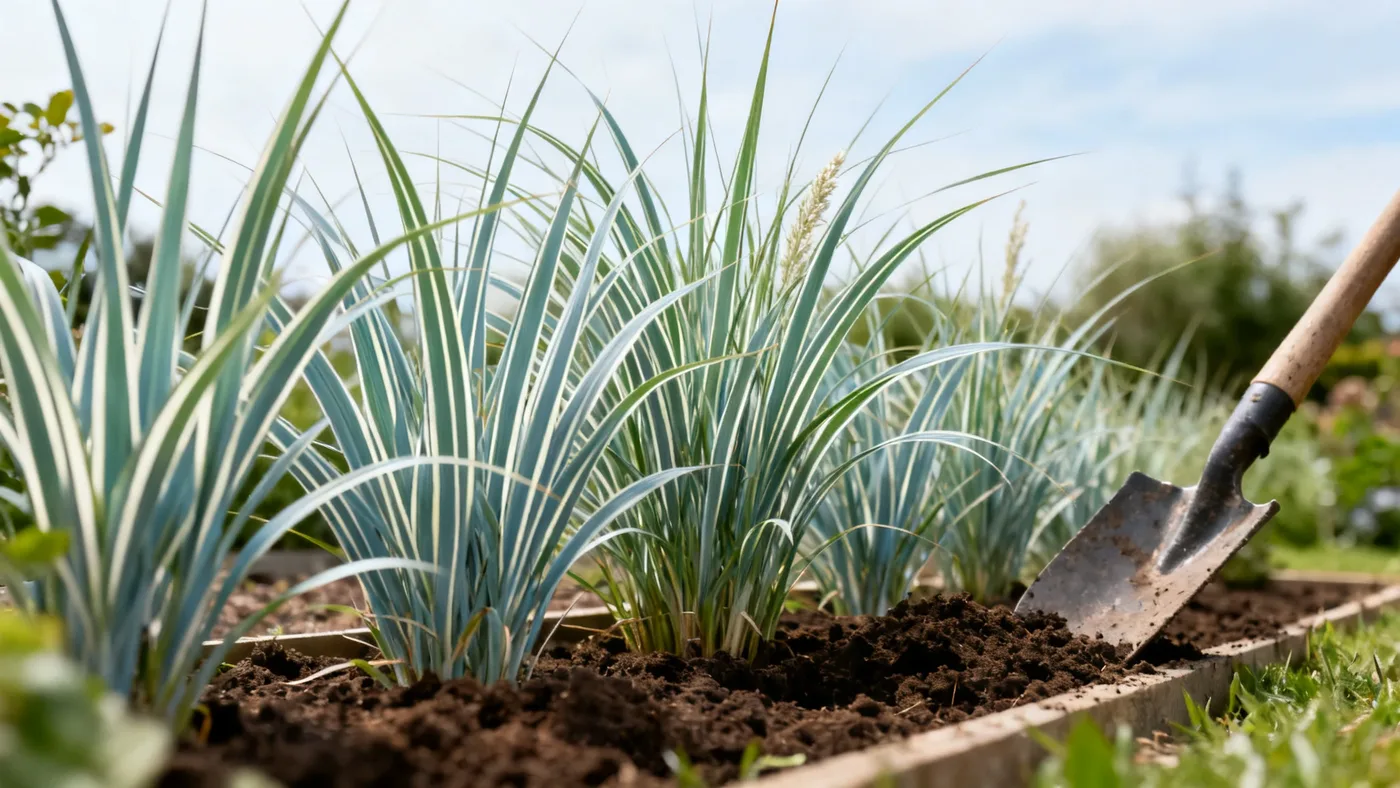
20 Adagio Grass Landscape Ideas and Companion Plants
Adagio Maiden Grass brings refined structure and motion to any landscape design. At 3 to 4 feet tall, this dwarf Miscanthus cultivar offers the vertical interest and late-summer color of its taller cousins without overwhelming a garden bed. Whether you're designing a mixed perennial border or planning a contemporary focal point, adagio grass landscape ideas can transform how your garden looks from August through winter. Below are 20 practical ways to use Adagio Grass in your landscape, paired with plants that complement its fine texture and coppery-pink plumes.
Landscape Design Ideas
1. Mixed Perennial Border Focal Point
Position a single Adagio Grass plant toward the back or middle of a mixed perennial border to add vertical rhythm and late-season color. Its 3 to 4-foot height draws the eye upward without creating a solid wall. The coppery-pink plumes (appearing August through October) emerge when many summer bloomers are fading, giving your border a second wind of visual interest.
Space the Adagio 24 to 36 inches from neighboring perennials to allow air circulation and prevent crowding as it matures to a 2.5 to 3.5-foot width. The fine-textured blue-green foliage with its distinctive white midrib catches morning light and contrasts beautifully against darker-leaved companions. In zones 5-9, this is a reliable, deer-resistant choice that requires minimal fussing once established.
Practical takeaway: Use one Adagio per 50 to 75 square feet of border. Plant in spring for full establishment before winter.
2. Mass Planting in Drifts for Maximum Impact
Group three to five Adagio plants in a staggered drift to create a substantial landscape statement. Mass plantings work especially well in larger gardens, estates, or public landscapes where visual impact and scale matter. The collective plume display in fall becomes a stunning focal feature, and the grouped plants create better wind resistance than single specimens.
Space each plant 24 to 36 inches apart center-to-center within the drift. Stagger them in a triangular pattern rather than a straight line for a more natural appearance. This approach also simplifies maintenance: you can cut all plants back together in late winter (to 4 to 6 inches above ground) and manage them as a cohesive unit.
Practical takeaway: Mass plantings need space; ensure the mature width of 2.5 to 3.5 feet per plant won't encroach on walkways or adjacent beds.
3. Specimen Focal Point in the Lawn
A single Adagio Grass plant positioned as a specimen in open lawn creates a sophisticated garden accent. This strategy works best in informal landscapes, cottage gardens, or modern minimalist designs where architectural plants draw attention. The narrow, upright habit and delicate plume texture make Adagio far more refined than clumpy, aggressive ornamental grasses.
Choose a location with full sun; the plant will tolerate light shade but flowering and habit are best in full sun. Allow 2.5 to 3.5 feet of clear space around the specimen for viewing and maintenance. The golden-bronze fall foliage and persistent dried plumes (which you should leave standing through winter for structure) provide three seasons of interest.
Practical takeaway: Plant in spring. Avoid locations where winter snow and ice will hide the structure entirely, or where foot traffic might damage emerging spring growth.
4. Tall Backdrop for a Perennial Border
Use Adagio Grass as a living backdrop to shorter perennials, shrubs, or specimen plants. At 3 to 4 feet tall, it screens a fence, neighboring property, or garden work area while remaining transparent enough to see through. Unlike a solid hedge, the fine texture of the foliage allows filtered views and admits light, making a narrow garden feel less confined.
Plant in a single row, spacing plants 24 to 36 inches apart along the back edge of your bed. The height is ideal for framing views at eye level when seated in a patio chair. The blue-green foliage provides neutral background color for any other plant palette, and the late plumes add warmth as temperatures cool.
Practical takeaway: Ensure the backdrop location receives full sun or light afternoon shade, not dense shade, so the plants flower and maintain their upright form.
5. Large Container as a Patio or Entryway Accent
Adagio Grass thrives in large containers (quart, number-1, or number-3 sizes from nurseries scale up to substantial garden pots). A single plant in a 20 to 24-inch diameter pot becomes a movable focal point for patios, entryways, or poolside seating. Container growing also works well in zones where winter might be marginal; you can move the pot to a sheltered microclimate or garage if frost threatens.
Use well-draining soil and water regularly during the first growing season; the plant is moderately drought tolerant once established but potted plants need more frequent watering than in-ground plantings. In containers, growth may be slightly more compact than in open garden beds. Position in full sun for best flowering and form. Cut the container-grown plant back to 4 to 6 inches in late winter or early spring.
Practical takeaway: Check the container's drainage holes before planting. Ensure the pot is heavy enough to resist wind tipping when the plant reaches its mature height of 3 to 4 feet.
6. Erosion Control on Slopes and Banks
The fibrous root system of Adagio Grass stabilizes soil on slopes, banks, and erosion-prone areas. Plant in groups of three to five on slopes, spacing plants 24 to 36 inches apart along the contour lines. The roots bind soil without requiring chemical treatment, and the upright growth habit doesn't interfere with access for maintenance or fire management.
Adagio adapts to most well-drained soils, including clay, making it suitable for a wide range of slope conditions. Once established, the mature clumps tolerate average to dry conditions. The persistent foliage and plumes also reduce the appearance of bare earth during off-season months, which matters aesthetically on visible slopes near walkways or property edges.
Practical takeaway: Water regularly during the first year as the root system develops. After that, the plant's moderate drought tolerance means less maintenance on slopes where irrigation is difficult.
7. Cut and Dried Flower Arrangements and Floral Design
The plumes of Adagio Grass make excellent long-lasting cut and dried flowers for arrangements. Harvest the panicles in late August to October when they reach their full coppery-pink to silvery-white color. A single stem adds height and movement to vases, while multiple stems create a substantial structural framework for other dried botanicals.
Hang harvested stems upside down in a dry, well-ventilated space (garage, garden shed, or studio) for two to three weeks. The plumes retain their color and form for months indoors, making them valuable for fall, winter, and spring arrangements. Pair them with dried seed heads from Rudbeckia, Echinacea, or Sedum for cohesive, garden-inspired designs.
Practical takeaway: Wait to cut plumes until they've fully emerged and hardened, usually mid-September in most zones. Do not cut back the plant until late winter; let the standing stems provide garden interest first.
Companion Planting Ideas
8. Sedum and Stonecrop Border Pairing
Low-growing Sedum species and their relatives (including Hylotelephium) create a natural companion layer below Adagio Grass. The succulent, fleshy foliage of sedums contrasts beautifully with the fine, airy texture of maiden grass. Sedums also share similar growing conditions: both thrive in well-drained soil and moderate drought.
Plant sedums 12 to 18 inches in front of your Adagio, spacing them for their mature width (typically 12 to 24 inches). The sedums will reach maturity (often 8 to 18 inches tall) before the grass plumes fully emerge in late summer, extending your border's color season. In fall, sedums develop rich russet and burgundy tones that echo the coppery plumes above them.
Practical takeaway: Both plants prefer full sun. In shade, sedums become leggy and Adagio produces fewer plumes, so this combination really shines in eight to ten hours of direct light daily.
9. Rudbeckia (Black-Eyed Susan) Combination
Pair Adagio Grass with golden-yellow Rudbeckia (black-eyed Susan) for classic late-season garden color. Rudbeckia blooms from July through September, creating continuity from summer into the period when Adagio's coppery plumes begin to open in August. The two plants share similar cultural needs: full sun, average to moderate drought tolerance, and adaptability to most soils.
Plant Rudbeckia 18 to 24 inches in front of Adagio, allowing room for both plants' mature widths. The yellow daisy-like flowers of Rudbeckia complement the soft pink tones of the maiden grass plumes beautifully. Both plants are deer-resistant and relatively pest-free, making this pairing easy to maintain. Leave both plants' seed heads standing through fall for interest and wildlife food.
Practical takeaway: Deadhead faded Rudbeckia flowers through late August to keep plants blooming longer and encourage them to expand outward rather than upward.
10. Echinacea (Coneflower) and Adagio Mixed Border
Purple, pink, or white Echinacea (purple coneflower) blends elegantly with Adagio Grass in a mixed perennial setting. Echinacea blooms from mid-July through frost, overlapping perfectly with the emergence of Adagio's plumes. The sturdy, upright stems of Echinacea stand in stark contrast to the fine, almost feathery texture of maiden grass, creating visual depth and interest.
Space Echinacea 18 to 24 inches in front of or beside Adagio, depending on your border design. Both plants thrive in USDA zones 5-9, handle average to moderate drought, and attract pollinators. The seed heads of Echinacea persist through winter, providing food for goldfinches and texture alongside the dried plumes of Adagio.
Practical takeaway: Choose Echinacea varieties that reach similar height (20 to 36 inches) so they don't disappear behind the Adagio. Double-flowered cultivars are lovely but produce fewer seeds for wildlife.
11. Russian Sage (Perovskia) Layering
Russian sage (Perovskia atriplicifolia) is a tall, airy shrubby perennial that pairs beautifully with Adagio Grass. Both plants feature fine-textured foliage, blue-gray tones, and late-season flowering (July through fall). The lavender-blue flowers of Russian sage complement the coppery plumes of Adagio without competing for visual attention. Both tolerate full sun and dry conditions once established.
Plant Russian sage 24 to 30 inches away from Adagio to allow for the mature spread (3 to 4 feet) of Russian sage. The two plants create a soft, almost cloud-like effect when massed together. Both require full sun and well-drained soil to thrive. In late winter, cut both back to 4 to 6 inches above ground before new growth emerges.
Practical takeaway: Russian sage can look sparse at the base in spring; underplant with low-growing sedums or catmint to fill in the visual gap while Russian sage and Adagio are leafing out.
12. Aster Understory Combination
Shorter aster varieties (reaching 18 to 30 inches) planted in front of Adagio Grass create a layered effect that extends color into fall. Asters bloom September through November, precisely when Adagio's plumes are at their most elegant. The daisy-like flowers come in white, pink, purple, or burgundy, all of which harmonize with the silvery-white or coppery tones of mature maiden grass plumes.
Space asters 18 to 24 inches in front of Adagio, allowing adequate room for both plants' mature widths. Both plants thrive in full sun and average to moderate moisture. Asters attract late-season butterflies and pollinators. Cut back asters after frost and the Adagio in late winter to refresh the planting for spring.
Practical takeaway: Taller aster cultivars can flop if overwatered or shaded; keep them in full sun and allow soil to dry slightly between waterings.
13. Ornamental Sedge Textural Layer
Ornamental sedges (Carex species) create a fine-textured groundcover and textural layer beneath or between Adagio plantings. Sedges offer year-round green or variegated foliage in compact, mounding forms (usually 8 to 20 inches tall). They prefer more consistent moisture than sedums and thrive in part shade to full sun, making them ideal for the transitional areas around Adagio groupings.
Plant sedges 12 to 18 inches in front of or around Adagio Grass for textural variety. Many Carex cultivars stay green through winter, providing structure and color when the Adagio is dormant. The contrast between sedge foliage and Adagio plumes creates depth and sophistication in garden design. Both plants are deer-resistant and relatively pest-free.
Practical takeaway: Some sedge species are invasive; choose non-spreading Carex species such as C. oshimensis or C. siderosticta recommended for your region, and check your local extension service before planting any sedge species.
14. Winter Structure and Off-Season Interest
Leave Adagio Grass standing through winter to maximize its architectural value and winter landscape presence. The dried tan foliage and persistent silvery-white or tan plumes create striking silhouettes against snow, frost, or pale winter light. This strategy is one of the best adagio grass landscape ideas for extending visual interest across all four seasons without adding extra plants.
Cut the entire clump back to 4 to 6 inches above ground in late winter or early spring (typically February through early April, depending on your zone) before new growth emerges. Never cut back in fall. The standing winter structure also provides shelter for overwintering birds and insects. Photograph the winter landscape before cutting; you'll appreciate the design value the dormant plant provided.
Practical takeaway: In snowy climates, the dried plumes bend under heavy snow load but typically spring back as snow melts. If plants become severely matted, gently stake them upright or wait for spring cleanup.
15. Burgundy Perennial Border Accent
Pair Adagio Grass with burgundy-leaved or burgundy-flowering perennials to create dramatic color play. Think dark-leaved cannas, burgundy Sedum cultivars, or deep purple Echinacea selections. The coppery-pink plumes of Adagio warm the deeper tones of burgundy foliage and add movement above solid-colored neighbors.
Position Adagio so its plumes rise above the burgundy plants, creating depth and layering. Both plant groups typically thrive in full sun and well-drained soil. The warm tones of Adagio's fall color (tan and golden bronze) transition beautifully as the burgundy plantings deepen in cool weather. This color combination works especially well in contemporary or bold cottage garden styles.
Practical takeaway: Avoid burgundy companions taller than Adagio itself; the maiden grass will be lost visually if obscured by taller plants.
16. Front Yard Focal Point and Curb Appeal
Use a single Adagio Grass specimen to anchor a front-yard landscape design, creating visual interest from the street without the density or formality of a shrub. A well-positioned Adagio draws attention, adds elegance, and signals a thoughtful garden to passersby. The moderate mature size (3 to 4 feet tall, 2.5 to 3.5 feet wide) fits many lot sizes without becoming overwhelming.
Position the Adagio where it receives full sun and is visible from the street or front entry. Surround it with low-growing companions (sedums, catmint, or dwarf shrubs) to soften the base and create a layered composition. The seasonal changes (green summer foliage, fall color, winter structure) provide four-season visual interest that rewards regular viewing.
Practical takeaway: Avoid placing Adagio directly in front of windows or entries where the winter height might block views. Position it off-center from the main entry for a more dynamic, professional appearance.
17. Rustic and Cottage Garden Style
Adagio Grass is naturally at home in cottage garden and rustic landscape designs where layered plantings and self-sown effects feel appropriate. The fine texture and soft plume color fit perfectly alongside traditional cottage companions like roses, lavender, foxgloves, and hollyhocks. Adagio adds vertical accent and rhythm without the formal stiffness of clipped hedges.
Group Adagio with other soft-textured perennials and ornamental grasses, allowing plants to intermingle and create a naturalistic, abundant look. The combination of fine grass and broad-leaved perennials creates visual complexity that's hallmark to cottage gardens. Leave spent flowers and seed heads standing longer in this style, cutting back only in late winter.
Practical takeaway: In cottage gardens, less rigorous spacing rules apply. Adagio can be planted somewhat closer than the recommended 24 to 36 inches if you want a denser, more abundant effect; just monitor for reduced flowering in crowded conditions.
18. Contemporary and Minimalist Landscape Design
A single Adagio Grass specimen with plenty of negative space embodies contemporary design principles: simplicity, architectural form, and bold visual statement. The fine, upright foliage and delicate plumes read as sculptural rather than fussy, making Adagio ideal for modern gardens featuring clean lines, hardscape elements, and restrained plant palettes.
In minimalist settings, position Adagio where it commands full attention, paired perhaps with architectural evergreens or substantial pavers. The blue-green foliage and silvery plumes provide all the color and texture needed. Avoid competing with other ornamental grasses or fussy companions; let Adagio's quiet elegance stand alone. The seasonal transformations (green, gold-tan, tan seed heads) provide visual evolution without additional plants.
Practical takeaway: This design approach works best where the plant receives full sun and is viewed regularly. The architectural qualities of Adagio deserve a location where its form is appreciated, not hidden in a crowded border.
19. Drought-Tolerant Xeriscape Design
Build a water-efficient garden using Adagio Grass as a cornerstone plant. Once established, Adagio is moderately drought tolerant and thrives with average water; this makes it far more efficient than many perennials. Combine it with other drought-tolerant companions like Sedum, Echinacea, Russian sage, and Rudbeckia to create a low-maintenance, resource-conscious landscape.
Space all plants according to their mature size to reduce competition for water and prevent overcrowding. Mulch lightly (1 to 2 inches) around plants to retain soil moisture without creating a dense mat that retains too much water. All recommended companions prefer full sun and well-drained soil, so site your xeriscape planting accordingly. Water regularly during the first growing season; thereafter, supplemental watering is minimal.
Practical takeaway: Apply the principles in the Adagio Grass care guide to ensure your companions are equally suited to drought conditions. Avoid pairing drought-tolerant Adagio with moisture-loving plants that will pull more water from the soil.
20. Shade-Transitional Garden Area
Plant Adagio Grass in light shade or dappled afternoon shade as a transitional plant between full-sun perennials and deeper shade areas. Adagio tolerates light shade, though flowering and form are best in full sun. In partial shade settings, you'll still get reasonable plume production and upright growth, simply somewhat more modest than in full light.
Use Adagio to bridge the gap between open sun garden and shaded tree canopy, pairing it with shade-tolerant sedges, ferns, and foliage plants. The airy texture of Adagio softens the visual transition and adds vertical accent without the density of shrubs. Site it where afternoon shade from a tree or structure provides relief during the hottest part of the day but allows morning sun to warm the plant.
Practical takeaway: If you plant Adagio in shade, water consistently (don't rely on drought tolerance alone) and watch for reduced flowering. If plumes are sparse or plants start to flop, move the plant to a sunnier location the following spring.
Quick Reference: Adagio Grass Companion Planting Guide
| Companion Plant | Height | Bloom Time | Bloom Color | Spacing from Adagio | Key Features |
|---|---|---|---|---|---|
| Sedum / Hylotelephium | 8-18 in | Aug-Oct | Pink, red, white | 12-18 in | Fleshy foliage, drought tolerant, russet fall color |
| Rudbeckia (Black-Eyed Susan) | 18-36 in | Jul-Sep | Yellow, orange | 18-24 in | Long blooming, deer-resistant, seed heads persist |
| Echinacea (Purple Coneflower) | 20-36 in | Jul-Oct | Purple, pink, white | 18-24 in | Attracts pollinators, winter seed heads, drought tolerant |
| Russian Sage (Perovskia) | 30-48 in | Jul-Oct | Lavender-blue | 24-30 in | Airy form, blue-gray foliage, drought tolerant |
| Aster | 18-36 in | Sep-Nov | Purple, pink, white | 18-24 in | Late-season color, butterfly attractor, easy to grow |
| Ornamental Sedge (Carex) | 8-20 in | Foliage | Green, variegated | 12-18 in | Year-round color, shade tolerant, textural contrast |
Adagio Grass Landscape Design Checklist
- Choose a location with full sun (8+ hours daily) for best flowering; light shade is tolerated but may reduce plume production
- Ensure well-drained soil; amend clay with compost at planting to improve drainage
- Space Adagio 24 to 36 inches from neighboring plants to allow for mature width of 2.5 to 3.5 feet
- Plant in spring to allow full establishment before winter
- Water regularly during the first growing season; expect moderate drought tolerance once established
- Do not cut back in fall; leave standing for winter interest until late winter or early spring
- Pair with companions that share similar sun and moisture needs (Sedum, Rudbeckia, Echinacea, Russian sage, asters, ornamental sedges)
- Allow 24+ inches of spacing between Adagio and most companion perennials to prevent overcrowding
- Cut the entire clump back to 4 to 6 inches above ground in late winter or early spring before new growth emerges
- Divide clumps every 3 to 4 years in spring to maintain vigor and rejuvenate aging plants
- Apply balanced slow-release fertilizer or light compost topdressing in spring; avoid over-fertilizing (causes flopping)
- Monitor for rust or leaf blight, especially in humid climates; remove affected foliage and ensure good air circulation