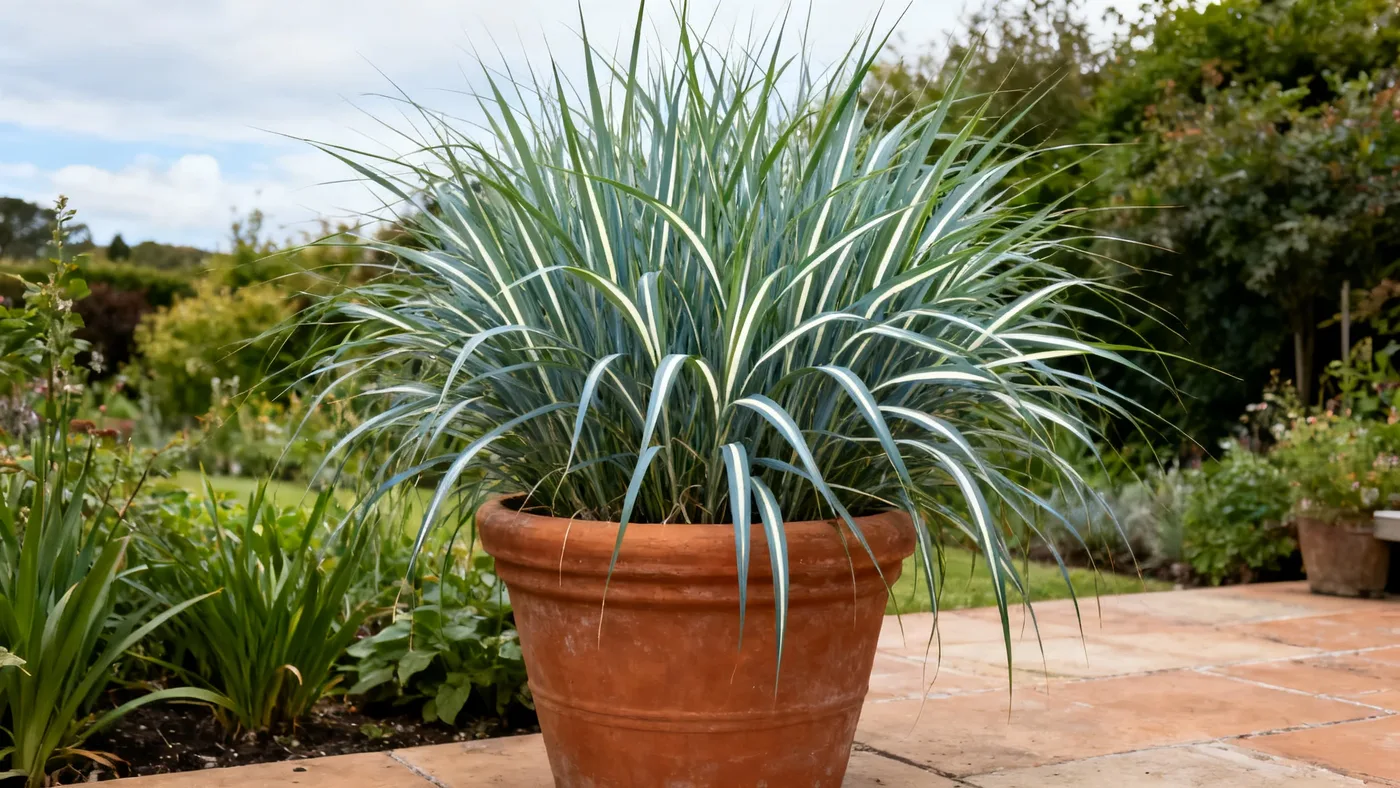
How to Grow Adagio Grass in Pots and Containers Well
Adagio Grass thrives in containers, making it an excellent choice for patios, decks, and small gardens where space is tight. The ornamental grass performs well in large pots with good drainage, and starting with a quart container starter plant gives you flexibility to upsize as the plant matures. Container growing also lets you move the plant to catch full sun or protect it during harsh winters in the cooler zones (5-6).
Why Container Growing Works for Adagio Grass
Adagio Grass (Miscanthus sinensis 'Adagio') is well suited to containers because it has a clump-forming growth habit and moderate size. The mature plant reaches 3 to 4 feet tall (with the foliage mound at 2.5 to 3 feet, and plumes extending it slightly higher) and spreads 2.5 to 3.5 feet wide. These dimensions fit reasonably into a dedicated corner or focal spot on a deck or patio.
Containers offer several practical advantages. You control the soil mix entirely, ensuring it drains well and matches the plant's preferences. You can relocate the pot to follow the sun as seasons change. In cooler regions at the edge of its hardiness range (zones 5-6), you can move a potted Adagio closer to the house for winter protection, or tuck it against a south-facing wall. And if you start with a commercially available quart container starter plant, you can gradually step up to larger pots as the plant fills out over two to three years.
Gathering Your Materials
Before you plant, assemble these supplies to set yourself up for success:
- A starter plant or division: A quart container Adagio or a division from an established clump
- Container: A pot at least 12 to 14 inches deep and wide initially (more on sizing below)
- Potting mix: A high-quality potting soil or a blend of equal parts potting soil and compost, formulated for good drainage
- Drainage material: Broken pottery shards or landscape fabric for the pot bottom (optional but helpful)
- Watering can or hose: For thorough watering after planting and ongoing care
- Balanced slow-release fertilizer: A light application in spring (optional, as Adagio is a light feeder)
- Mulch: A thin layer of compost or bark chips to retain moisture (optional)
- Pruning shears: For cutting back the plant in late winter or early spring
Step-by-Step Planting Instructions
- Select your container size. For a starter plant in a quart container, begin with a pot 12 to 14 inches deep and 12 to 14 inches in diameter. This gives the roots room to spread without excess soil that would stay waterlogged. As the plant grows over the first year, plan to upsize to a 15 to 20 gallon container (roughly 18 to 20 inches wide and deep) to accommodate the mature size of 2.5 to 3.5 feet wide. Always choose a pot with drainage holes; waterlogged soil is the enemy of healthy Adagio Grass.
- Prepare the soil mix. Fill the pot about halfway with potting soil. If your potting soil is very dense or clay-heavy, blend it with compost to lighten it. Adagio tolerates most well-drained soils, including clay, but prefers moist (not waterlogged) soil with a pH around 6.0 to 7.5, slightly acidic to neutral. Potting mixes typically fall into this range, so most commercial blends work well.
- Position your starter plant. Remove the Adagio from its quart container and gently tease apart the root ball with your fingers. Set the plant in the pot so the top of the root ball sits slightly below the rim. You want enough space to water without soil spilling over.
- Backfill and firm the soil. Add more potting mix around the roots, pressing gently to eliminate air pockets. Do not compact hard; Adagio prefers loosely settled soil. The plant should sit at the same depth it was in its original container. Overly deep planting can slow establishment.
- Water thoroughly. Water until water drains from the bottom of the pot. This settles the soil and helps roots make contact. In the first year, maintain average water: the soil should be moist but never soggy. Stick your finger 2 inches into the soil; if it feels dry, water again.
- Place in full sun. Set your container in a spot that receives at least 6 hours of direct sunlight daily. Adagio flowering and upright habit are best in full sun. Light or part shade will slow flowering and may cause the clump to flop, especially if the soil is overly rich in nitrogen. South- or west-facing locations work well on most patios.
- Consider wind and support. On exposed windy sites, the mature plumes may bend or lodge if the plant gets too much shade or rich soil. In very windy locations, a single stake near the center can help, though Adagio rarely needs support if grown in adequate light.
Seasonal Care Through the Year
Spring (March to May in most zones): In late winter or early spring before new growth emerges, cut the entire clump back to 4 to 6 inches above the pot soil. This removes the dried foliage from the previous year and makes room for fresh growth. Apply a light topdressing of compost or a balanced slow-release fertilizer if desired. Adagio is a light feeder, so over-fertilizing will cause weak, floppy growth. Increase watering frequency as new shoots appear and temperatures warm. Growth rate is moderate, roughly 6 to 12 inches per year until the plant reaches full maturity in 2 to 3 years.
Summer (June to August): Keep the soil consistently moist during the growing season, especially the first year after planting. Check the pot every few days in hot weather; container soil dries much faster than ground soil. Water when the top inch feels dry. Once established, Adagio is moderately drought tolerant, but regular water during the growing season produces fuller, healthier clumps. No fertilizer is needed unless the plant looks pale or weak.
Late Summer to Fall (August to November): Watch for the distinctive plumes to emerge, typically August through October depending on your region and first frost date. The plumes open coppery-pink to silvery-pink and gradually age to silvery-white or tan. Fall foliage turns tan or golden bronze, providing weeks of ornamental interest. Do not cut back the plant in fall; leave the dried foliage and plumes standing to provide winter interest and protect the dormant crown. Reduce watering as growth slows, but do not let the pot dry completely.
Winter (December to February): In zones 5 to 7, move the container against the south side of a wall or into a sheltered location if possible to buffer extreme cold. The pot itself provides some insulation. In zones 8 to 9, Adagio may remain outdoors year-round. In all zones, cut back the dried clump in late winter or early spring before new growth begins, as described under Spring care.
Tips to Avoid Common Mistakes
- Underwatering in the first year: Potted plants dry out faster than in-ground plants. Check soil moisture frequently from June through August. Adagio establishes best with regular, even moisture in year one.
- Overfertilizing: Adagio is a light feeder. Too much nitrogen causes the clump to become loose and floppy. A spring topdressing or light slow-release fertilizer is all it needs. If using compost, a 1-inch layer is plenty.
- Poor drainage or waterlogging: The pot must have drainage holes. If water sits in the saucer for hours after watering, the soil is too dense or the drainage is blocked. Refresh the soil mix or upgrade to a grittier potting soil blend.
- Insufficient sunlight: Planting in part shade or shade will reduce flowering and weaken the upright form. Adagio needs full sun for best performance. Reposition the pot if it's not getting at least 6 hours of direct sun daily.
- Cutting back at the wrong time: Never cut back Adagio in fall or early winter. Late winter or very early spring, just before new growth starts, is the only correct time. Fall cutting exposes the dormant crown to frost damage.
- Outgrowing the container too quickly: If the plant becomes severely root-bound (roots circling the pot, water running straight through), upsize to the next container size. This typically happens over one to two years as the clump fills out. Upsizing gives the roots room to develop without waterlogging a larger pot of fresh soil.
Expected Results and Timeline
In the first growing season, a quart container starter may show modest growth as it establishes a strong root system. By the second and third years, growth accelerates; the plant typically reaches close to its mature size of 2.5 to 3.5 feet wide and 3 to 4 feet tall. Flowering usually begins in year two or three. Once established, Adagio is long-lived and can remain in the same pot for many years if you refresh the top few inches of soil each spring and divide the clump every 3 to 4 years if vigor begins to decline.
Potted Adagio can display winter interest for many months. The foliage turns tan or golden bronze in fall, and the silvery plumes persist through winter in most climates. This extended season of visual appeal, combined with the plant's low maintenance and safety around pets (Adagio is not known to be toxic), makes it an excellent choice for container gardeners seeking year-round structure and texture.
For more detailed information on Adagio care, pruning schedules, and pairing it with other plants, see our complete growing guide to Adagio Grass.
Quick Reference: Container Growing Checklist
| Item | Details |
|---|---|
| Container size (starter) | 12 to 14 inches deep and wide |
| Container size (mature) | 15 to 20 gallon (18 to 20 inches wide and deep) |
| Drainage | Must have drainage holes; no exceptions |
| Soil type | Well-draining potting mix, pH 6.0 to 7.5 |
| Sun requirement | Full sun (6+ hours daily) for best flowering |
| Watering (first year) | Keep soil moist; check every few days in summer |
| Watering (established) | Average water; moderate drought tolerance once established |
| Fertilizing | Light feeder; spring compost topdressing or light slow-release fertilizer only |
| Pruning time | Late winter or early spring before new growth; cut to 4 to 6 inches above soil |
| Expected bloom time | August to October (varies by region) |
| Years to full size | 2 to 3 years |
| Hardy zones | 5 to 9 |
| Growth rate | 6 to 12 inches per year until mature |
| Mature height | 3 to 4 feet (foliage 2.5 to 3 feet) |
| Mature width | 2.5 to 3.5 feet |