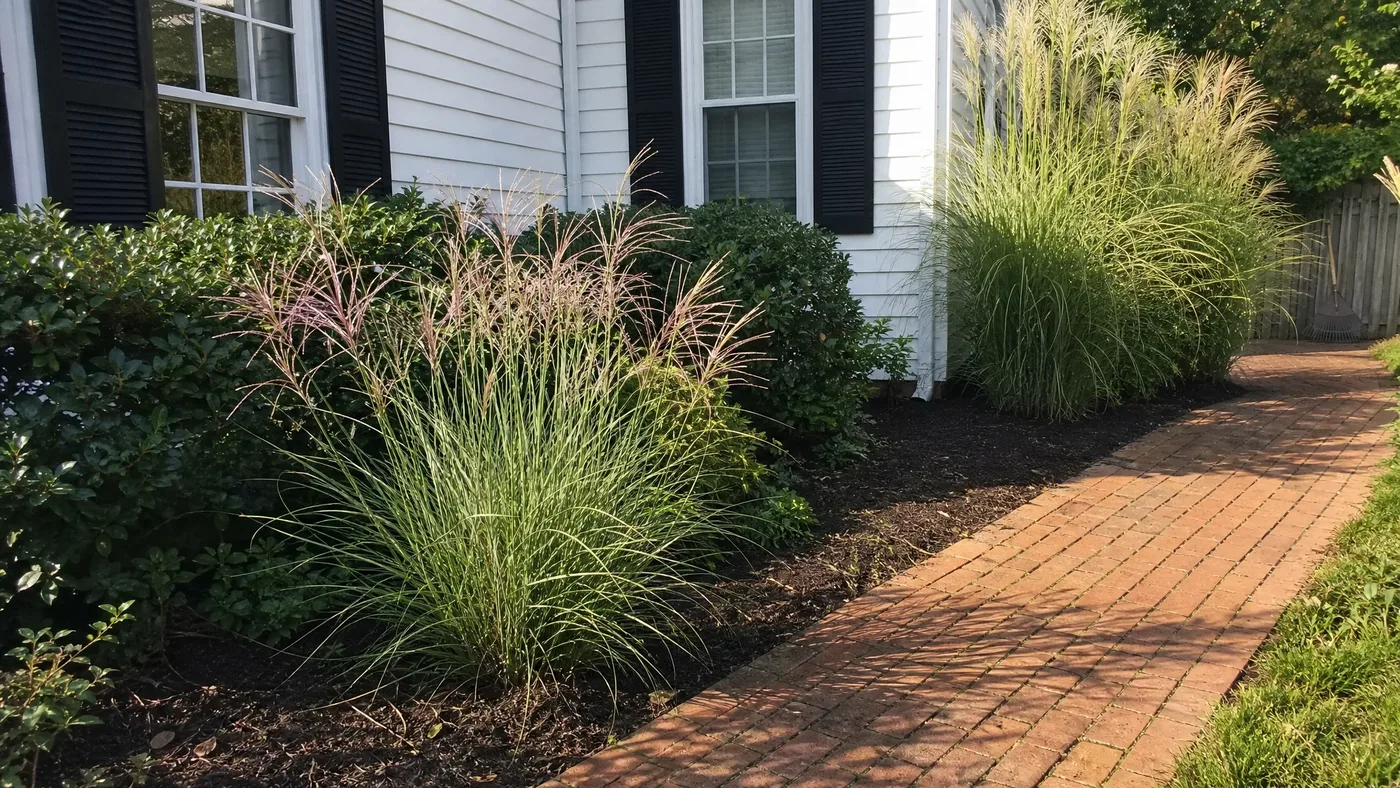
Adagio Grass vs Pampas Grass: Why They Are Not the Same Plant
One of the most common calls we get goes like this: someone planted a "pampas grass" two summers ago, and it has stayed around waist height. They expected a giant and got a tidy, arching clump, and they want to know what went wrong. Nothing did. That plant was never pampas. It was a compact Miscanthus, and it was behaving exactly as it should.
Adagio Grass and pampas grass get lumped together because both carry feathery plumes, and shoppers use "pampas" as a catch-all. The difference matters. Mix them up and you either plant a giant where you wanted a border plant, or you wait years for a monster that never arrives. We'll walk you through the names, the leaves, the winter hardiness and the size, then show you how to read a label so you get the plant you meant to buy.
How Two Grasses Ended Up Sharing One Name
A common name is a nickname, and nobody polices nicknames. That is how one word got stretched over plants that have very little in common.
What Pampas Grass Actually Refers To
Before comparing anything, it helps to pin down the term itself.
"Pampas grass" is the common name for Cortaderia selloana, a very large grass. It forms a large, dense, grassy mound, and an invasive plant guide from Arizona calls it deep-rooted, aggressive and vigorous. That is the plant the name belongs to. It is a landscape giant with real attitude, not a tidy border grass.
Why Shoppers Blur the Two
The mix-up has a few predictable causes, and none of them is the shopper's fault.
Both grasses throw feathery plumes above a fountain of narrow leaves, and in a photo or from across a parking lot the silhouette looks alike. Search habits do the rest. People type "pampas" because it is the plumed grass they have heard of, and sellers and photo captions repeat it. Plumes and arching leaves tell you almost nothing about size, edge or hardiness, and those are the traits that decide whether a plant works in your yard.
You will hear that a plumed grass is a plumed grass, so the name hardly matters. We disagree. A shopper who wants pampas and gets Adagio Grass finds it a fraction of the height they pictured. A shopper who wants a border plant and gets pampas finds a clump that swallows the bed.
Adagio Grass Is Miscanthus, Pampas Is Cortaderia
Botanical names look fussy, but they work like a family address. Learn to read one and you can sort almost any grass at a glance.
Surname, First Name, Nickname
The easiest way to hold the three parts of a plant name in your head is to think of a person.
The genus is the family surname, shared by a group of related plants. The species is the first name, picking out one member of that family. The cultivar, written in single quotes, is the nickname for one particular selection that growers propagate because of a trait they like. So Miscanthus sinensis 'Adagio' reads as the Miscanthus family, the sinensis member, the one called Adagio.
Two Different Surnames
Now apply that to the two plants in this guide.
Pampas grass is Cortaderia selloana. Adagio Grass is Miscanthus sinensis 'Adagio'. The surnames do not match, which means two different genera, each with its own habits, and not two siblings from one household. Our piece on the botanical name for Adagio Grass goes deeper into how that name is built.
The nickname does one more job for you. The plain species Miscanthus sinensis runs 4 to 12 feet tall, so the genus and species words alone will not tell you the size. The cultivar name does. 'Adagio' is a selection with a far more compact habit, which is why you should read the whole name, quotes included, and never stop at "Miscanthus" or at "grass."
The species is native to China and Japan, among other parts of East Asia. Adagio Grass inherits that background but not the species' bulk, and that is the point of choosing it.
Soft Blades Beside Blades That Cut
Leaf edge is the difference people notice first, usually with a fingertip. It helps to define what "sharp-edged" means before comparing the two.
What sharp-edged means in practice. A sharp-edged grass has leaf margins fine enough to slice skin the way paper does, and tips stiff enough to jab. The Arizona guide says pampas leaf tips are bristly and curled and the margins are rough and sharp, and it advises protective gloves. The blades have very sharp edges. Treat that as a working rule: long sleeves and gloves every time you work near it.
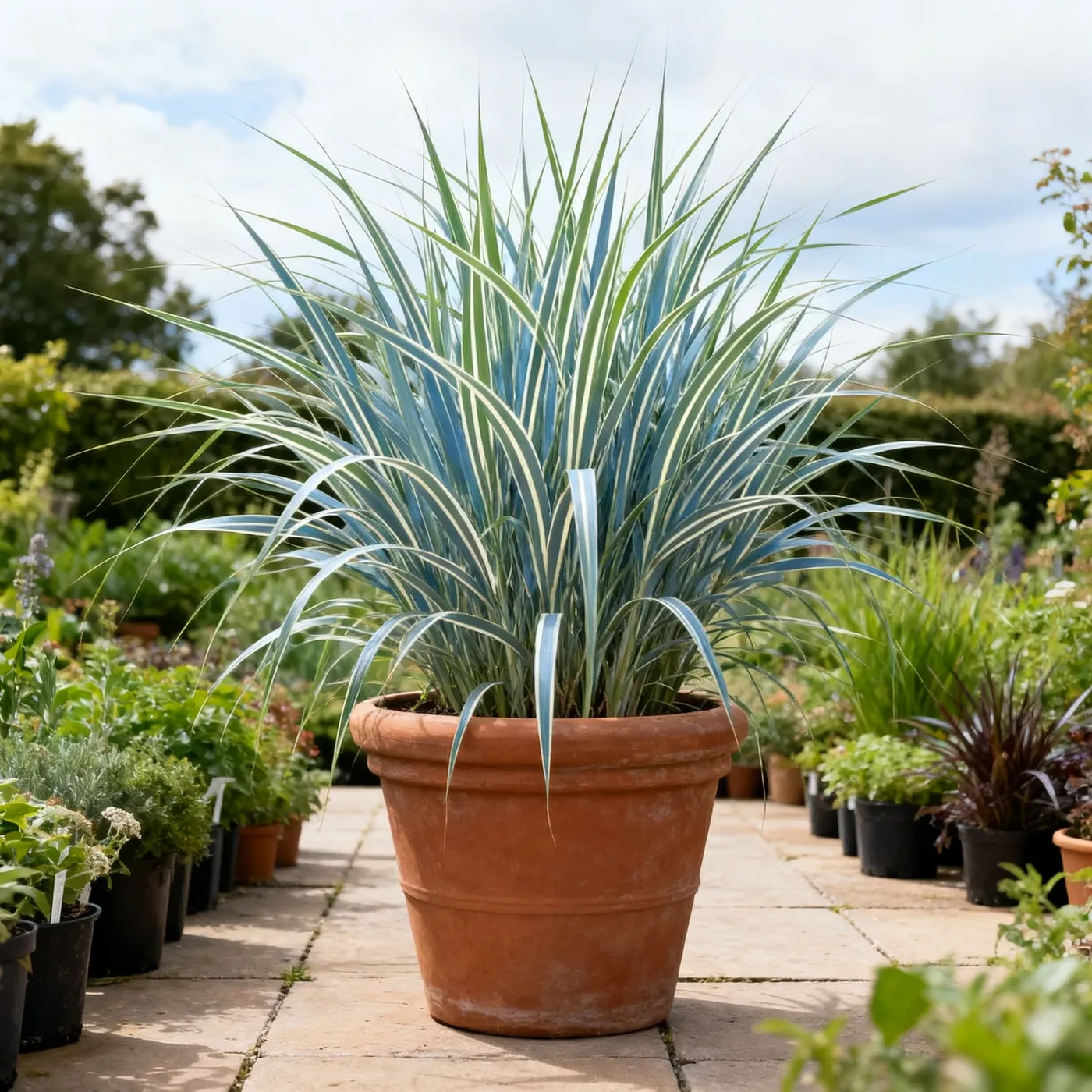
How Adagio Grass behaves. Adagio's foliage is soft and does not cut. The leaves are long, narrow, gray-green and arching, and they turn orange and yellow in autumn. They fall in a gentle fountain you can brush past in shorts. Spring cleanup is a plain job too, since you simply remove dead foliage and old flowered stems in spring.
Why this decides placement. Edge safety controls where a plant can live. Pampas needs distance from walkways, play areas and anywhere bare legs pass. Adagio can sit right at the edge of a path or at the front of a bed. Customers usually ask us whether it is safe to plant beside a walkway, and with Adagio the answer is yes, because the blades do not cut.
Where Adagio Grass Survives Winter and Pampas Does Not
Cold is where the two plants part ways most bluntly. A tall plumed clump that dies back for good every second winter is not much of a landscape plant.
Adagio Grass in Zone 5 and Beyond
Start with the plant that does what it promises.
Adagio is hardy to USDA zone 5, and the parent species is hardy in zones 5a through 9b. In practice that means you plant it, let it fade to tan over winter, leave the dry foliage standing, and cut it back in spring. Our hardiness zone guide shows where it will thrive across that range.
Pampas Grass at the Cold Edge
Pampas is a warmer-climate plant, and the sources show it.
Cortaderia selloana grows in zones 6a through 10b, so a zone 5 yard sits outside the range entirely. Even inside it, Missouri State calls pampas marginally hardy in that state and says it usually takes at least one year after planting to flower. The edge of a range is where a plant gets lost: it survives one mild winter and dies in the next.
What we tell customers in zone 5 and the colder part of zone 6 is not to bet on pampas. Adagio gives you plumes and a reliable return every year without the gamble.
The Warm-Climate Catch
Where pampas does thrive, it can become a problem.
Pampas is highly invasive in some areas of the United States, and the Arizona guide says it can take over disturbed and unattended areas and outcompete native species. Check with your local extension service about rules before planting any pampas. Adagio grows as a clump, and our guide on whether Adagio Grass is invasive covers its habits.
A Compact Adagio Grass Clump and a Towering Specimen
Size settles where each plant belongs. Adagio fits a border, while pampas needs a corner of the lawn to itself.
Adagio has an ultimate height of 1 to 1.5 meters, roughly 3.3 to 5 feet, with a spread of 0.5 to 1 meter, about 1.6 to 3.3 feet. Pampas is a different scale. The Arizona guide gives stiff stems of 6 to 14 feet, and the mound itself reaches 6 to 10 feet by 6 to 10 feet. The table sets the numbers side by side.
| Trait | Adagio Grass | Pampas Grass |
|---|---|---|
| Height | About 3.3–5 feet | 6–14 feet |
| Spread | About 1.6–3.3 feet | 6–10 feet |
| Leaf edge | Soft, non-cutting | Rough and sharp |
| Hardiness | Zone 5 and warmer | Zones 6–10, marginal at the cold end |
Where Adagio Grass Fits
Because it stays compact, Adagio has a long list of good spots.
Use it at the front or middle of a border, along a path, or beside a foundation. It wants full sun. Its narrow spread means you can set it close to neighbors without a wall of foliage later. Our size and growth rate guide covers how quickly it fills out.
Where Pampas Needs to Go
Pampas asks for the opposite kind of site.
It needs open ground well away from paths, with room for a mound up to 10 feet wide and tall stems above it. Put it in a bed sized for a 4-foot grass and it will crowd everything within a season or two. That is also the reason we do not suggest it for small yards.
Reading a Tag so Adagio Grass Arrives, Not Pampas
Most mix-ups happen at the point of purchase. A few seconds with the label can save you several seasons of disappointment.
Label and Listing Checklist
Run any tag or online listing through these checks before you pay.
- Look for the full botanical name, Miscanthus sinensis 'Adagio', with the cultivar in single quotes. Cortaderia anywhere in the name means pampas.
- Check the mature height on the label. A figure of 3 to 5 feet fits Adagio, and anything of 6 feet or more is pampas territory.
- Read the hardiness zone. A zone 5 rating fits Adagio. A listing that starts at zone 6 or warmer should make you ask which plant it is.
- Treat words like "pampas type" or "dwarf pampas" as a reason to look for the Latin name before you buy.
- Compare the photo to the description. Soft, gray-green, arching leaves and pink-tinged plumes that turn creamy white match Adagio.
We often see tags that say only "ornamental grass" or "pampas style," which tell you nothing about size or edge. Our guide to buying Adagio Grass also covers container sizes.
Identifying a Plant Already in Your Yard
If you already own a mystery grass, three tests will sort it out.
First, check the edge, wearing gloves: a cutting edge means pampas. Second, watch the height across a full season, since Adagio stops around 5 feet at most. Third, see what happens after winter. A clump that returns reliably in zone 5 is not pampas.
Adagio Grass and Pampas Grass, Sorted Out
Choose Adagio Grass if you want a border or path plant, a soft touch, or a reliable return in zone 5 and warmer. Choose pampas only if you have a large open site in a warm zone, can wear gloves, and have checked local rules. For nearly every home garden we would pick Adagio.
Adagio Grass
Nursery-grown Adagio Grass in sizes from 1 Gallon, shipped to your door.
From $31.97
Shop Now →Here is a test you can repeat to a friend: soft, short and tough in zone 5 means Adagio, while sharp, tall and cold-shy means pampas. Every Adagio we ship leaves our own farms in a firm pot with its full botanical name on the tag, wrapped so the crown and arching blades arrive intact and ready for the ground, because we grow top-quality ornamental grasses ourselves.