Buying Adagio Grass: Container Sizes and What to Look For
Adagio Maiden Grass (Miscanthus sinensis 'Adagio') is one of the most reliable ornamental grasses for home gardens, and sourcing a healthy plant is the first step toward success. Unlike perennials sold in generic sizes, ornamental grasses vary significantly in vigor and establishment time depending on how they were grown. This guide walks you through what to look for, which container size makes sense for your project, and how to spot a plant that will thrive.
Understanding Container Sizes for Adagio Grass
Adagio Grass is commonly sold in three container formats. Each represents a different balance of price, establishment speed, and immediate visual impact.
Quart containers are the most affordable entry point. These starter-size plants are typically 4 to 8 inches tall and have a small, developing root system. They're ideal if you're building a large planting bed, want to test the grass in your space before committing to larger plants, or are budget-conscious. The tradeoff: quart plants take longer to fill in. Most quart plants reach flowering size by their second or third growing season. Expect roughly 6 to 12 inches of new growth per year until the clump reaches full mature size in 2 to 3 years.
#1 containers (also called 1-gallon or 2-quart sizes) are the nursery standard. These plants are typically 10 to 18 inches tall and have an established root ball. They're larger than quart plants but smaller than premium sizes, and they offer good value. A #1 Adagio should flower in its first or second season and reach near-mature proportions in 2 to 3 years. This is the best choice for most home gardeners buying one or a few plants.
#3 containers are field-grown, premium-size plants, often 2 to 3 years old. They're 18 to 30+ inches tall with a substantial root system and may already show plumes in the first year. #3 plants deliver immediate landscape presence but cost significantly more. They're best for projects requiring instant effect or where you're buying as a specimen focal point.
For small residential spaces, one #1 or two quart plants spaced 24 to 36 inches apart is typical. For a mass planting or screen, space multiple plants 24 to 36 inches center-to-center; this spacing accounts for the mature width of 2.5 to 3.5 feet per clump.
What to Look For: Quality Indicators
A healthy Adagio plant has a specific set of characteristics. Learning what to inspect takes just a minute at the nursery or when unpacking a mail-order plant.
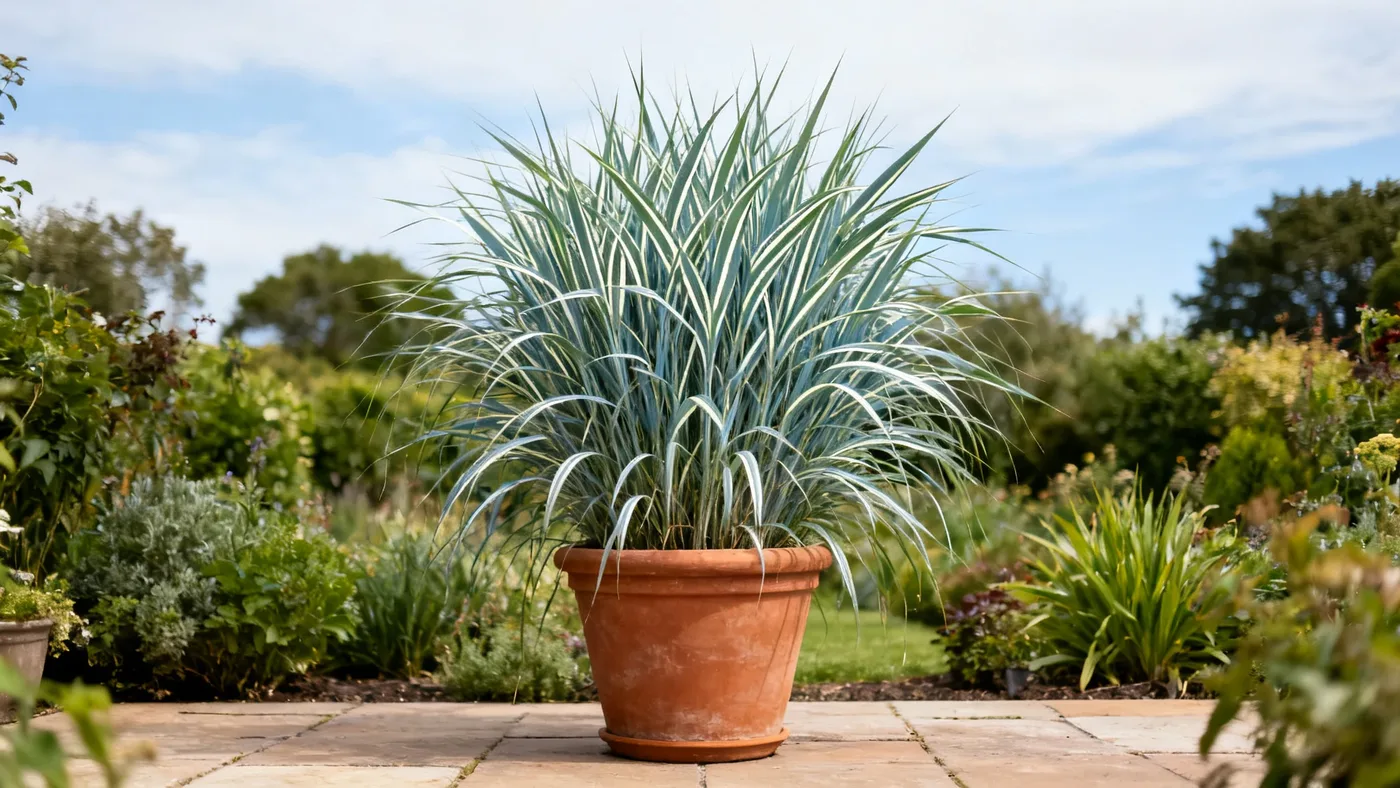
Foliage color and texture. The leaves should be a fine-textured blue-green or gray-green with a distinct white midrib running down each blade. The white midrib is the signature of Adagio and a reliable way to confirm you're buying the right cultivar, not a similar-looking grass. The foliage should look fresh and turgid, not dull, bleached, or wilted. If leaves are yellowing or browning at the tips, that plant has been neglected or stressed in the nursery.
Plant vigor and density. The clump should be full and compact, not sparse or one-sided. Gently tilt the pot and examine the base. If you see thick shoots emerging from the soil, that's a sign of an actively growing, vigorous plant. Thin, weak shoots or a hollow center suggest the plant has been root-bound or poorly cared for.
Root system. Carefully examine the pot drainage holes and soil surface. You should see a few healthy light-colored roots at the drainage holes, but not a dense mat of roots circling the soil surface (a sign of being severely root-bound). If roots are dark or smell sour, the plant may have been overwatered. The soil should be moist but not waterlogged. Press gently on the soil surface; it should feel firm and hold together, not dusty or compacted.
Pot size and weight. A container that feels light relative to its size suggests the soil is dry. A pot that feels surprisingly heavy for its size often means waterlogging or poor drainage. Lift the pot by its rim; it should feel substantial but not swampy.
Signs of pest or disease. Adagio Grass is generally pest-free, but inspect the leaves closely for any webbing, spots, or unusual discoloration. Check the base and soil surface for small insects. A light infestation of aphids is treatable, but heavy pest pressure suggests the plant has been stressed and may recover slowly in your garden.
Key Features to Compare
If you're comparing plants at different nurseries, focus on a few distinguishing factors.
Foliage uniformity. All leaves should have consistent color and texture across the clump. Variegation or color banding is a sign of stress, not variability. The plant should look balanced when viewed from above.
Plume development (in late summer). If buying Adagio in August or September, look for emerging plumes. They start as reddish or coppery-pink and age to silvery-white. Emerging plumes indicate a plant ready to flower that year. A mature plume cluster should be full and unblemished, not sparse or broken.
Container condition. Cracked or damaged pots can harbor root rot or allow soil to dry unevenly. A nursery-quality container is sturdy and drains freely.
Red Flags to Avoid
Walk past plants with these issues, even if they're discounted.
- Leaves that are uniformly brown, gray, or bleached, suggesting severe sun damage, drought, or cold injury during transport.
- Wilted foliage that doesn't recover when the soil is moist. This indicates root rot or vascular disease.
- A clump that is noticeably one-sided or hollow in the center, signaling poor propagation or old stock that has begun declining.
- Soil that is bone-dry or sour-smelling, indicating poor care and possible root death.
- Heavy pest infestation (visible insects, thick webbing, numerous sticky residues).
- Plumes that are falling apart, brown, or damaged. These won't develop further.
- A plant that tips over easily when lifted, suggesting a small root system relative to top growth.
Pricing and Value at Different Sizes
Nursery-grown Adagio plants are typically priced by container size. Quart containers are usually the most economical per-plant choice but have the longest establishment time. #1 containers offer the best value for most gardeners: faster establishment than quarts, lower cost than #3 plants, and good likelihood of flowering in the first or second year. #3 plants cost more but deliver immediate landscape scale.
Watch for bulk or landscape discounts when buying multiple plants for a large planting area. Some nurseries offer reduced per-plant pricing for quantities of 5 or more.
Where to Buy Adagio Grass
Local nurseries and garden centers. These are ideal for inspecting plants in person. Staff can answer questions about local growing conditions and provide planting advice. Choose a nursery with high plant turnover (freshly stocked stock) and good care practices.
Online nurseries and mail-order specialists. Reputable online growers ship bare-root or container plants and often guarantee plant health on arrival. Allow time for shipping and acclimatization. Online sources may offer rare cultivars or bulk pricing not available locally.
Independent growers and farms. Some regional growers and specialty grass nurseries sell directly to home gardeners. These sources often have deep knowledge and well-established plants.
Sizing for Your Space
Before buying, confirm that Adagio Grass is hardy in your region. It thrives in USDA zones 5 through 9. If you're in zone 5 or at the edge of zone 9, give your plant a sheltered location to minimize cold or heat stress.
Mature Adagio reaches 3 to 4 feet tall (including plumes) and 2.5 to 3.5 feet wide. It needs full sun for best flowering and habit, though it tolerates light or part shade. Space plants 24 to 36 inches apart. Allow room for plants to reach mature width without crowding neighbors.
After You Buy: Getting Started
Spring planting is preferred because it allows full establishment before winter. You can also plant in early fall in milder zones. Adagio prefers moist but well-drained soil and average water. It's moderately drought-tolerant once established, but water regularly in the first year.
For detailed planting and long-term care instructions, see our complete growing guide at Adagio Grass Care: The Complete Growing Guide.
Quick Reference: Buyer's Checklist
| What to Check | Good Plant | Avoid |
|---|---|---|
| Foliage color | Blue-green to gray-green with white midrib | Yellowed, bleached, or dull |
| Foliage texture | Fine, turgid, full across clump | Wilted, sparse, or one-sided |
| Soil moisture | Moist but not waterlogged | Bone-dry or sour-smelling |
| Root visibility | Light-colored roots at drainage holes | Dense matted roots or dark/mushy roots |
| Container condition | Sturdy, intact, drains freely | Cracked, damaged, or retains water |
| Plant vigor | Firm, compact clump with thick basal shoots | Hollow, thin, or easily tips over |
| Pest/disease signs | Clean leaves, no visible insects | Webbing, spots, discoloration, or active pests |
| Plumes (late summer) | Full, unblemished, coppery-pink to silvery | Sparse, broken, or brown |