Can You Grow Adagio Grass From Seed?
It is October. The plumes on your Adagio have faded from pink-tinged to creamy white, and they are turning fluffy. You wonder whether that fluff is seed. Or you typed "adagio grass seed" into a search box, hoping for a cheap way to fill a bed.
The answer matters because Adagio is a named cultivar, and seed does not carry a cultivar forward. Sow it and you can spend years tending a plant that is taller, floppier or plainer than the one you wanted. Read on for the quick decision, why seedlings vary, how long they take to flower, how to divide a clump, what to look for in a nursery plant, and how to run a seed trial if you insist.
The short version: you can sow it, but you will not reliably get the plant on the tag.
Growing Adagio Grass From Seed: The Short Answer
Here is the decision first, then the reasoning behind it in the sections that follow. The choice is simple, so we keep the answer simple.
The Quick Decision
Do not grow Adagio from seed if you want Adagio. Divide an existing clump or buy a nursery plant instead. Both give you a genuine copy, with the compact habit and the pink-tinged plumes you saw in the picture.
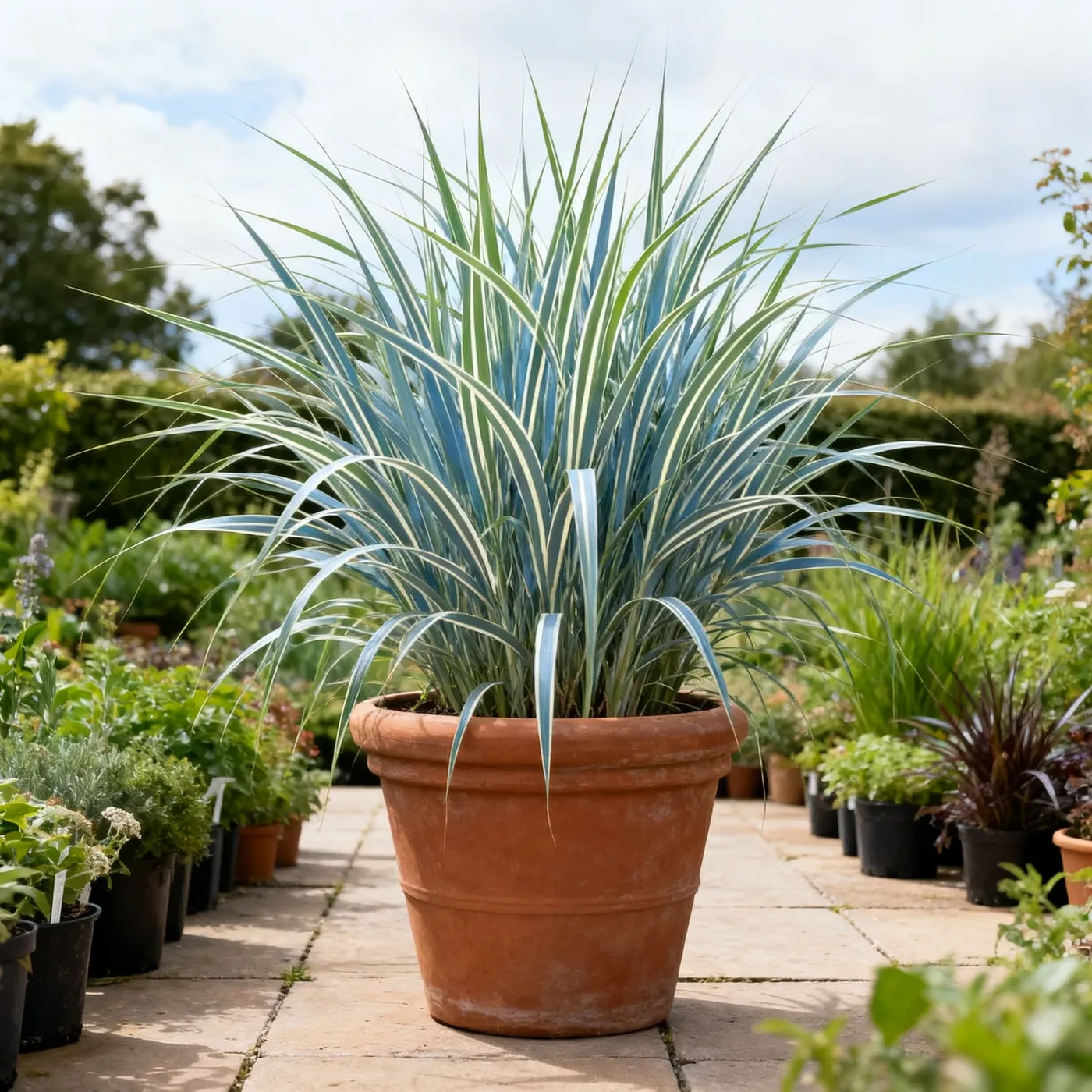
Adagio has an ultimate height of 1–1.5 meters (about 3.3–5 feet) and a spread of 0.5–1 meter (about 1.6–3.3 feet). That tidy size is exactly what seed cannot promise.
Who Seed Does Suit
Seed suits you only if you enjoy experiments and have room and years to spare. Seed sown in pots in a cold frame in spring is one way to propagate 'Adagio'. Treat that as a gamble, not a guarantee of a matching plant.
If you want a border of even, knee-to-chest-high clumps, skip it. Seed is for the curious. Nursery plants and divisions are for everyone who wants a result.
The Advice We Don't Follow
A common tip says to save seed from your best plant and sow it for free plants. We don't follow that for Adagio. The free plants are not copies of the plant you saved from, and you will not know how they differ until years have passed.
Free plants from division, on the other hand, really are free, and they really are Adagio. Spend your effort there.
Why Seedlings Do Not Match Adagio
A cultivar is one selected plant, multiplied so that every copy is identical. Seed breaks that chain, because each seedling gets a fresh mix of genes.
What Seedlings Can Vary In
Expect differences in height, clump width, plume color, plume shape and bloom timing. Some seedlings will look a lot like Adagio. Many will lean toward the wild species, which is a much bigger grass.
North Carolina State Extension says species Miscanthus sinensis grows 4 to 12 feet tall, while Adagio tops out around 5 feet. Customers usually ask us why a plant from a seed packet is towering over the fence. This is why.
Adagio Against Its Species
The table below sets the cultivar beside the species so you can see how much room seedlings have to wander.
| Trait | Adagio | Species Miscanthus sinensis |
|---|---|---|
| Height | About 3.3–5 feet | 4–12 feet |
| Spread | About 1.6–3.3 feet | 4–6 feet |
| Plume color | Pink-tinged in summer, creamy white in autumn | Gray/silver, pink, red/burgundy or white |
| Leaves | Long, narrow, gray-green, arching, orange and yellow in fall | Varies with the plant |
Pollen From the Neighbors
A seedling has two parents. The seed on your plant was set by pollen, and that pollen can come from any Miscanthus in range, not only from Adagio. So even the best-behaved seed head carries unknown genes.
That is the heart of it. You cannot steer the outcome, and you cannot predict it from the mother plant alone.
Seed Labeled Maiden Grass
Packets sold as maiden grass are the species, not Adagio. If a listing uses the Adagio name on seed, we would doubt it. For a fuller side-by-side, see our guide to Adagio versus maiden grass.
How Long Seed-Grown Plants Take to Flower
Seed is slow, and with a clumping grass the slowness is the real cost. First you wait for size. Then you wait to learn what you got.
Maturity Is Measured in Years
Adagio takes 2–5 years to reach maturity and can be slow to establish. That figure describes a plant you start with. A seedling begins as a thin tuft, much smaller than a nursery division, so plan on the long end or beyond.
What Each Year Looks Like
Do not expect a show in the first season. A seedling starts as a few narrow blades in a pot, and the plant spends its early life building roots and a crown.
In the second season it may bulk into a small clump, often with no plumes at all. Plumes and full size usually come later, in the third season or after. Only then can you judge the height and habit honestly.
The Seasons You Lose
Count the cost. A seedling grown for four or five years may flower and then turn out to be a tall, loose species plant that you would not have planted. That is four or five seasons of garden space, watering and weeding for a plant you then remove.
The same bed planted with a division or nursery plant gives you a recognizable Adagio in a season or two.
What a Division Does Instead
A division carries a mature root mass, so it re-establishes far faster than a seedling. It also blooms on the habit you already know. In our rows, the plants that settle quickest are the ones that started with a chunk of established clump.
How to Divide Adagio for a True Copy
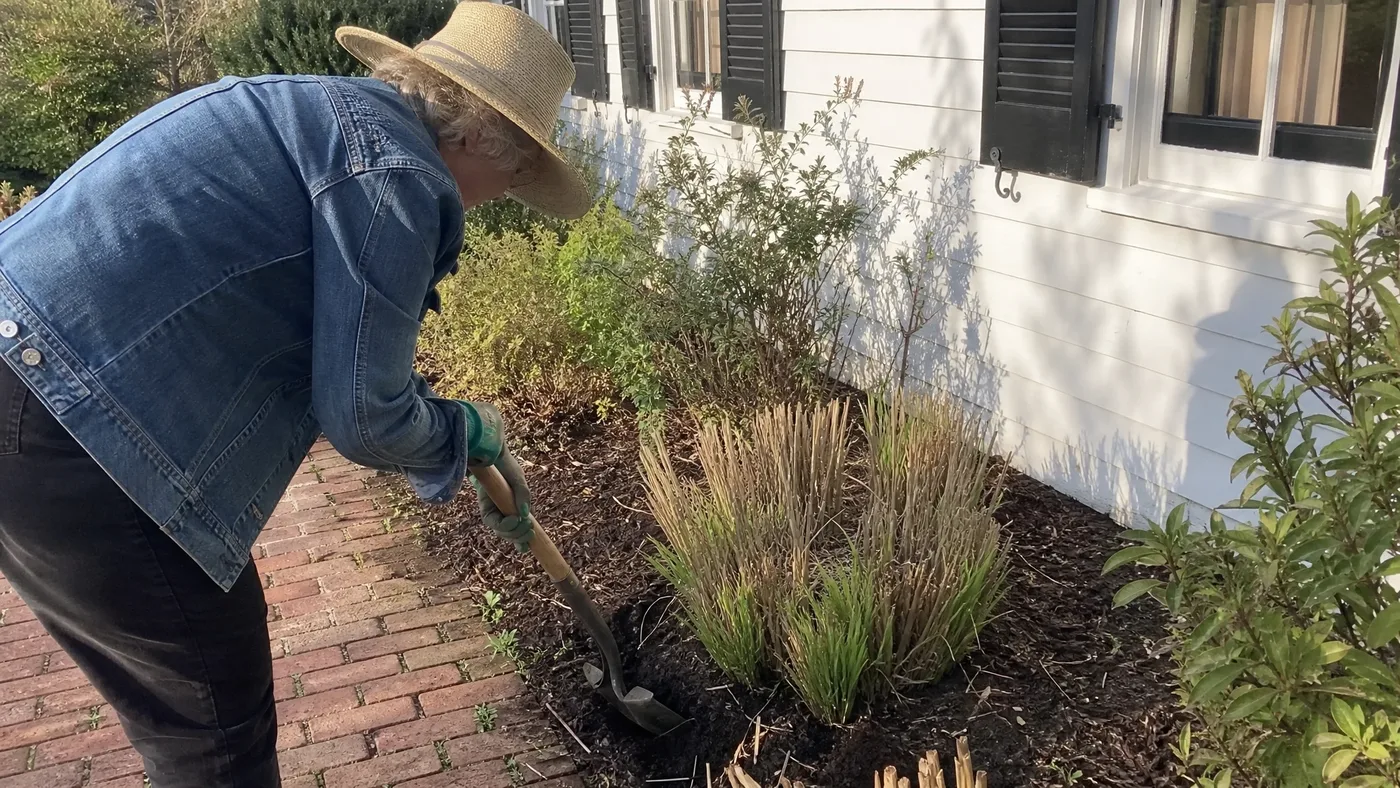
Division is the free route, and it gives you real Adagio. Miscanthus sinensis is propagated by division in the spring. Our full walkthrough is in how to divide and propagate Adagio grass, so this is the short version.
Steps
Work on a mature clump, ideally one that has been in the ground for a few years. Follow these steps in early spring, just as new growth starts.
- Cut last year's dead foliage and old flowered stems to the base in spring if you have not already.
- Dig around the clump and lift the whole root ball. Keep as much root as you can.
- Slice the clump into sections with a sharp spade or saw. Each piece needs healthy roots and several shoots.
- Replant a section right away at the same depth it grew before. Pot the others or plant them elsewhere.
- Water well, and keep the new plants evenly moist through their first season.
Choose the Right Parent
Divide only a plant you know is Adagio, with its fine, arching, gray-green leaves and compact outline. A division of a seedling just copies the seedling. Check size and plume color first.
If the clump is a lookalike you inherited with the garden, compare it with the table above before you cut it up.
Care for the Pieces
Plant divisions in full sun. Do not bury the crown deeper than it grew. Give each piece room to fill out, since a mature clump spreads up to about 3.3 feet.
Expect a slow first season. Resist the urge to feed heavily or to fuss. A division that is planted at the right depth, watered and then left alone is doing what it should.
Buying Nursery-Grown Adagio Instead
If you have no clump to divide, buy plants. This is the fastest path to a border that looks like the photos.
Why a Nursery Plant Wins
Nursery-grown Adagio is propagated from existing plants, not sown from seed. That means each plant has the same height, habit and plume color as the next. You can plant a row of five and trust that they will match.
We grow Adagio in containers sized to establish quickly, and our plants arrive ready to go in the ground.
What to Look For
Choose a plant with several healthy shoots, fine gray-green foliage and no brown, dried crowns. Our guide to buying Adagio grass covers pot sizes and what each one gets you.
Check that the plant looks like the description: long, narrow, arching leaves, not wide, stiff blades. A tall plant with coarse leaves in the pot is not Adagio.
Planting It Right
Set the plant in full sun in soil that drains. Adagio grows in moist but well-drained or well-drained soil, including chalk, clay, loam and sand, and in acid, alkaline or neutral pH. That is a forgiving range, so most yards qualify.
Check your zone with a local source first. UF/IFAS gives the species zones 4 through 9, but cultivars can differ, so confirm with your local extension service. For planting steps, read how to plant Adagio grass for a strong first season.
If You Sow Seed Anyway: A Cautious Method
Some people want to try regardless, and that is fine. Set it up as a trial and keep your expectations low.
Sowing
Sow in pots in a cold frame in spring. Use a free-draining mix and keep it lightly moist. Label every pot with the seed source and the date so you can track results.
Sow more than you need. You will cull most of what comes up.
Selecting and Culling
Grow the seedlings on in pots or a spare row until they flower. Then compare them with a true Adagio. Keep only the ones that match the compact height and pink-to-cream plumes, and discard the rest.
Do not call the keepers Adagio. They are seedlings that resemble it, and any plant you divide from them is a seedling selection, not the cultivar.
Keep Seed From Spreading
NC State notes that wind-disseminated seeds add to the invasive nature of maidengrass, and that some cultivars are less weedy than others. Cut spent plumes before they shatter if you grow seedlings or the species near open ground. Never toss seedlings into a wild area.
For more on how Adagio itself behaves, see is Adagio grass invasive.
Adagio From Division or Nursery Stock: Takeaways
Adagio is a clone, and a clone stays true only when you copy it, not when you sow it. Seedlings vary in height and plume habit, they take years to show what they are, and they will not reliably give you that tidy 3 to 5 foot clump.
Adagio Grass
Nursery-grown Adagio Grass in sizes from 1 Gallon, shipped to your door.
From $31.97
Shop Now →Divide a known plant in spring or start with nursery stock, and you get the real thing within a season or two. We are growers with our own farms, and we grow and sell top-quality grasses. On our farms, we give Adagio full sun and well-drained soil, so every plant we send out is the Adagio you ordered.