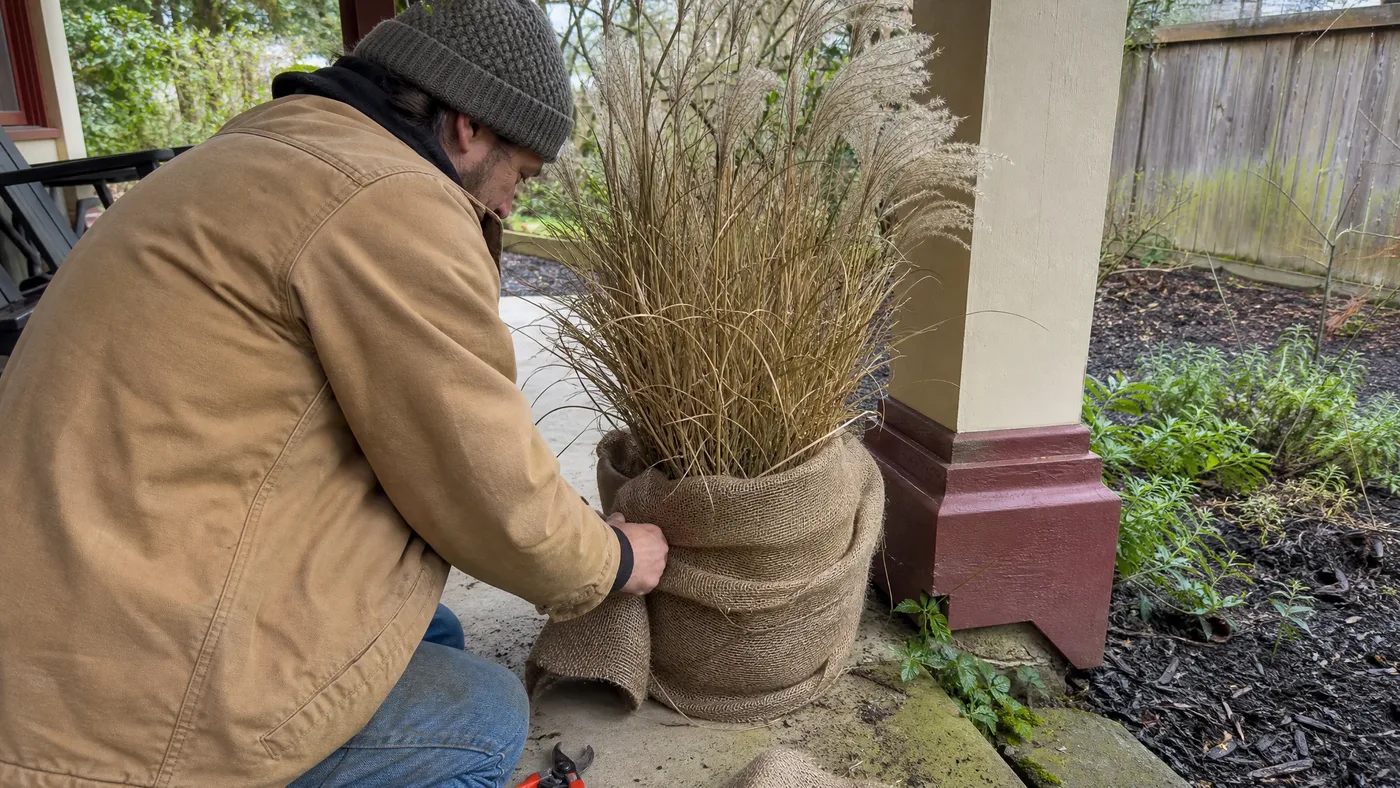
Overwintering Potted Adagio Grass in Cold Climates
A hardy grass in a pot is not the same plant as a hardy grass in the ground. Adagio is rated to zone 5 when it is planted out. Put the same clump in a container on a deck, and its roots can freeze solid in a winter the garden clump ignores. Spring then brings a pot of tan stalks that never greens up.
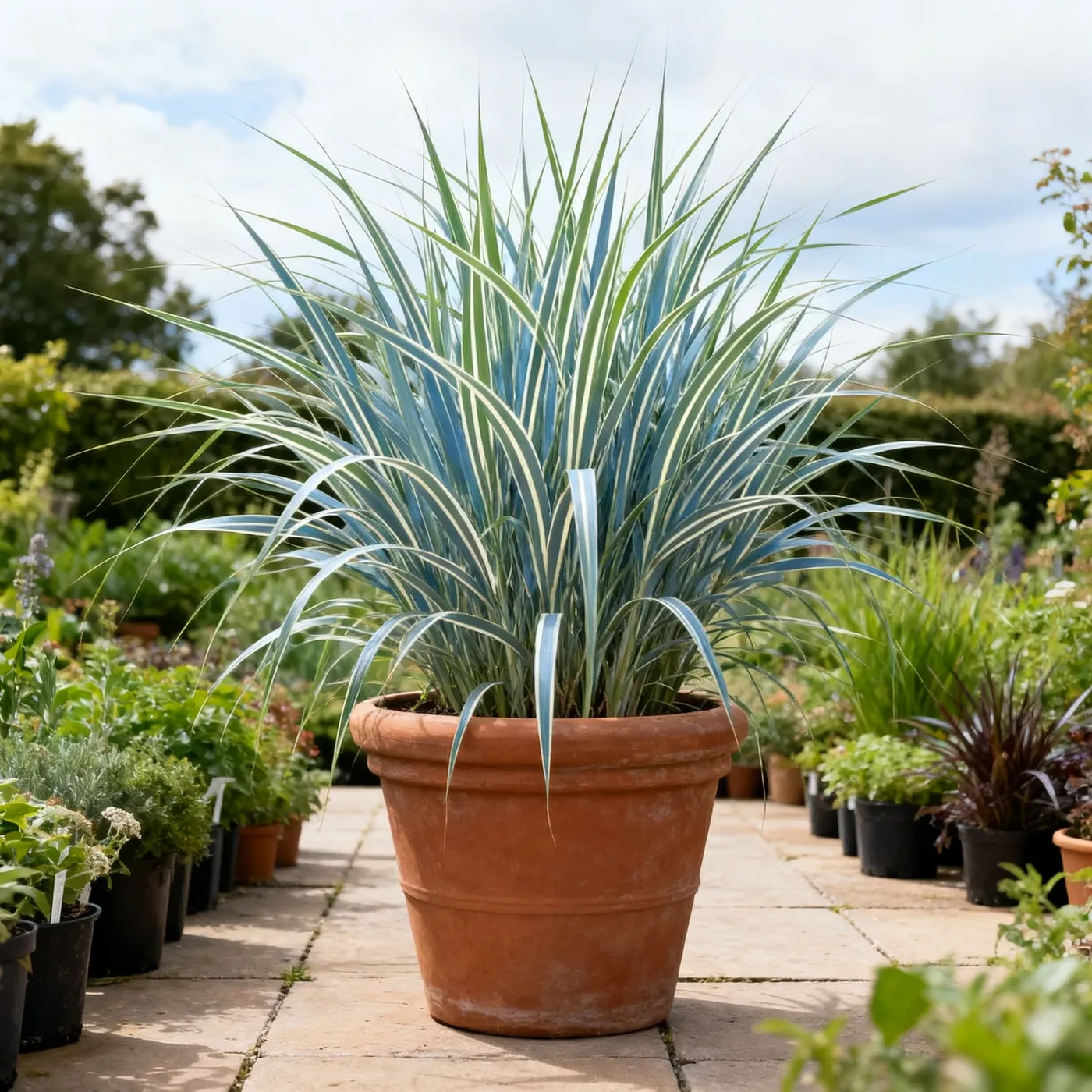
That loss is easy to prevent, and the fix costs very little. Done right, one pot gives you a compact clump up to about 5 feet tall, with pink-tinged plumes that turn creamy white in autumn, year after year.
This guide covers everything you need to know about overwintering a potted Adagio, from fall prep and choosing a method to midwinter checks and the spring wake-up.
Why Potted Adagio Grass Freezes When a Planted One Does Not
The problem is the pot, not the plant. A container strips away the soil that protects the roots, and that matters more for Adagio than the zone rating suggests.
The Insulation Gap
Adagio is listed at zone 5a, and that rating assumes the crown sits in the ground. Ground soil is a huge mass that cools slowly and buffers swings in air temperature. A pot has none of that. As UMass Extension puts it, the root ball of an unprotected container can approach the temperature of the surrounding air.
Potting mix left above ground may drop into the single digits because the soil volume is so small. A zone 5 or 6 winter can easily bring that kind of cold.
Where Your Zone Puts You
Illinois Extension gives a simple rule for pots. Look for plants hardy in a zone lower than yours, because potted roots face colder conditions than those in the ground.
Run that rule on Adagio. In zone 6, a 5a plant just meets it, with no margin. In zone 5, it falls one zone short. UF/IFAS lists the species as hardy to zone 4, but we would not lean on the species number for this cultivar.
What Nobody Can Promise
We can't hand you a temperature at which Adagio roots die. None of our sources give one, and it would be a guess. What Rutgers does say is that root hardiness is the most important factor in winter survival of container plants. So protect the roots first and worry about the foliage later. Your local extension service can tell you how cold your pots actually get.
Fall: Get Your Potted Adagio Grass Ready
Good overwintering starts before the first hard freeze. Three small jobs in fall decide how easy the rest of the season will be.
Leave the Foliage Standing
A common tip is to cut grasses to the ground in fall to tidy up before winter. We don't follow it for a potted Adagio. The standing leaves and stems shed some water and help catch snow around the crown. Fall foliage on this cultivar turns orange and yellow, so you also get something to look at.
Save the cutting for spring. Our cutting-back guide covers the timing in detail.
Check the Pot and Its Drainage
Look at the pot itself. Thin ceramic can crack when wet mix freezes and expands, so pick a sturdy, frost-rated container if you have a choice. Make sure every drainage hole is open. Lift the pot slightly off the deck on pot feet or bricks so water can escape instead of pooling and freezing underneath.
Adagio likes well-drained soil in any case, and a pot that sits wet all winter is a poor bet. Our container guide covers the mix and pot size.
Keep Watering Until the Ground Freezes
Do not stop watering the day the plumes fade. A pot that goes into winter bone dry has a weaker root system and little reserve. Water when the top of the mix feels dry, and keep doing it through fall until freezing weather sets in. The watering guide explains how to judge it.
Now move the pots together, ideally out of the wind. That makes the next steps quicker.
Late Fall: Choose One Method for Your Adagio
You have three realistic options. Pick one before the plant goes dormant, because the best choice depends on what you have in your yard.
The Three Methods Side by Side
This table compares the options for a potted Adagio in a zone 5 or 6 winter.
| Method | How it protects the roots | Best for | Watch for |
|---|---|---|---|
| Bury the pot | Surrounding soil insulates the pot and the roots | Anyone with a bit of garden or bed space | Digging before the ground freezes |
| Unheated garage or shed | Keeps the pot out of wind and the worst cold | Small or light pots you can carry | Temperature swings beyond the safe range |
| Wrap above ground | Slows heat loss from the pot | Pots too heavy to move or bury | Wrap alone does not add warmth |
What We Recommend
Bury the pot. Soil does the job a wrap can only imitate. Illinois Extension notes that sinking pots into the ground lets the surrounding soil insulate the roots against extreme cold and sudden swings.
The garage is our second choice, and wrapping is the last resort. Many people wrap a pot in burlap and call it done. We don't, because a wrap slows heat loss but never adds heat. A pot in a cold snap still gets cold.
One of the most common questions we get is why a grass sold as zone 5 died in a pot in zone 5. This is the answer.
Early Winter: Bury or Move Your Adagio Pot
Do this once the foliage has faded and the plant is dormant. You don't need to wait for deep cold, but do not leave it past the point where you can still dig.
Burying the Pot
Choose a spot in a spare bed or the vegetable patch. Adagio grows to about 5 feet in the ground, but dormant stems are small enough to tuck beside a fence or shed. Follow these steps.
- Dig a hole deep enough that the pot rim sits level with the soil surface.
- Set the pot in the hole and backfill the gaps with soil, firming it gently.
- Once the plant is fully dormant, pile loose mulch over the pot and crown. A layer of 6 to 12 inches of straw, pine needles or other loose mulch works well.
- Mark the spot, so you can find it again in spring.
Moving to an Unheated Garage
A garage or shed works if it stays cold but not brutal. Illinois Extension gives the target as between 20 and 45°F. A garage that is too warm breaks the cold rest that perennials need.
Set the pot against an inside wall, away from the door, and leave it alone. If you can't be sure of the temperature, put a cheap thermometer in there before you commit a plant to it.
If You Can Only Wrap
If the pot is too heavy to move and you have no bed to bury it in, do the best you can. Group several pots tightly together against a sheltered wall. Wrap each pot, not just the foliage, with insulating material and fill the gaps between them with leaves or straw. Then pile mulch over the top of the mix. It is the weakest option, so be ready to check it often.
Midwinter: Leave Your Adagio Alone, With a Few Checks
This is the easy part. A dormant Adagio needs very little, and the main job is making sure your protection stays in place.
Buried Pots
Walk past the bed after every big windstorm. Loose mulch blows off, and a thin layer does less than a deep one. Top it up if it has shifted. Snow on top is a bonus, so don't clear it away.
During a long winter thaw, check the pot. If you can poke a finger into the exposed mix and it is bone dry, water lightly. Otherwise, leave it be.
Garage Pots
Garages are less steady than they look. Unheated buildings can swing warmer than 45°F on sunny winter days and much colder than 20°F at night.
That is why the thermometer matters. If the space runs warm in sun, open the door a little on mild days. If it plunges, drape blankets or old cardboard around the pots overnight.
Water sparingly. A dormant clump uses very little, and mix that stays wet in the cold is not what you want.
Resist the Urge to Fuss
Brown, dry stems in January are normal. They are not a sign of trouble. In our rows, the plants we see lost most often belong to people who keep lifting covers to peek. Check on the weather and the mulch, not on the plant.
Spring: Wake Up Your Potted Adagio Grass
Spring is where you finish the job. Rushing it is the one way to lose a plant that survived the winter.
Unwrap in Stages
Pull back mulch gradually as the weather warms, not all in one weekend. A late freeze can still hit exposed new growth. Keep the straw or pine needles nearby for a few weeks in case you need to cover the pot again.
When the pot is clear, lift it from the hole and return it to its sunny spot. Adagio wants full sun, so give it the brightest place you have.
Pots from the garage can come out once nights are mild. Move them gradually, starting in a sheltered spot for a few days, and then into full sun.
Cut Back and Water
Now is the time to cut. For this cultivar, remove dead foliage and old flowered stems in spring. Cut the old stems low, just above the base, before the new shoots get tall. Cutting later risks snipping new growth.
Water when the mix feels dry, and let new leaves come in. A fresh pot of Adagio will not need much feeding to get going.
Read the Plant Before You Give Up
Adagio can be slow to show green shoots, especially after a cold winter. Don't tip it out in April. Scratch the stems at the base. If they are firm and tan inside, wait. If the whole base is soft or mushy and the mix smells sour, the roots probably froze or rotted.
If it did not make it, you will know what to change next fall. Our winter care guide covers the general cold-weather routine for planted clumps.
Keeping Potted Adagio Alive Until Spring
Adagio is tough in the ground, but a pot changes the rules. The roots lose the soil's insulation, and a zone 5a plant in a zone 5 or 6 container can freeze through. Leave the foliage standing, water through fall, and bury the pot under loose mulch. Use an unheated garage only if it stays cold but not extreme, and wrap only when nothing else works.
Adagio Grass
Nursery-grown Adagio Grass in sizes from 1 Gallon, shipped to your door.
From $31.97
Shop Now →Then check the mulch, keep your hands off the plant, and cut it back in spring. The hardiness zone guide helps you judge how much protection your area needs. As a small grower, we care about getting this right because we raise Adagio from our own farms and want every pot we grow to come back stronger next year.