Is Adagio Grass a Perennial? Here's the Answer
"Will I have to replant this every year?" Customers ask us that more than almost anything else, and the answer is no. Adagio grass is a cold-hardy, clump-forming perennial that returns from the same crown every spring for years. The question usually comes after spotting a small pot of it near a row of annual grasses at a big-box store.
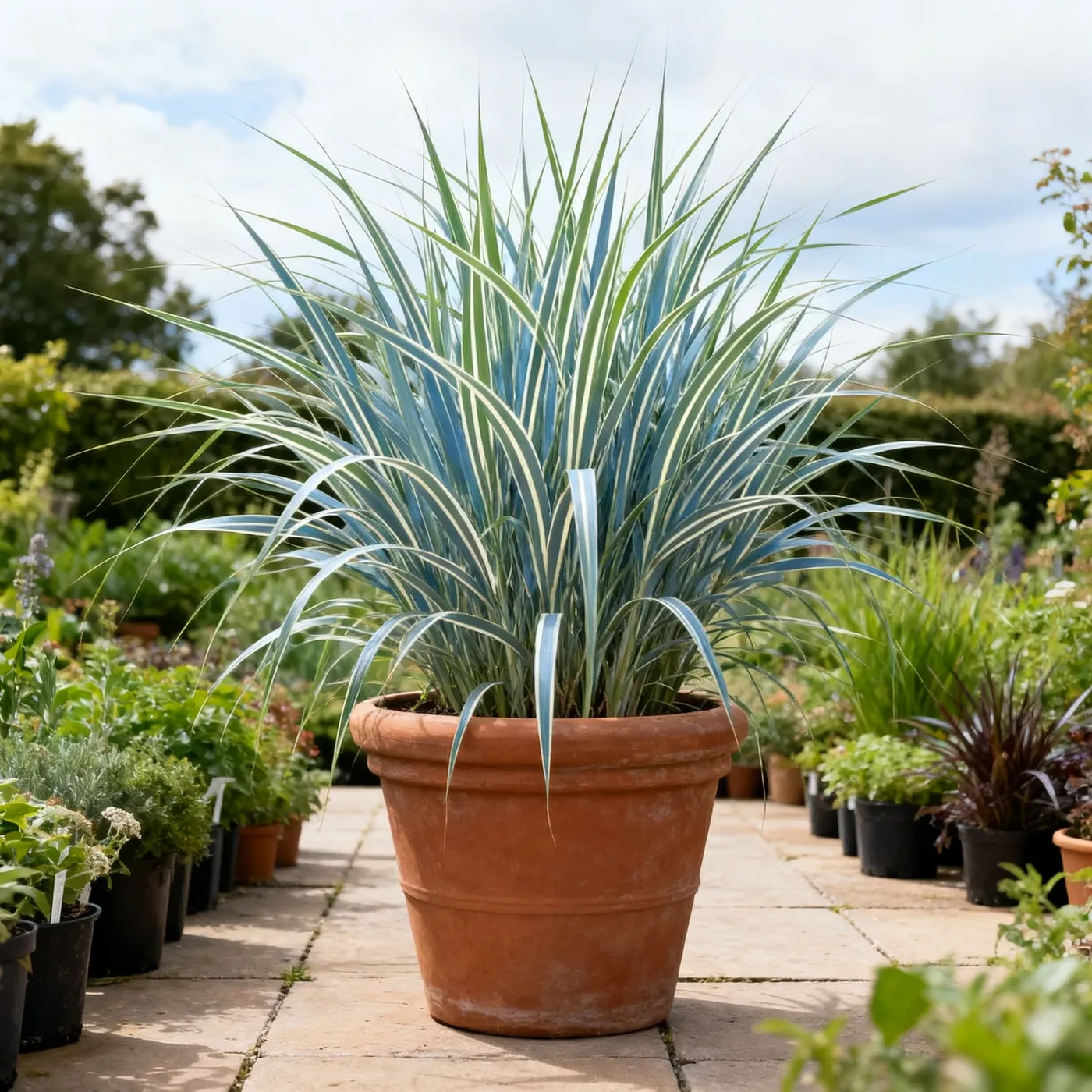
The doubt is fair. The pots look alike, the tags are short, and in winter the foliage turns tan and stops looking alive. That is how a healthy plant gets pulled out in March.
In this article, we'll go through the mistake behind the doubt, what "perennial" means for Adagio, how it differs from true annual grasses, and what the clump does through a full year. Get this right and you plant once and leave it alone. Get it wrong and you pay for the same plant twice.
The Adagio Grass Mistake Behind Most Replacements: Pulling It Every Year
Most of the trouble with this plant starts before it gets home. This section covers where the doubt comes from and what acting on it costs you.
Why the Doubt Starts at the Store
Adagio often sits in small pots right beside grasses that really are annuals, so the shelf gives you no clue which is which.
A young Adagio is a modest green tuft with a short tag. Next to a seasonal grass priced for one summer of color, it looks like the same kind of purchase. It isn't. Adagio is a perennial, and that little pot holds the first stage of a clump that fills out over several seasons. Read the botanical name on the tag: Miscanthus sinensis 'Adagio'. Our guide to buying Adagio grass and choosing a container size covers what else to check.
What Replacing It Costs You
The habit usually shows up in late winter, when the clump is brown and the urge to clear it out is strong.
Pull a dormant Adagio and you throw away a healthy crown. Worse, you restart the clock, since a fresh plant spends its first season building roots instead of putting on a show. Replace it every spring and you never see the grass at its best. You also buy the same plant again, and again.
Our advice is simple: plant once and wait. A brown clump in winter is a sleeping plant. The next two sections show why.
What "Perennial" Means for Adagio Grass
A perennial comes back from the same roots year after year instead of finishing its life in one season. Adagio does this in a specific way, and it helps to know how.
The Top Dies Back, the Crown Lives On
The lifecycle of Adagio's species is well documented, and the cultivar follows it.
NC State Extension describes maiden grass as an herbaceous perennial, deciduous, ornamental grass. Both words matter. Herbaceous means the leaves and stems die back each year instead of turning into woody growth. Deciduous means the foliage gives out for the cold season. The crown, the dense base of buds and roots at soil level, stays alive and does the work of returning.
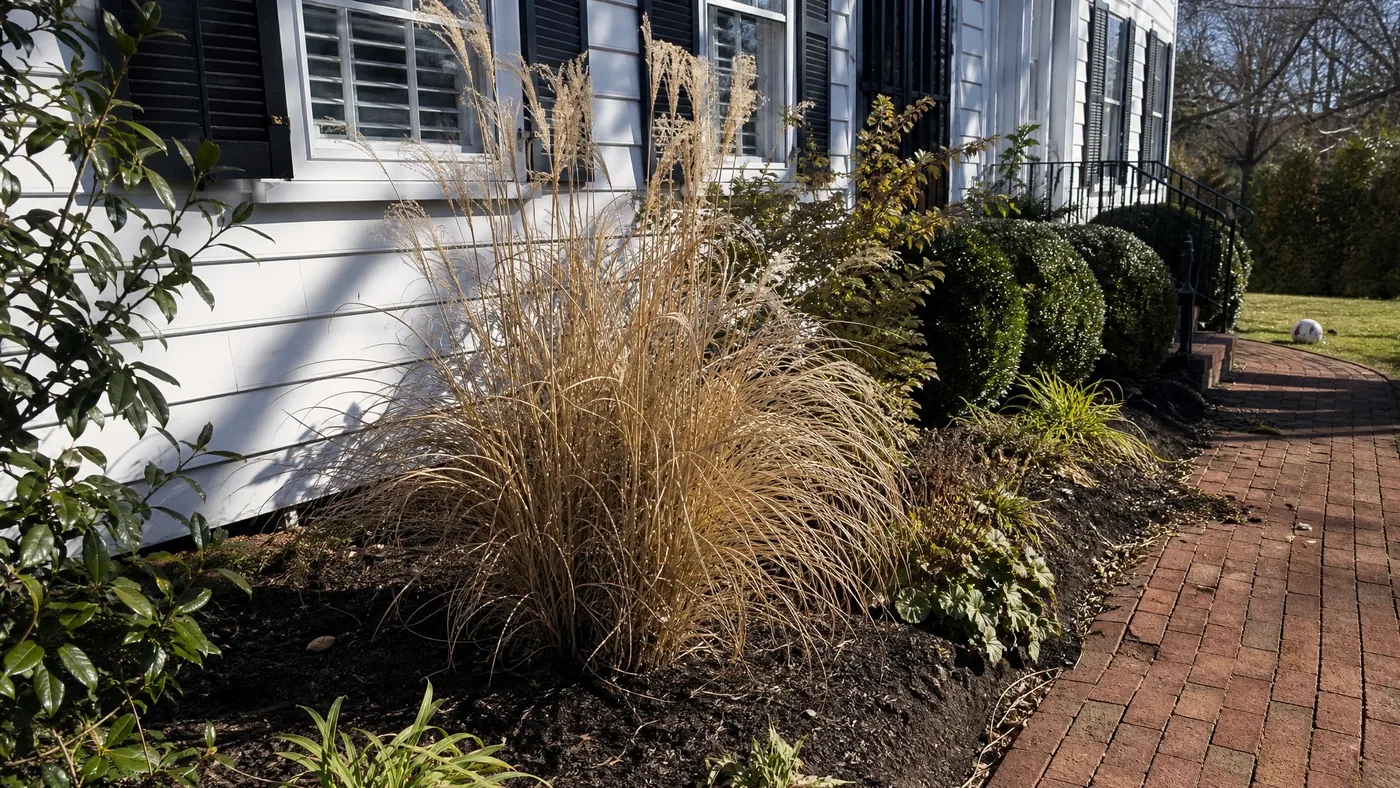
By late winter the blades are tan and brittle. By spring, new green shoots push up from that same crown.
A Clump, Not a Runner
Clump-forming growth is why the plant is still in the same spot next year, and not somewhere else in the bed.
The species grows 4 to 12 feet tall and 4 to 6 feet wide. Each year the clump widens a little from its edges. It does not send out runners to pop up elsewhere.
You get the same footprint, only slightly bigger, and nothing to dig out. That makes Adagio a good choice for a spot you want to forget about, such as a border edge, a path corner or the back of a bed.
Adagio Grass Compared With True Annual Grasses
The quickest way to settle the question is to set Adagio next to a true annual ornamental grass, one that finishes its whole life in a single growing season.
The table below shows what each one does over a year.
| Point of comparison | Adagio grass | True annual grass |
|---|---|---|
| After the first hard frost | Foliage browns, crown stays alive | Whole plant dies, roots included |
| The following spring | New blades rise from the same crown | Nothing returns, so you buy again |
| Growth form | Clump that widens slowly from the crown | One season of growth, then finished |
| Winter hardiness | Zones 5–9 | Cannot take a hard freeze |
| Replanting | Not needed | Every year |
Read the Tag Before You Buy
Two details on the tag tell you most of what you need.
Look for the botanical name and a hardiness zone range. A tag with both is a good sign. A tag that says "annual," or shows no zone at all, deserves a second look. If you are unsure, hold the pot up to the zone range for your area and check that it matches the 5 to 9 we give for Adagio.
Tender Grasses and Look-Alikes
Some grasses are perennial only in warm climates and get sold as annuals in cold ones. Adagio is not one of them.
It is also a Miscanthus, not a fountain grass, which is a frequent mix-up on the shelf. Our short explainer on whether Adagio is a fountain grass sorts out the difference. The takeaway for this question is simple: Adagio's hardiness is its own, and it does not depend on the grass in the next pot over.
Where Adagio Grass Comes Back: Hardiness in Plain Terms
A perennial only returns where winters stay inside its range. For Adagio, that range is zones 5 through 9.
Zones 5 to 9 for Adagio
The species has a wider published range than the cultivar, and it pays to keep them apart.
NC State lists the species as hardy in zones 5a through 9b. UF/IFAS gives the species zones 4 through 9. We don't stretch Adagio to zone 4 on that basis. The cultivar's own rating starts at zone 5, and a plant you are counting on should be judged by its own limits, not its parent's best case.
Our guide to Adagio grass hardiness zones goes into more detail on each end of the range.
The Cold Edge, the Warm Edge and Pots
Perennial does not mean the same thing everywhere in the range, so it helps to know which edge you are on.
In zone 5, plant in spring so the roots settle in well before the first winter, and judge the plant by its second spring, not its first. In zone 9, winter dormancy is shorter than farther north, so ask your local extension service how long it should look bare and how it handles summer heat in your area.
Pots are the one place where the perennial promise gets shaky in cold zones. Roots in a container have less protection than roots in the ground, so a pot that is fine in zone 8 may struggle in zone 5. If you grow Adagio in a container, treat winter as a real test.
A Year in the Life of an Adagio Grass Clump
Knowing the calendar makes the dormant months less worrying. Here is what the clump does, season by season, and what you do in return.
Spring: Cut Back, Then Watch for Green
Spring is the only time Adagio needs real work, and it takes about as long as a cup of coffee.
Cut the foliage down in late winter or early spring, before or just as new blades appear. Cut the whole clump close to the crown in one pass, then leave it to grow. Our guide on when and how to cut back Adagio grass has the details.
Summer: Plumes in Full Sun
Summer is when the plant earns its place.
Adagio puts up pink-tinged, tassel-like flower heads in summer, and it needs little else. The plumes fade to creamy white as autumn comes on.
Fall and Winter: Leave It Standing
Common advice is to cut ornamental grasses down in fall to tidy up. We don't do that with Adagio.
The leaves turn orange and yellow in autumn, then fade to tan, and the standing clump gives the bed shape through winter. It also keeps the crown covered. Cutting early leaves you with a bare stub and a worse view for months. Wait for late winter, cut once, and you are done.
Telling Dormant Adagio Grass From a Dead Clump
A tan, flattened clump in midwinter is the sight that sends people back to the store. Here is how to judge what you are really looking at.
The Spring Check
In our rows, a clump that looks finished in midwinter is nearly always just asleep. Run through this list before you decide anything.
- Wait until the weather has stayed warm for a few weeks before judging. A clump that looks bare in late winter may only be waiting.
- Cut the old foliage back, then look at the base for small green or pale pointed shoots at the crown.
- Tug a few old blades. Brittle tan blades that snap are normal. A base that is soft, black and sour-smelling is not.
- Give a first-year plant extra patience.
- Check whether water stands around the crown after rain. Standing water is a far likelier killer than cold.
When a Clump Really Has Died
It does happen, and the cause is almost always the site, not the plant's lifecycle.
Clay is fine as long as it drains. A clump sitting in a low spot that stays soggy through winter is the one most likely to rot. Late planting in zone 5 and thin-walled pots in cold zones are the other usual causes.
Our guide to winter care for Adagio grass covers what to do before and during the cold months.
Plant Adagio Grass Once and Let It Return
Adagio grass is a perennial. The foliage dies back each winter, the crown lives on, and the same clump sends up new blades each spring in zones 5 through 9. It stays in its spot and widens slowly. Cut it back once in late winter, leave it standing until then, and don't mistake brown blades for a dead plant.
Adagio Grass
Nursery-grown Adagio Grass in sizes from 1 Gallon, shipped to your door.
From $31.97
Shop Now →We are a small business with our own farms, growing and selling top-quality ornamental grasses like Adagio. Our growers watch this plant through every season, from the first new blades at the crown in spring to the pink-tinged plumes of summer and the standing clumps of winter, so we know a sleeping one when we see it.