Is Adagio Grass Safe for Dogs, Cats and Sensitive Skin?
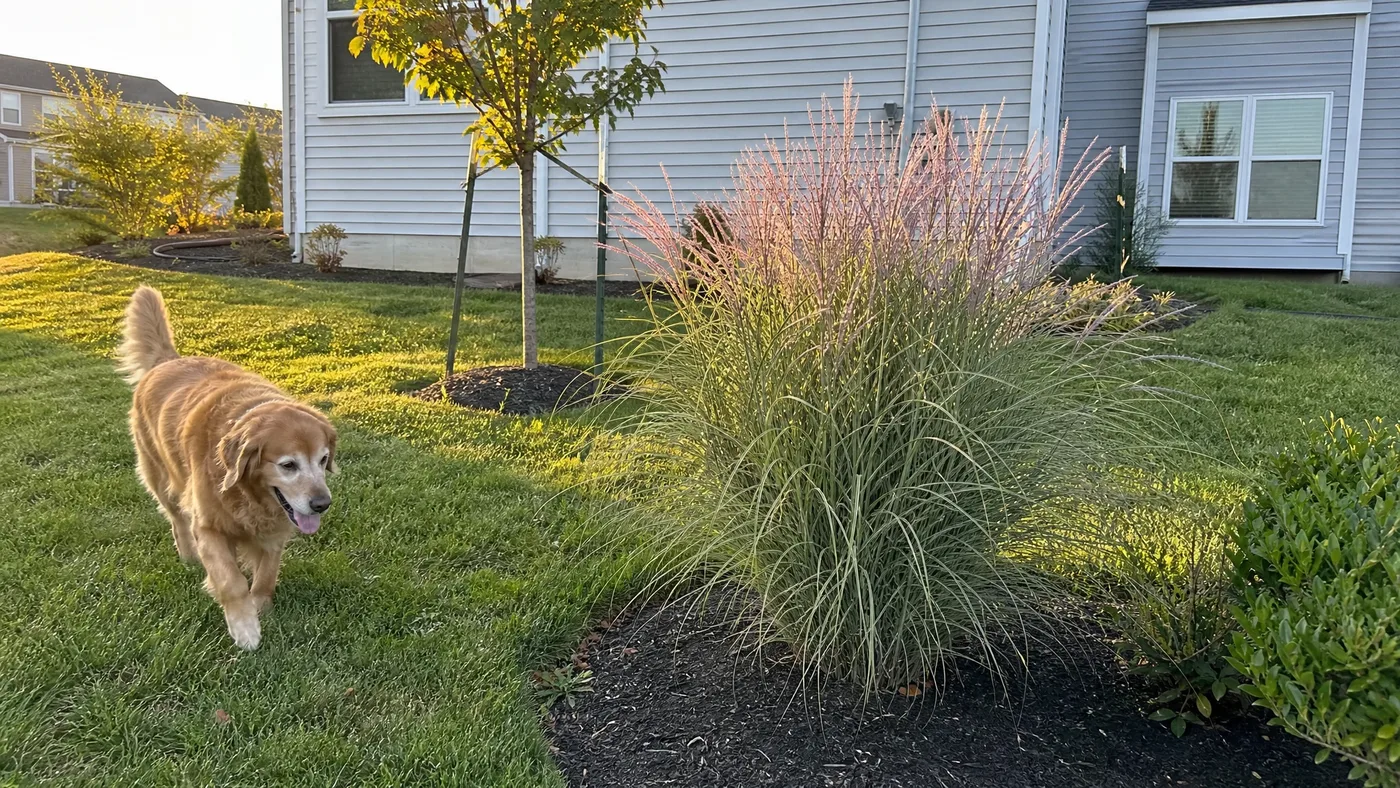
Hear that soft rustle when a breeze moves through Adagio Grass? Now picture a dog bounding straight toward it, tail high, ready to plow through the arching blades. It is a lovely scene, and it is exactly the moment that sends pet owners to search whether this grass is toxic.

Poison is the question people ask first, but it is not what we see in practice. A tidy clump that stays about 3 to 5 feet tall puts blades and plumes right at dog-nose and child height. That makes scratchy edges, itchy skin after handling and plume pollen the everyday concerns.
We'll walk you through what to do if a dog or cat chews a blade, then why the edges nick skin and paws, what causes the itch and the sneezing, and where to plant so kids, pets and plumes all get along.
Your Dog Chewed an Adagio Grass Blade, Now What?
Stay calm. A nibble or two calls for watching your dog, not a panic, and the steps below keep you ahead of it.
What We Can and Cannot Tell You
Here is where we stand on the poison question, plainly.
None of the sources we rely on for Adagio Grass list it as poisonous, and none give it a pet-safety rating either. So we will not promise it is harmless. For a firm answer about your own dog, call your vet or an animal poison control line. It takes a few minutes and settles it.
Signs to Watch and Next Steps
Adagio's blades are long, narrow and fibrous, which makes them tough to swallow. Many dogs end up with a little drool or a grassy vomit, and that is where the episode often ends.
Pull any leftover plant bits from your dog's mouth and offer fresh water. Then watch for drooling, pawing at the mouth, gagging, vomiting, loose stools or a dog that turns down dinner.
Call your vet if vomiting repeats, the belly looks sore, your dog seems unusually tired, or you cannot tell how much was eaten. Mention anything else your dog chewed, such as mulch or sprayed plants, because that changes the picture. The finely toothed edges can also scratch a mouth, so a dog that keeps pawing at its face deserves a look inside.
Stopping a Repeat Chewer
A new clump looks like a toy to a puppy or a bored dog. The plant sits right at dog height, so the temptation is built in.
Fence the clump off for its first season, hand your dog something better to gnaw on, and plant away from the spot where it runs and plays. Do not spray chemicals on any plant your dog mouths. A dog that has learned the clump is boring usually leaves it alone for good.
Cat Nibbling and Hairball Worries
Cats treat grass differently than dogs do. They graze quietly, often when no one is looking, and the evidence shows up later on the rug.
Customers usually ask us whether a grazing cat is in trouble. A cat that nibbles a few narrow Adagio blades and then coughs up a bit of grass, sometimes with fur, is doing what many grazing cats do. We still cannot call it risk-free, for the same reason as above: our sources are silent on toxicity.
You will read advice to keep every ornamental grass out of a yard with cats. We think that is overkill. Give your cat a pot of soft cat grass of its own, and plant Adagio where a nap in the clump is the biggest temptation, not a snack.
When to Call the Vet
Occasional grassy vomit is one thing. These signs mean a phone call.
- Vomiting that repeats over several hours or returns day after day.
- Retching with nothing coming up, or blood in anything your cat brings up.
- Refusing food, hiding, drooling or seeming to be in pain.
- A long strand of blade hanging from the mouth. Do not pull it out yourself.
Cats and the Standing Clump
Adagio keeps its dry foliage standing through winter, and that makes a cozy hideout.
Cats like the dry center of a standing clump, and so do small animals. Look through the clump before you cut it back so nobody gets caught in the shears.
Thin Red Lines From Adagio Grass Blades
The thing you are most likely to notice after a romp is a set of fine, red, paper-cut lines on an arm, a leg or a paw. Here is why they happen and how to head them off.
Why the Edges Nick Skin
The leaf edges are finely toothed. NC State describes the species leaves as inconspicuously serrulate, which means you can barely see the teeth but you will feel them. A cut-flower trial of this cultivar found the leaf blades sharp and painful to cut.
The blades are long, narrow and arching, so they drag across skin in a slicing motion. A hand pulled down a blade, or a leg brushing past at a run, gets the worst of it. Dry winter blades feel stiffer than green summer ones.
Paws, Legs and Eyes
The injury we hear about most is this one, not a bellyache. Dogs that tear through a clump come out with thin lines on their legs, bellies and between the toes.
Check after a romp, rinse the area and watch for limping or a spot that keeps bleeding. Deep or swollen cuts are a job for the vet.
Eyes are the bigger worry. Arching tips sweep at the height of a small dog's face or a child's. Keep the clump off any route where someone is running at speed.
Preventing Cuts
The simplest fix is distance, and Adagio makes it easy because the clump is compact.
It spreads up to about 3 feet, and the blades arch past the center. Set it back from paths and play areas by at least its full spread, and do not tuck it into narrow walkways. A low, soft-leaved edging plant in front gives paws a buffer and gives the clump room to arch.
Itchy Skin After Pruning Adagio Grass
Pruning day is when most people meet this grass up close. A few hours later, a pink, itchy arm is a very common result.
What Causes the Itch
Several things stack up. Tiny scratches from the serrated edges, dry bits of old leaf that cling to sweaty skin, and friction under a sleeve can all produce an itch.
Some people react to grass itself. We cannot tell you which cause is yours, so if a rash spreads or lingers, see a doctor.
Gloves, Sleeves and a Smarter Cut
Dress for it like you would for brambles. Wear long sleeves, long pants, eye protection and snug gloves with cuffs that overlap your sleeves. Shower and wash the clothes afterward.
Tie the clump with twine or a strap first so the blades come away in one bundle. Cut the foliage in late winter or early spring, before or just as new blades begin to appear. That way you slice through dry stems, not fresh green blades. Our cut-back guide walks through the steps.
Rake up every loose piece when you finish. Stiff cut ends are easy to step on, and curious pets love them.
Sneezing and Watery Eyes Near the Plumes
If you get stuffy around grass, the plumes are the likely culprit. They bring the pink-tinged color of summer and the creamy white that follows, which is the best part of the plant, and also the part that sheds.
Sneezing When You Sit Nearby
Adagio's flowers are consistent through August. That is a long stretch of plumes in bloom right at head height.
If grass pollen already sets you off, expect a hay-fever feel when you sit downwind of a clump: sneezing, an itchy nose and watery eyes. We cannot say how strongly any one person will react, so test it by spending time near a plant before you plant one by the patio.
Fluff Drifting Across the Yard
As the plumes age they loosen, and the fluffy seed heads shed. Wind-disseminated seeds add to the species' invasive nature in North Carolina, which is why plume placement matters. We cover that in our guide to seedlings and clump habit.
The fluff also lands on windowsills, in pet fur and on a damp deck, so a clump near the door gets tracked indoors.
Simple Fixes
Plant the clump away from open windows, doors and the spot where you sit, and set it downwind of seating, not upwind. Wear a dust mask and glasses on cut-back day.
If symptoms are strong, talk to an allergist. We cannot diagnose you, and we would rather you check than guess.
Where Kids Play Around Adagio Grass
Children and this grass are drawn to each other. The plumes sit at face height for little ones, and they feel as soft as they look.
Edges and Plumes
The risk for kids is the same as for dogs. A hand pulled along a blade gets cut, and a child who tugs a plume gets the blades with it. The cut-flower trial's "sharp and painful" verdict applies to small hands as much as to pruning shears.
Plumes are tempting to grab, shake and wave, so expect them to be the first thing a child reaches for. That is where the blades are close by.
Setting Boundaries
Mark the plant's edge in a way a child can see. Leave a band of mulch, gravel or paving between the clump and any play lawn, and keep it out of ball-game zones, where running kids and loose balls meet.
Teach a short rule: look and listen to the rustle, but do not pull. Keep children indoors or well away on cut-back day, when stiff cut stems lie around.
Give children something soft of their own to touch, like a few plumes you clip and set in a vase for them.
Placing Adagio Grass so Everyone Stays Happy
This is where the earlier sections come together. With a clump that tops out at about 3 to 5 feet and spreads up to 3 feet, a good spot is easy to find.
The table below lines up the spots we like best for homes with pets and kids, with a note on each.
| Spot | Why it works | Tip |
|---|---|---|
| Back of a border | Low plants in front keep paws and hands away | Leave a gap for you to reach the clump at cut-back time |
| Corner of the patio | Plumes catch the light without brushing past anyone | Place it downwind of seating |
| Large pot on a deck | Raises blades and keeps the clump contained | See our container guide |
| Along a fence line | Backs up a barrier and keeps dogs out | Space it as in our spacing guide |
Skip the dog's running path, narrow walkways, the edge of the play lawn and anywhere near an entry door. Adagio wants a full-sun spot, so choose a sunny corner that is also out of the traffic.
Before you dig, walk the route your dog takes and picture your child's. If either passes within a full spread of the planting hole, move it. Our landscape ideas show how to build a safe layout around it.
Adagio Grass Plumes Are Worth the Planning
Adagio rewards you with soft summer plumes, orange and yellow autumn color and a tidy clump that does not demand much. The concerns are small and manageable: edges that cut, pollen that bothers some noses, and a toxicity question that your vet can settle.
Adagio Grass
Nursery-grown Adagio Grass in sizes from 1 Gallon, shipped to your door.
From $31.97
Shop Now →Come enjoy the plumes, and start with one placement tip: set the clump back from the path where your dog runs, by at least its full spread, and watch it sway from a comfortable distance. Every Adagio we ship is potted and packed with care so it arrives ready to plant, which leaves you free to choose the right spot.