Adagio Grass vs Gracillimus: Which Miscanthus Fits Your Yard?
When we pack a truck, the tall, wide plants go in first and the small ones go in last. Size decides where everything sits, and in the yard it decides the same things: how much room a grass takes, what it hides, and how soon you wish you had picked the other one. Customers usually ask us which is better, Adagio or Gracillimus, and the honest answer starts with how much room you have.
Choose wrong and you get a clump crowding the walkway or a gap in a border you meant to fill. Choose right and you plant it once and leave it alone. Read on for height, blade texture, spread, hardiness, soil and sun, plumes and flopping, how each arrives, and a yard-by-yard pick.
Mature Height Decides the Rest
Start with the numbers, because they sit closer together than most catalog copy suggests. Here is what the published sources say for each cultivar.
| Trait | Adagio | Gracillimus |
|---|---|---|
| Height | 1–1.5 m, about 3.3–5 ft | 1–1.5 m, about 3.3–5 ft, or 3–5 ft |
| Spread | 0.5–1 m, about 1.6–3.3 ft | 0.5–1 m, about 1.6–3.3 ft |
Adagio grows 1–1.5 meters tall, and Gracillimus has the identical range. You will see Gracillimus quoted taller elsewhere, and in some gardens it does stand above Adagio. The sources we trust do not promise it.
Where the Species Sits
The wild-type plant is a different animal. NC State lists Miscanthus sinensis at 4 to 12 feet tall, so both of these cultivars are well down the size scale. Our guide on how big Adagio Grass gets covers its growth rate year by year.
Verdict: a near tie on paper, so do not buy Gracillimus expecting a 6-foot privacy screen. Neither one is a true screen. If you want a hedge of grass, you want a tall species-type Miscanthus. If you want a grass that tops out around 5 feet at most, either works, and we would reach for Adagio first because its ceiling is the one we can stand behind.
Blade Width and Texture in Adagio Grass
Texture is where the two plants look least alike up close, so this is the one criterion where you can choose by eye.
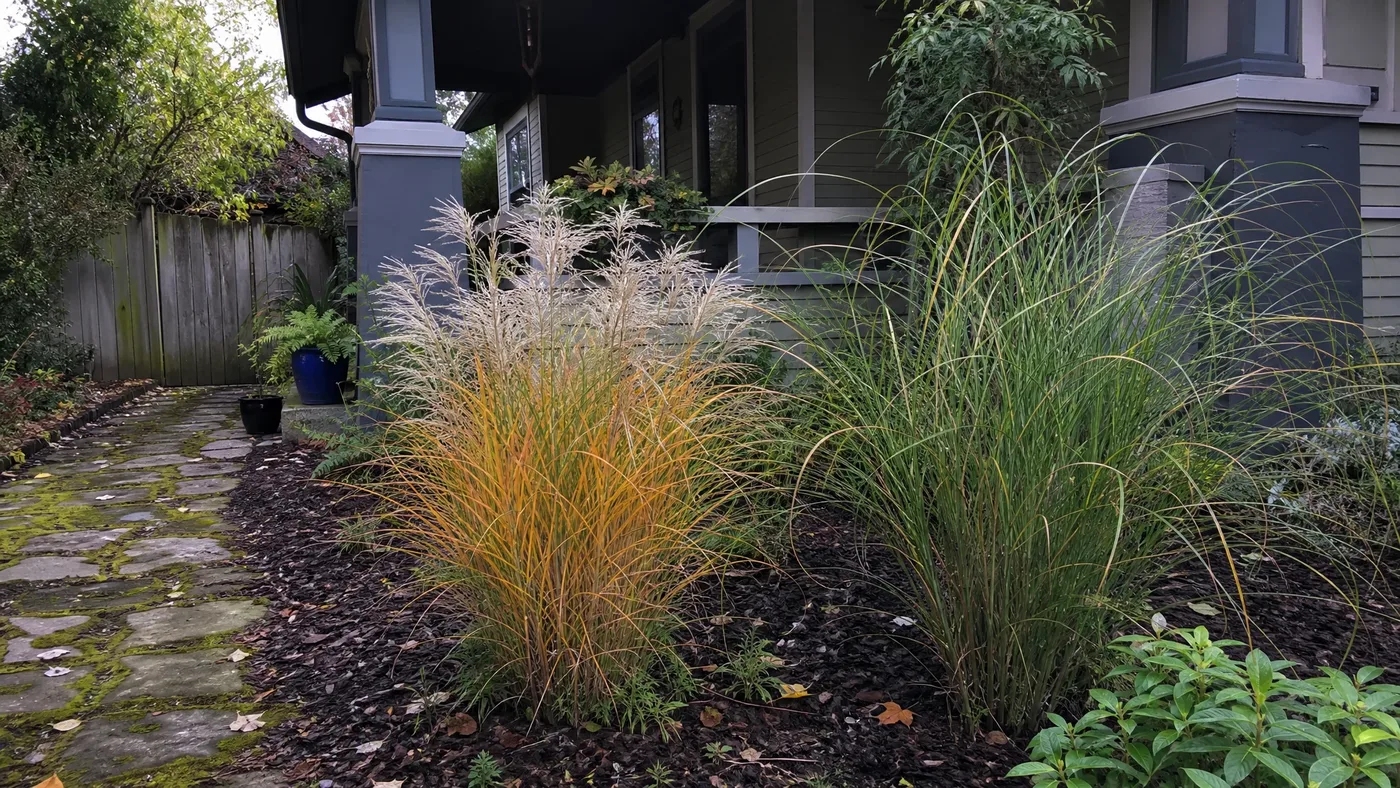
LSU describes Gracillimus as having very fine green leaves, ¼ to ½ inch wide, in a dense, erect clump. A white midrib runs down each blade. The foliage is slender, medium green and weeping. The effect is a thread-like, pale-striped mound.
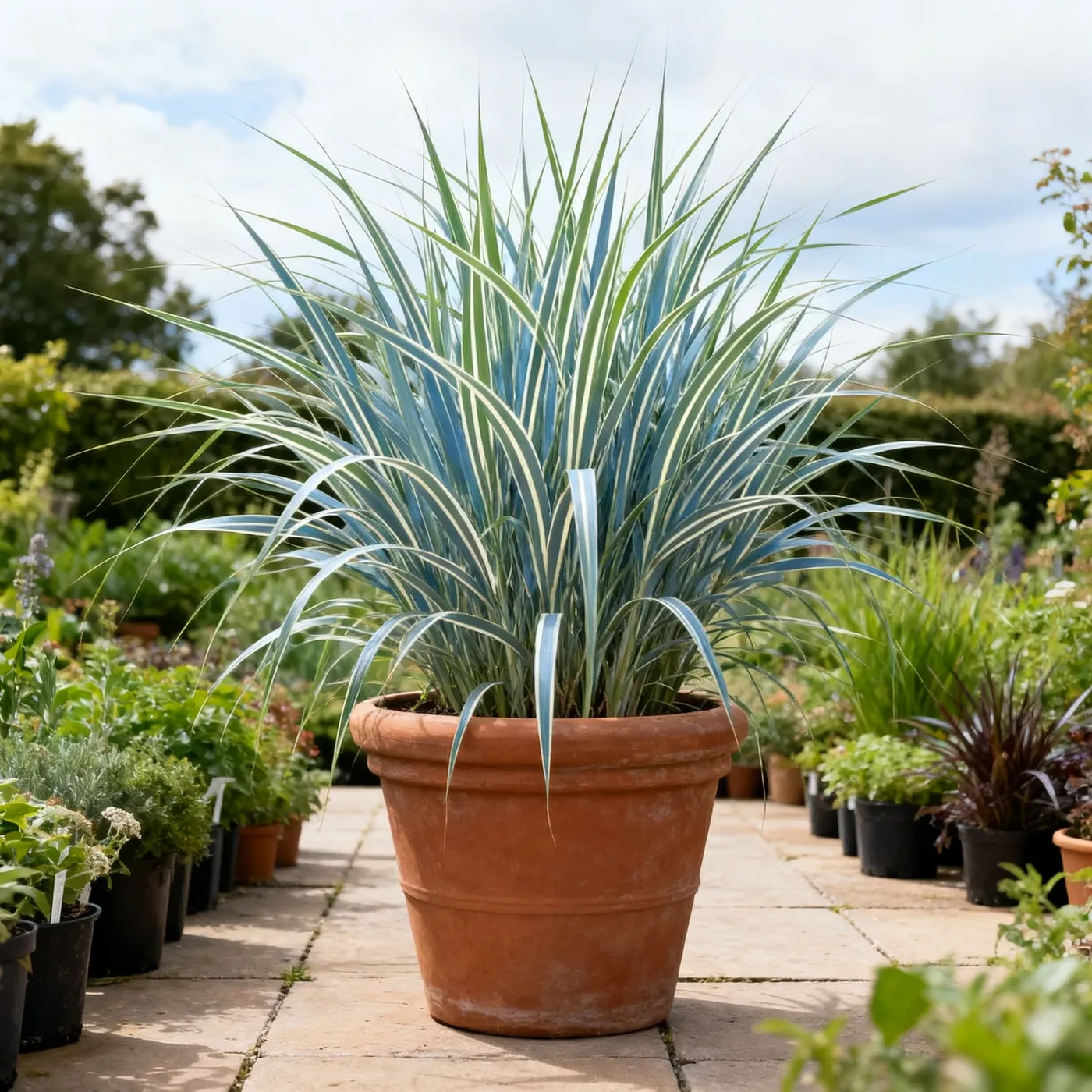
Adagio gives you long, narrow, arching blades too, but in gray-green rather than medium green. That cooler color is what sets it apart. It turns orange and yellow in autumn, but Gracillimus also colors in fall, turning gold, orange or copper-orange.
Which Reads Better in a Border
Fine texture shows best against bold leaves such as hostas, coneflower or broadleaf evergreens. Gray-green foliage, by contrast, quiets down a bed of bright greens and holds its own next to purple and burgundy.
Verdict: Gracillimus wins on texture alone. If you want the finest, most feathery blade, that is the one. If you care more about foliage color and autumn change, Adagio wins, and it is the better partner for the companion plants in our landscape ideas.
Clump Shape and Spacing for Adagio Grass
You may have read that Gracillimus fountains much wider than Adagio. The published spread figures do not show that, so here is what they do show and how we would space either one.
What the Sources Say About Spread
Both cultivars have a spread of 0.5–1 meter, or about 1.6–3.3 feet. Gracillimus is compact and clump-forming, with narrow arching leaves. It forms a dense, erect clump. Nothing about it suggests a broad, sprawling fountain.
The species is another story, at 4 to 6 feet wide. If a plant on a nursery bench is labeled only as maiden grass, ask for the cultivar name. The wrong tag can cost you several feet of border.
Spacing for Either Grass
Space by the mature spread, not by the pot. For a border where you want each clump to stand alone, set centers at about 3 feet, the top of the range. For a tighter drift, go closer and accept that the clumps will knit together. Our guide to Adagio Grass spacing for borders, hedges and mass planting has the layouts.
Verdict: a draw on spread. Treat Gracillimus the way you would treat Adagio and plan for the high end of 3.3 feet. Then if either one turns out narrower, you have lost nothing but a little empty mulch for a season.
Cold Hardiness and Winter Survival Compared
Both grasses die back to the ground and return from the crown, so the question is how cold the crown can take. The sources describe cold in different systems, so we will keep them apart.
For Adagio, the grower listing we work from gives zone 5a. The species spans zones 5a through 9b at NC State and 4 through 9 at UF/IFAS, so a cultivar rated 5a sits comfortably inside that. Our hardiness zones guide goes zone by zone.
For Gracillimus, we found no stated zone in our sources, and we would not guess one.
Winter Behavior
The dead foliage looks tan and stays upright, and the plants look better for it. Leave it standing, then cut it down in late winter or early spring, before or just as new blades appear, which is the right timing for the species.
Verdict: Adagio for colder yards, simply because it comes with a stated zone you can check against your map. Gracillimus is very likely fine in a cold garden, but a hard rating beats a hunch. If you are on the edge, ask your local extension service what has survived near you.
Soil, Sun and Water Differences That Matter
Both are easy, which is the point of them. The details below matter mostly at the extremes: very lean ground, heavy ground and shade.
Sun
Adagio wants full sun only. The species tolerates partial shade, but a grass pushed into shade grows soft and loose. If your bed gets less than a full day of sun, you are better off choosing the site first and the cultivar second.
Soil and Drainage
Adagio takes moist but well-drained or well-drained soil, in chalk, clay, loam or sand, and acid, alkaline or neutral pH. That is a wide net. We found no soil listing for Gracillimus from our sources, so give it the same drainage and expect the species baseline: UF/IFAS lists Miscanthus sinensis as tolerating occasional wet, acidic to slightly alkaline soil and moderate drought.
Watering
Water new plants through their first season, then back off. Established clumps of either grass want a deep soak in a dry spell, not a routine. Our watering guide has the schedule, which we do not repeat here.
Verdict: for lean, sandy or chalky ground, Adagio, since the listing names those soils. For a wetter site, neither does well in standing water. Fix drainage first and the cultivar choice barely matters.
Plume Timing and Flop Risk in Adagio Grass
Plumes are the reason most people buy a Miscanthus, and a flopped plant hides them. Both matter, so we look at each.
When Each One Blooms
Adagio carries pink-tinged, tassel-like flower heads in summer that turn creamy white in autumn. Gracillimus has silky, purple-tinged, curled panicles in late summer. They emerge coppery in the fall and mature to silver.
So Adagio shows color sooner and moves through pink to cream. Gracillimus arrives later, in darker, more coppery tones. Both then stand well into winter.
Leaning and Flopping
None of our sources report a flopping problem for either cultivar. In our rows, the grasses that lean are almost always the ones that got extra feed or too little sun, not the ones that got the wrong name on the tag. That fits with growing Adagio in full sun.
Self-seeding is a separate matter. Gracillimus sets little seed, while the species is invasive in North Carolina. Whether Adagio spreads is a question we answer in our guide on its clump habit, so check it before planting near a natural area.
Verdict: a draw. If you want plumes earlier, take Adagio. If you want them late and silvery, take Gracillimus. To keep either upright, give it full sun and skip the rich soil and extra fertilizer.
Shipping Size and Planting Order for Adagio Grass
This is the part we know best, because it is the part we handle. We grow and ship Adagio Grass in containers, and the sizes and what to look for are laid out in our container sizes buying guide.
How They Arrive
Whatever the size, a larger pot gets you a fuller clump in year one and a smaller one costs less and catches up. Gracillimus from other sources comes in its own range of sizes, so compare pot size to pot size, not price to price. Unpack the day it arrives and check that the crown is firm and the roots are moist.
Prep, Plant and Space in Order
Work in the same order we load a truck, biggest first, and the planting goes quickly.
First, mark the footprint. Use stakes or flour to outline where each mature clump will sit, using the spread figures above.
Second, prep the bed. Pick a full-sun spot, loosen the soil and check that water drains away.
Third, plant the largest clumps. Gracillimus or taller plants go at the back, with Adagio in front.
Finally, water in and mulch. Our first-season planting guide covers the details from there.
Choosing Between Adagio Grass and Gracillimus by Yard
Here is where the verdicts above turn into a pick. We would choose Adagio Grass for most of these yards, and we say so plainly.
Small front border or tight bed. Adagio. Its 5-foot ceiling and 3-foot spread are the ones you can plan around.
Cold yard. Adagio, for the stated zone 5a.
Sandy, lean or chalky soil. Adagio, since its listing names those soils.
Fine-textured accent among bold leaves. Gracillimus, with its very fine, pale-striped blades.
Late, silvery plumes. Gracillimus, for the coppery late-season panicles.
A real privacy screen. Neither. Choose a tall species-type Miscanthus.
Measure, Check, Then Order Your Miscanthus
Size is close, texture favors Gracillimus, and everything else leans to Adagio because it comes with the clearer paperwork. For most yards, plant Adagio and leave it alone. Before you order, run this short check:
- Measure the space and plan for a clump up to about 5 feet tall and 3 feet wide.
- Check your zone against 5a and confirm with your local extension service.
- Pick the cultivar: Adagio for color, cold and lean soil, Gracillimus for the finest blade.
Adagio Grass
Nursery-grown Adagio Grass in sizes from 1 Gallon, shipped to your door.
From $31.97
Shop Now →On our farms we grow Adagio Grass in full sun and well-drained soil and then leave it alone, which is how we would grow it for you. We are growers who grow and sell top-quality grasses, and that is the advice we give every customer.