Where Adagio Grass Comes From: Cultivar Origin and Native Range
No, Adagio grass is not native anywhere. It is a garden cultivar of Miscanthus sinensis, a species that grows wild in East Asia, and a cultivar has no native range of its own. Only its parent species does.
The split matters if you plan around native plants, hardiness zones or invasive plant lists. Mix the two up and you either rule out a good plant for the wrong reason or put it in the wrong spot.
This article talks about where Adagio and its parent species come from and answers the questions customers ask us most. Read on to learn what "native" means for a cultivar, how the East Asian roots shape hardiness, what escape risk looks like in North America, and how to fit Adagio into a native-minded garden.
Adagio Grass Is Not Native, and That Is Where the Mistakes Start
The most common mistake is a hunt for Adagio's native range. There is none to find. Here is why, and what to do with the answer.
A Cultivar Has No Native Range
A cultivar is a plant selected for particular traits and kept going in cultivation. It does not grow wild on any hillside. Adagio is a selection of Miscanthus sinensis, so the clump in your yard started with growers, not with a wild population.
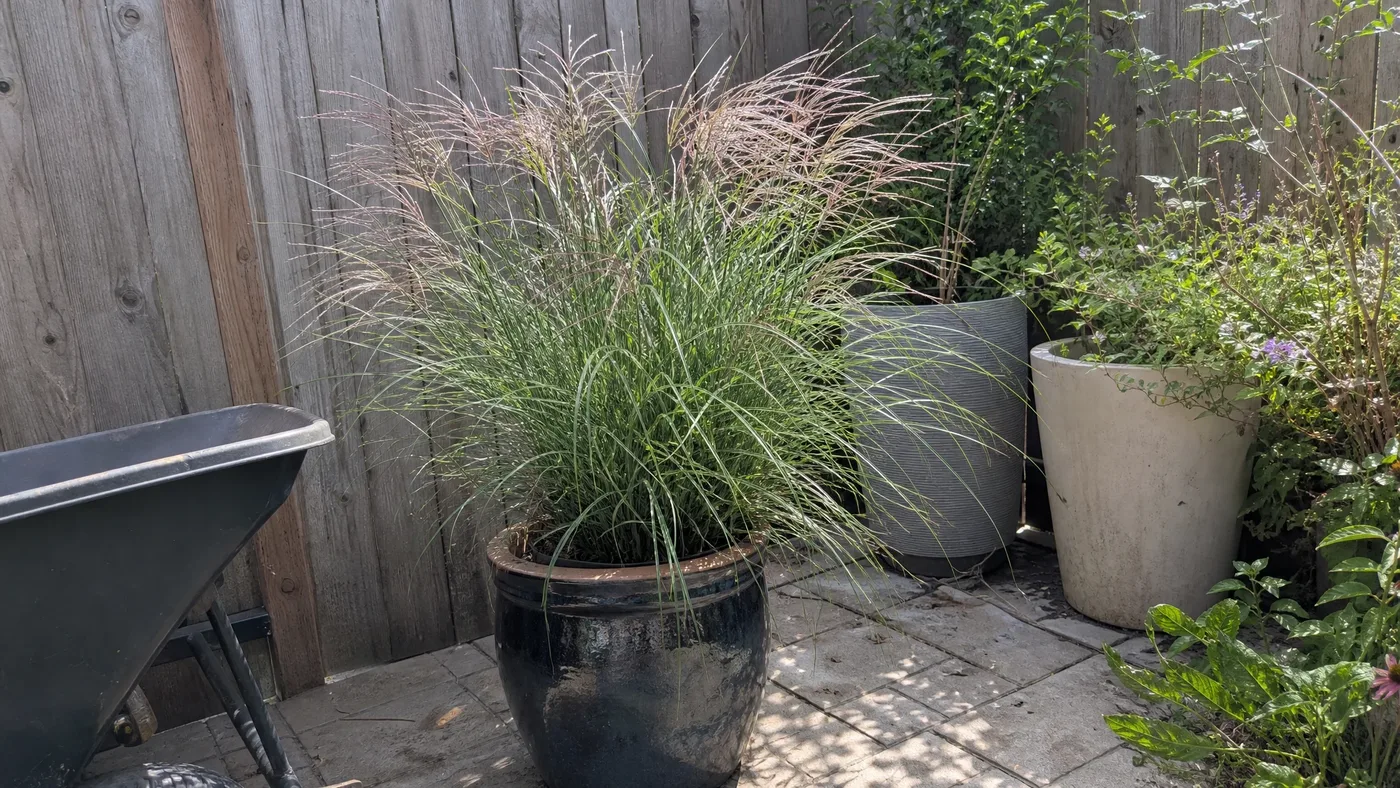
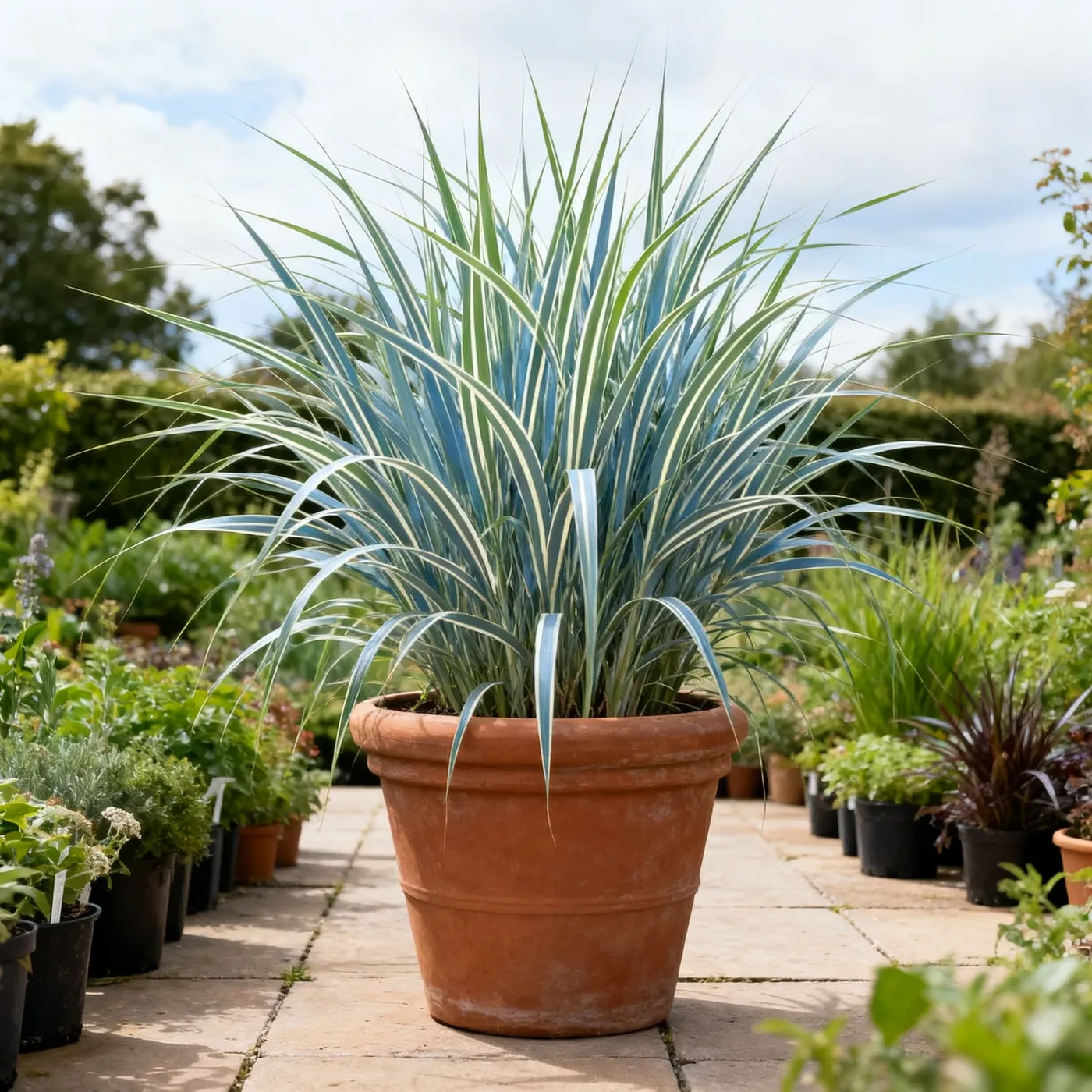
You can see the selection in the numbers. Adagio stands 1–1.5 meters tall, about 3–5 feet, with a spread of 0.5–1 meter, or roughly 1.6–3.3 feet. The wild-type species grows 4 to 12 feet tall. The compact size and the pink-tinged plumes that fade to creamy white in autumn belong to the cultivar.
Where the Confusion Comes From
Most pages about "maiden grass" describe the species. They talk about native range, seeding and tall clumps. Readers carry all of that over to Adagio.
One of the most common questions we get is whether Adagio is a native plant. People then land on one of two wrong ideas. Some assume it is a North American native. Others assume it is a wild, weedy grass because the species has a reputation. Neither is right. Adagio is a garden plant with a wild relative abroad.
What "Native" Actually Means Here
Native means a plant grew in a place on its own, before people moved it around. That is a statement about a species and a region, never about a named selection.
So the question has two layers. Is the species native to your area? No, it comes from East Asia. Is the cultivar native to anywhere? No, because it only exists in cultivation. A plant can fail the first test and still be a well-behaved garden plant, but you should know which test you are applying.
The Short Answer to Give a Neighbor
Adagio is not native to North America, or to anywhere else. Its parent species is native to East Asia. That is the whole answer, and it is the one to use on a native-plant checklist.
If you want to see how the name breaks down into genus, species and cultivar, our guide on the botanical name for Adagio grass walks through it. Knowing which part of the name is the species and which is the cultivar makes every other question on this page easier to sort.
What Adagio Grass Inherits From Its East Asian Parent
A cultivar still carries its parent's wiring. Where the species comes from tells you a lot about what Adagio wants in your yard.
Where the Parent Species Grows Wild
The species is native to Borneo, three regions of China, Hainan and Japan. That is a big spread of climates, from island lowlands to cooler mainland country. It is the species that holds this range, not Adagio.
In Japan the picture is clear. In its native Japan, it is often the dominant species in grasslands. This is an open-country grass, and that explains a lot about how it behaves in a garden.
What Open Grassland Means for Your Site
A plant that wins in open grassland wants light. Full sun suits Adagio, and that fits its open-grassland roots. Put it in a bright spot and it holds a tidy, upright clump with plumes above the leaves.
Soil can be moist but well drained or simply well drained, in chalk, clay, loam or sand, and acid, alkaline or neutral. In other words, give it sun and it is not fussy about much else. Our guide to Adagio versus the larger maiden grasses covers how the cultivar differs from the taller type you see in older plantings.
What the Roots Mean for Hardiness
A species with a wide natural range tends to give gardeners a wide range of zones. Sources still differ a little. UF/IFAS gives the species zones 4 through 9, while NC State lists 5a through 9b.
For Adagio itself, we plan around zone 5a as the cold limit. Check our Adagio hardiness zone guide before you plant at the edge of that range.
Species and Adagio Side by Side
This table lays out the parent species next to the cultivar, so you can see which facts belong to which.
| Trait | Parent species | Adagio |
|---|---|---|
| Native range | East Asia, including China and Japan | None. Garden-selected cultivar |
| Height | 4–12 ft | About 3–5 ft |
| Spread | 4–6 ft | About 1.6–3.3 ft |
| Hardiness | Zones 4–9 (UF/IFAS) | Zone 5a listing |
| Plume color | Gray/silver, pink, red/burgundy or white | Pink-tinged, turning creamy white |
Escape Risk: What the Species Record Means for Adagio Grass
Native-minded buyers rarely ask about origin out of curiosity. They want to know whether the plant will leave the bed. The record on the species is worth knowing before you decide.
What the Research Says About the Species
A natural history survey from the University of Illinois notes that the species has been in the United States since its introduction in the late 19th century and has become both a major ornamental crop and an invasive species. Escaped plants strongly favored disturbed, unmanaged ground such as roadsides and forest edges.
The survey also found the species tolerates a broad range of climate, light and nutrients in the eastern US. That is why the authors see a risk of further spread. NC State adds that wind-carried seed adds to its invasive nature, and that the species is on the North Carolina Invasive Plant Council list.
Why Wind-Carried Seed Matters
Escape is mostly a seed story. A clump that stays put is a garden plant. Seed that rides the wind to a ditch or a woodland edge is how a garden grass becomes a roadside one.
We won't tell you Adagio sets no seed, because none of our sources say that. What we can say is that the escape record describes the species in unmanaged places, not tended beds. That is the line to plan around.
What a Cultivar Name Does and Does Not Tell You
There are also many cultivars, some of which may be less weedy than others. That cuts both ways. It does not clear every cultivar, and it does not condemn every one.
Here is where we part ways with common advice. Plenty of people say a cultivar name makes a plant safe. We don't treat it that way for Adagio. The species record is real, and the sources give no reason to hand any cultivar a blanket pass. Nor do we think you need to avoid every Miscanthus.
The practical rule is to plant it where you manage the ground. Keep it in a tended bed, away from roadsides, ditches and forest edges. Our guide on Adagio's spread, seedlings and clump habit goes deeper on how it behaves in a garden.
Check Your Local List
Status differs by state and county. Before planting, check your state's invasive plant list or call your local extension service. If the species is listed where you live, follow that rule over anything you read here.
Planning a Native-Minded Garden With Adagio Grass
You can keep a native-focused yard and still have a place for Adagio. The trick is giving each part of the garden one job.
Sort the Beds by Purpose
Wildlife and restoration areas should hold plants native to your region. Adagio does not belong in those. Display beds, entries and borders are another matter, and a 3–5 foot clump with pink-tinged plumes fits there well.
That split keeps the species and the cultivar from blurring together. Native plantings stay native, and the garden-bred grass stays in the garden. If you want pairing ideas for formal beds, see our Adagio landscape ideas and companions.
If You Want a Native Grass Instead
Some yards need a native grass and nothing else, and that is a fair rule. Adagio will not satisfy it, and we would rather say so than stretch the definition.
Ask your local extension service or native plant society which grasses are native to your county. They know what suits your soil and rainfall. Choose from that list for restoration areas and keep Adagio for the beds where a compact, plumed grass earns its place.
Placement Checklist
Use these points when you pick a spot for Adagio in a yard that leans native.
- Choose a full-sun site inside a managed bed, since sun is what the cultivar wants and what keeps a bed tidy.
- Stay well back from woodland edges, roadside ditches and unmown ground, where the species has escaped in the past.
- Cut back old flower stems in spring, so you are not leaving plumes standing through a windy winter.
- Keep it clear of native restoration plantings, so the two do not mix.
- Look up your state's invasive plant list once before you buy.
Plant It and Leave It Alone
Adagio is an easy grass, and in our rows it asks for little once it is settled. The extra work in a native-minded yard is in the siting, not the upkeep. Pick the spot well and the rest is simple.
Adagio Grass: Garden-Bred, Asian-Rooted, Best Kept in the Bed
Adagio is not native to your region or anywhere else. It is a cultivar of Miscanthus sinensis, a species native to East Asia, and the native range, the invasive record and the broad zone numbers all belong to that parent. The cultivar adds its compact 3–5 foot size and its pink-tinged plumes. Plant it in a managed, sunny bed, keep it off wild edges, and check your local list.
Adagio Grass
Nursery-grown Adagio Grass in sizes from 1 Gallon, shipped to your door.
From $31.97
Shop Now →Before a plant leaves us, our growers look it over to confirm the clump is sound and true to its label as a named cultivar, not a loose seedling of the species. We are a small business with our own farms, where we grow and sell top-quality grasses like Adagio.